#Guest post
At first glance, 2025 looks like a strong year for venture capital. Around $425 billion flowed into startups worldwide – the third strongest year ever. But behind this number lies a structural shift that has far-reaching consequences for Germany.

Around 50% of the capital invested globally was in AI companies. Five US players alone raised around $84 billion. Particularly impressive: Anthropic’s most recent financing round of $30 billion was around four times larger than the total venture capital volume that was invested in Germany in 2025. These relations are more than just a side note – they mark a new quality of capital concentration.
The public conflict between Anthropic and the US Department of Defense over the operational limits of AI models underlines how closely capital, technology and security policy are now connected. Anyone who develops frontier models operates in an environment relevant to security policy – and accordingly receives access to exceptionally large financing volumes.
In the slipstream of today’s giants, work is already underway on the next generation of frontier models – and European startups also want to play a role in this. In February, Sequoia led a $1 billion seed round for Google DeepMind alumni David Silver’s new London-based AI lab – the largest seed funding in Europe to date. With Ineffable Intelligence, Silver wants to conduct basic research into new model architectures and develop the next generation of powerful AI systems.
The Federal Agency for Leap Innovations also recently launched an initiative for new AI frontier models Made in Europe. Europe continues to produce many young technology companies. The continent accounts for around 20% of the global early-stage volume and has a strong scientific base – from Oxford to ETH to UnternehmerTUM. According to the Financial Times, the latter leads the ranking of the leading European startup hubs – followed by two other ecosystems in Bavaria.
In the DefenseTech sector, German companies such as Helsing, Quantum Systems and Stark have the technological potential to become new global players. But this is exactly where the structural imbalance becomes apparent. While Europe is solidly positioned in the early stages, the continent lags significantly behind when it comes to growth capital. The fact that the problem has now been recognized is shown by the renewed discussion about a capital markets union and the launch of new European growth vehicles. With the Scaleup Europe Fund, a pan-European growth fund is currently being created, in which Allianz and the Schwarz Group, among others, want to participate. The aim is to channel more institutional capital into late-stage financing rounds of European technology companies and prevent migration. Such initiatives are an important step – but at the same time they make clear how big the gap has now become: Europe must finally build its own structures for double-digit or even triple-digit million rounds instead of permanently relying on US capital in the scaling phase.
It is therefore not surprising that, according to KfW, the mood of venture capital investors in Germany is at a multi-year low. Above all, the assessment of the exit environment remains weak and fundraising on the fund side is proving difficult, which further darkens the prospects for future financing rounds. A vicious circle.
The uncertainty is also noticeable on the founder side. A current Bitkom survey shows that every eleventh startup in Germany fears bankruptcy. Even more frightening: only around half of the founders would now set up their business in Germany again. A vote of no confidence couldn’t be much clearer.
About the author
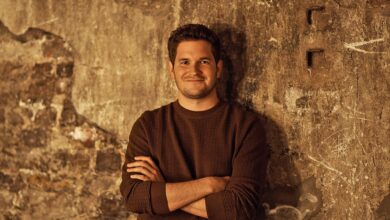
Nils Langhans is managing director of the strategy consultancy KAUFMANN / LANGHANS. He advises startups on fundraising and developing their equity story – from pre-seed to later-stage financing.
Startup jobs: Looking for a new challenge? In ours Job exchange You will find job advertisements from startups and companies.