


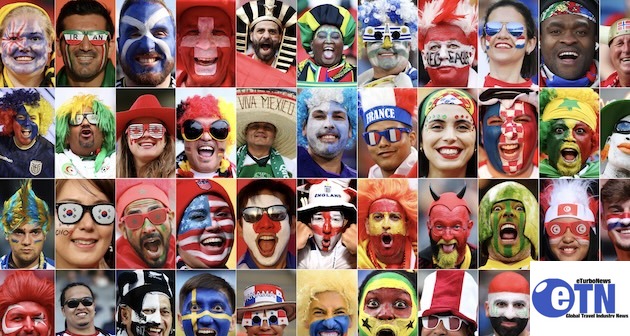
While Spain lifted the trophy, the United States may have claimed something equally significant. For one unforgettable month, football united cultures, forged friendships across borders, and reminded millions that America’s greatest strength has always been its diversity, hospitality, and ability to bring people together beyond politics.
Spain Defeats Argentina 1–0 during extra time, as K-Pop and a Stirring American Anthem Light Up the World Cup Final.
New York – For one unforgettable month, the United States became the center of the football world. Millions of visitors arrived not to debate politics, tariffs, elections, or international conflicts, but to celebrate the universal language of the beautiful game.
For a brief moment, stadiums became places where passports mattered less than team colors, and accents became part of the soundtrack rather than a point of division. That may ultimately become the greatest legacy of FIFA’s American adventure.
Today’s 104th and final match at MetLife Stadium was about far more than crowning a champion.
Before a ball was kicked, Jennifer Hudson’s stirring rendition of The Star Spangled Banner filled the stadium with remarkable emotion. It was a reminder that patriotism and openness need not be opposing ideas—that love for one’s country can coexist with the welcoming world.
In a nation built by generations of immigrants, shaped by countless cultures, and strengthened by diversity, the anthem became more than a ceremonial tradition. It reflected the best version of America: confident enough to celebrate itself while embracing people from every corner of the globe.
The entertainment throughout the tournament reflected football’s truly global spirit. FIFA deliberately assembled artists representing North America, Latin America, Africa, Europe, and Asia, reinforcing that the world’s game belongs to everyone.
The final featured Jennifer Hudson before kickoff, during the inaugural halftime show brought together Madonna, Shakira, Justin Bieber, Burna Boy, and the globally celebrated K-pop phenomenon BTS, curated by Coldplay’s Chris Martin in support of the FIFA Global Citizen Education Fund. Each performer represented more than musical talent.
- Shakira embodies Latin America’s enduring love affair with football.
- Burna Boy brought Africa’s vibrant contemporary voice.
- BTS demonstrated the extraordinary global influence of South Korea’s cultural renaissance.
- Madonna and Justin Bieber highlighted North America’s place on one of the world’s biggest stages.
Together, they transformed the tournament into a celebration not only of football, but of humanity itself.
A Moment Bigger Than Politics
The ceremony was not without debate.
Given the political climate surrounding President Donald Trump and the United States’ prominent role in hosting FIFA’s biggest events, some questioned why that
US national anthem was played before a final that did not feature the American national team.
Listen to it click here.
Yet inside MetLife Stadium, the atmosphere told a different story. As the anthem concluded, much of the crowd rose in applause. Many American spectators were visibly emotional, some wiping away tears.
Whatever one’s political beliefs, the moment resonated because it spoke to something deeper than government or ideology. It reminded those watching that national identity is at its strongest when it inspires rather than excludes.
Sports Creating Friends Out of Strangers
Walking through fan festivals and city streets across the country, one could witness scenes that felt increasingly rare in today’s polarized world.
- Argentine supporters shared drinks with Japanese fans.
- Mexicans celebrated alongside Germans.
- Brazilians exchanged scarves with Moroccans.
- Palestinians and Israelis stood in the same concession lines.
- Children who spoke different languages played football together without needing translators.
- Complete strangers became friends simply because they loved the same game.
For ninety minutes at a time, geopolitics seemed to disappear.


- War.
- Trade disputes.
- Sanctions.
- Elections.
- Diplomatic rivalries.
- All gave way to chants, songs and celebrations.
Football reminded the world why FIFA’s vision of bringing people together still carries meaning despite criticism directed at the organization.
One sentence echoed repeatedly throughout the tournament: “For once, we stopped asking where people stood politically and simply asked which team they supported.”
It may sound idealistic.
Inside stadiums across America, it became a reality.
Except When Politics Enters the Stadium
No global sporting event can completely escape international affairs. Questions surrounding Iran’s participation, visa policies, and travel restrictions served as reminders that football does not exist in isolation from the world around it.
Politics occasionally entered the conversation. But importantly, it never became the story. That, in itself, felt like a victory.
The America Visitors Experienced
The Trump administration viewed the tournament as an opportunity to present the United States as open for business, capable of hosting the world’s biggest events, and ready for the 2026 FIFA World Cup.
President Donald Trump arrived at today’s final by helicopter and appeared alongside leaders from Canada, Mexico, Spain, and other nations, underscoring the geopolitical significance of the occasion. The average ticket price to watch this event is US$18,222- which makes it unavailable to the average American of course.
The official image was clear:
- efficient.
- secure.
- economically dynamic.
- globally respected.
To a large extent, visitors found much of that to be true.
They experienced welcoming volunteers, world-class stadiums, passionate crowds and remarkable hospitality. But they also discovered something more important—an America that cannot be defined by any single administration or political moment.
- They encountered neighbors helping lost tourists.
- Families opening conversations with complete strangers.
- Communities proudly sharing food, music and traditions from every continent.
- They saw a country whose greatest strength has always been its extraordinary mix of cultures, languages and stories.
- That America has existed long before today’s political debates, and it will endure long after them.
Of course, challenges remained.
- Long immigration queues.
- Visa uncertainty.
- Expensive accommodation.
- Inconsistent public transport between host cities.
- Complex security procedures.
Like every great nation, America revealed both its remarkable strengths and its imperfections.
A Significant Economic Victory
- Hotels filled.
- Restaurants thrived.
- Transportation providers, retailers and tourism operators benefited from an influx of international visitors expected to generate billions of dollars in economic activity.
The tournament also served as a full-scale rehearsal for the 2026 FIFA World Cup, testing logistics, transportation and security across multiple cities.
Not every community benefited equally. Some small businesses struggled with security restrictions. Residents faced traffic disruptions.
Many supporters questioned premium ticket prices that increasingly placed football beyond the reach of ordinary fans. Even so, the overall impact extends far beyond economics.
Football’s Greatest Power
Perhaps FIFA’s greatest achievement was reminding the world that football remains one of humanity’s most powerful forms of diplomacy.
- No political summit could have gathered so many nations in one place.
- No international conference could have created so many spontaneous friendships.
- No government initiative could have inspired millions to sing together despite speaking different languages, practicing different religions or carrying different passports.
That is football’s unique power.
Beyond the Final Whistle
Long after the trophy has been lifted, many visitors will remember something else.
- Conversations on trains.
- Shared meals between rival supporters.
- Children exchanging jerseys.
- Volunteers helping visitors from countries they had only ever seen on a map.
For a few remarkable weeks, America hosted more than a football tournament. It hosted a conversation between the world and itself.
- Not a perfect conversation.
- Not one untouched by politics.
- But one that reminded millions of a simple truth.
The United States has always been at its strongest when it reflects the many people who have built it—people arriving from every corner of the world, bringing different languages, cultures and dreams, yet contributing to one shared story.
For one extraordinary month, football allowed that story to shine brighter than the divisions that so often dominate headlines.