


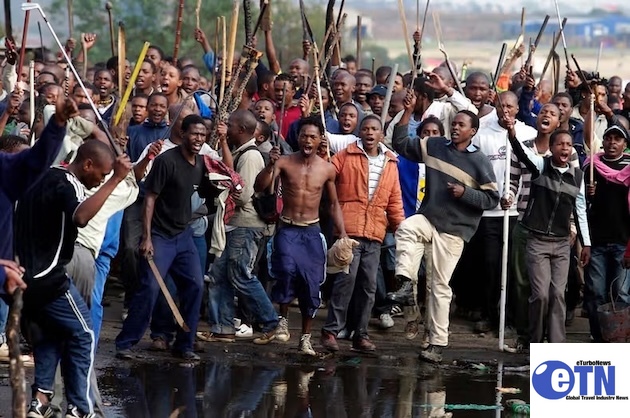
South Africa, one of Africa’s leading tourism destinations and the continent’s largest hub for international and regional travel, is facing growing concerns about the impact of anti-immigrant protests on its tourism industry.
The latest wave of anti-immigrant demonstrations in several urban centers has raised alarm among African travelers, tour operators, and tourism stakeholders, who fear that the country’s image as the “Rainbow Nation” could suffer long-term damage if tensions continue.
South Africa has built its tourism brand on cultural diversity, world-class attractions, wildlife, and modern infrastructure. However, repeated outbreaks of xenophobic violence over the past two decades have periodically undermined that image, prompting travel advisories, cancellations, and concerns about visitor safety.
The current protests have intensified in parts of Johannesburg, Pretoria, Durban, and other urban areas, where demonstrators have accused undocumented migrants of contributing to crime, unemployment, and pressure on public services. Although the demonstrations are primarily directed at foreign nationals living in South Africa, tourism experts warn that international visitors often perceive such uncertainty as a broader security risk.
Several tour operators serving African markets have reported inquiries from travelers concerned about safety, while some business and leisure trips have reportedly been postponed or canceled pending improvements in the security situation.
Tourism Relies Heavily on African Visitors
South Africa remains Africa’s largest destination for intra-African tourism. According to official tourism statistics, visitors from other African countries account for approximately 75 percent of all international tourist arrivals.
These travelers support hotels, restaurants, transportation services, conference facilities, shopping centers, entertainment venues, and thousands of small businesses operating throughout the tourism value chain.
The tourism sector contributed approximately R361.7 billion (about US$23 billion) to South Africa’s economy in 2024, making it one of the country’s largest employers and foreign exchange earners.


Everything you need to know to travel to South Africa (US)
From city life to adventure, wildlife to culture, breathtaking scenery to sun-soaked coasts – discover South Africa.
Industry analysts warned that any sustained decline in regional travel could have significant economic consequences, particularly for small tourism enterprises that depend heavily on visitors from neighboring countries.
Cape Town Remains a Tourism Jewel
Cape Town continues to rank among Africa’s premier tourist destinations and serves as an international gateway to Southern Africa.


The city is internationally recognized for its spectacular coastline, Table Mountain, vineyards, wildlife experiences, and rich multicultural heritage. It also hosts the annual World Travel Market (WTM) Africaone of the continent’s leading travel trade exhibitions.
Cape Town’s history dates back to the Age of Discovery, when Portuguese explorer Bartolomeu Dias reached the Cape in 1488, opening one of the world’s most important maritime routes between Europe and Asia. Later, the city developed into a strategic port and today welcomes millions of international visitors annually.
Despite Cape Town’s popularity continued, tourism experts caution that negative headlines originating elsewhere in South Africa can affect perceptions of the country as a whole.
A History of Xenophobic Violence
South Africa has experienced several waves of xenophobic violence since 2008.
Major outbreaks occurred in 2008, 2015, 2019and again in recent years, with migrants from Zimbabwe, Mozambique, Malawi, Nigeria, Ethiopia, Somalia, Pakistan, Bangladesh, and other countries frequently targeted.
These incidents have resulted in deaths, injuries, destruction of businesses, and displacement of thousands of foreign nationals.
International media coverage of the violence has repeatedly prompted concern among governments and travel organizations, with some countries issuing travel advisories or encouraging their citizens to exercise caution when visiting South Africa.
Tourism note researchers that perceptions of safety play a decisive role in destination choice, particularly for first-time international visitors.
Government Condemns Vigilantism
South African Minister of Justice and Constitutional Development Mmamoloko Kubayi has warned that vigilantism and attacks targeting foreign nationals will damage the country’s international reputation, investment climate, arts sector, and tourism industry.
She said the government would not tolerate individuals taking the law into their own hands and emphasized that law enforcement agencies must address criminal activity within the framework of the Constitution and the rule of law.
Tourism organizations have echoed those concerns, arguing that restoring visitor confidence will require visible security measures, community engagement, and consistent messaging that South Africa remains open and welcoming to international visitors.
Historic Regional Solidarity
The current tensions stood in contrast to South Africa’s history during the anti-apartheid struggle.
During the decades-long fight against apartheid, neighboring African countries—including Tanzania, Zambia, Zimbabwe, Botswana, Angola, and Mozambique—provided sanctuary, military training facilities, diplomatic support, and educational opportunities for members of the African National Congress (ANC) and other liberation movements.
Nigeria also became one of the strongest financial supporters of the anti-apartheid movement, contributing millions of dollars through the Southern African Relief Fundscholarships, humanitarian assistance, and diplomatic campaigns that helped sustain South African liberation organizations during their years in exile.
Political analysts say those historical ties have long strengthened South Africa’s position as the continent’s economic and tourism leader. However, repeated outbreaks of anti-immigrant violence risk straining regional relationships that have supported both trade and tourism for decades.
As South Africa seeks to maintain its position as Africa’s leading tourism destination, industry leaders say preserving visitor safety, strengthening community cohesion, and protecting the country’s reputation will be essential to sustaining future tourism growth.