


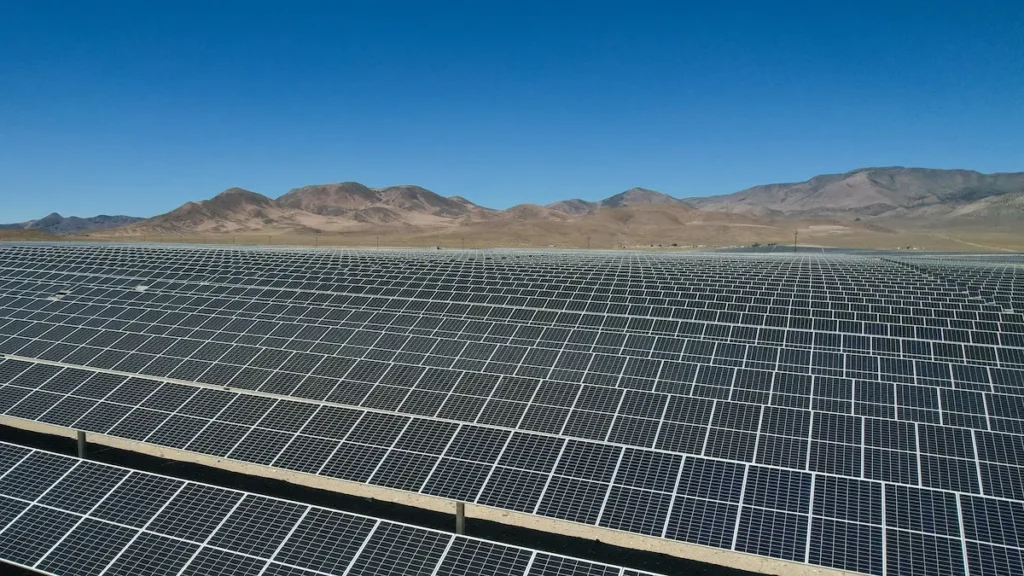
Climate change is increasingly threatening Europe’s electricity supply as extreme summer temperatures put a strain on sustainable infrastructure. A new scientific study shows that solar systems can suffer massive drops in performance of up to 90 percent in hot weather.
A team of researchers from the University of Évora in Portugal has examined the effects of extreme heat phases on solar systems on the Iberian Peninsula in 2024 and 2025. To do this, the scientists analyzed the real performance of three different photovoltaic systems in Portugal and Spain in order to measure the operational performance and climate-related resilience of photovoltaic systems under real conditions.
The results show clear differences in yield – in theory and practice. They are relevant because climate change has caused ground temperatures in this area to rise, in some cases significantly, since 1979.
In the worst case scenario, climate models for European land areas also predict a further temperature increase of up to 8.5 degrees Celsius by the year 2100. There is a risk of immense economic damage, as the climate-related risks in Europe could cause annual costs of around 40 billion euros by the 2080s.
Why solar systems collapse in the heat
In practice, the efficiency of PV systems drops by 0.3 to 0.5 percent per degree Celsius as soon as the air temperature exceeds 25 degrees Celsius. During extreme heat waves of up to 49 degrees Celsius, the module surfaces heat up to over 70 degrees Celsius.
This accelerates the aging of the panels. In the hottest afternoon hours, this leads to a critical drop in performance of up to 90.44 percent. If it gets too hot, the inverters switch off to protect themselves.
These hourly outages have a particular impact on infrastructure. This also endangers network stability. In addition, short-term heat outbreaks are often not shown transparently in the classic planning data. The study authors write:
In planning and contractual terms, this means that design year expectations systematically underestimate heat-related operational risk.
New solutions for solar infrastructure
Despite the large hourly drops, solar parks show a high level of regenerative resilience. Because the systems recover no later than one day after reaching the lowest point. In order to plan better for the future, the study recommends supplementing classic simulation data with event-based stress tests based on high-resolution reanalysis data such as ERA5-Land.
These freely available data sets show a high level of agreement with real measuring stations and enable precise risk analysis. In addition to better data, plant operators should also adapt operational protection protocols. This happens, for example, through better ventilation of the inverters or additional thermal power reserves.
The side effects of climate change, such as dust storms and forest fire smoke, additionally dampen global radiation and reduce the efficiency of the modules.
Also interesting: