


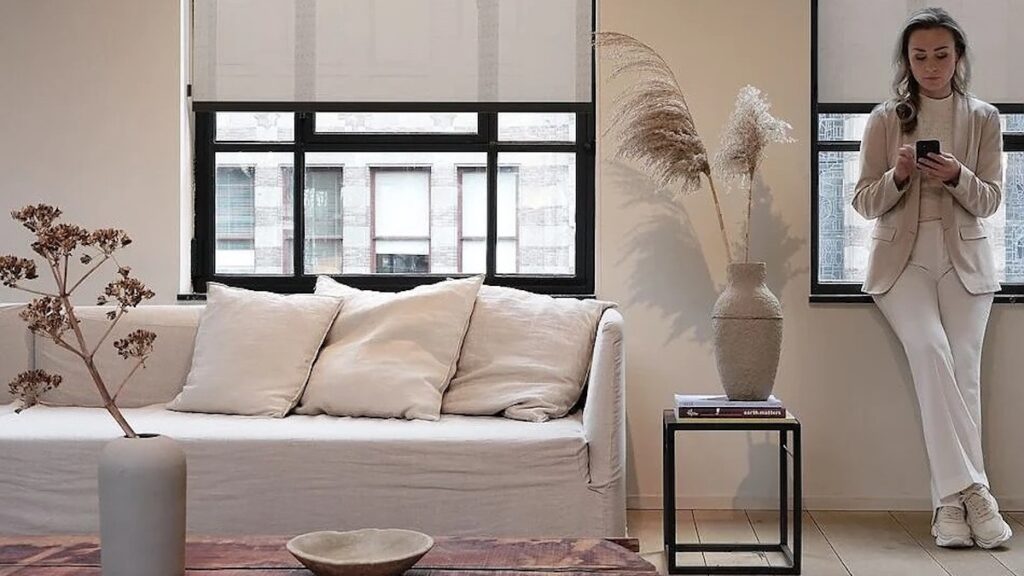
Smart homes will continue to develop rapidly in 2026. Instead of individual lamps or voice assistants, networked systems are being created that make decisions independently. This change is particularly visible in the area of intelligent shading.
While smart homes used to consist of a few networked devices, today complex systems take on numerous tasks in the household. They analyze lighting conditions, detect temperature changes, react to weather developments and even know when someone is home. The goal is clear: a home that regulates itself and noticeably relieves the workload of its residents.
A particularly dynamic field is intelligent shading. It influences living comfort, temperature management, energy consumption and security and is therefore one of the most important building blocks of modern smart homes. Solutions like the smart products from Jalousien.com show how versatile this area has become.
Autonomous systems instead of pure app control
The trend is clearly moving away from manual operation towards truly autonomous systems. Users don’t want to constantly adjust settings, but rather benefit from a home that independently takes care of shading, light or indoor climate. Modern smart home solutions use sensors that measure brightness, indoor temperature or even gusts of wind.
The more precise the data, the better the system adapts its behavior. Smart blinds open in the morning to let in daylight, close automatically in strong sunlight or react to sudden changes in the weather. This form of intelligent self-control ensures that rooms remain at a pleasant temperature over the long term without users having to intervene.
The advances in pattern recognition are also exciting. More and more systems on the market are learning how a household lives: when residents get up, which rooms are preferred or when the most sunlight comes in. Based on this, they make decisions that are optimally tailored to individual needs.
Energy efficiency as a real advantage for everyday life
Energy efficiency continues to gain in importance. Smart shading systems can keep rooms several degrees cooler in summer, without any additional technology. In many cases, this can replace an air conditioning unit, reduces electricity consumption and reduces costs in the long term. Studies show that intelligent shading is one of the most effective passive measures against overheating – according to the Climate Fund, the cooling needs of buildings will increase significantly by 2050.
A similar effect occurs in winter. Closed blinds act as a natural barrier against heat loss. This means that the heating system has to work less, which noticeably reduces energy costs. Systems that are based on real-time data rather than rigid schedules are particularly effective. You can tell when heat needs to be kept in the room or when the sun can provide heating for free.
Another trend in the industry is the combination of shading and energy optimization. In the future, many systems will be able to respond to variable electricity tariffs or network with photovoltaic systems. In this way, your own consumption of solar power can be increased by adjusting the timing of certain processes.
Smart blinds: technology for retrofitting
Motorized blinds are one of the easiest ways to get started with smart shading – even in existing buildings. The smart products from Jalousien.com use the MotionBlinds system: wireless, battery-operated and rechargeable via USB-C, without the need for an electrician or major modifications.
The setup takes just a few minutes via the app, after which schedules can be programmed and positions set. It is controlled via smartphone, remote control or voice command – Amazon Alexa, Google Assistant and Apple Siri are supported. If you want to go deeper, you can integrate the products seamlessly into an existing smart home system and link them to lighting, heating or security systems.
Configure smart shading now
Technology that you can’t see, but you can feel it
A modern smart home trend is: Technology should be powerful, but not visible. Instead of many individual devices, more and more households are turning to inconspicuous solutions that blend in harmoniously. Smart blinds that are directly connected to the smart home system meet this requirement: self-controlled blinds take over control automatically in the background and do not require additional wall modules or visible technology in the living room.
Operating concepts are also changing. Users no longer have to switch between five apps, but rather control their home via a central system. Many functions run completely independently, while more complex scenes – such as “evening”, “work” or “vacation” – are triggered with a single command.
The smart home also impresses in terms of security
Smart shading can simulate presence by opening or closing blinds at typical times. These routines seem much more realistic than classic timers. If they are also linked to cameras or motion detectors, a higher level of security is achieved.
The practical benefits in everyday life also continue to increase. Many systems offer automatic night modes that close the shading in the evening without the user having to think about it. In the morning, the shading opens gently so that daylight instead of an alarm clock ensures a pleasant start.
Comfort is being redefined
Modern smart homes want to offer more than just technology. They should provide a living experience that automatically feels good. Intelligent shading plays a central role because it directly influences light, well-being, temperature and privacy.
In addition, many users are looking for solutions that are as easy to install as possible. Smart retrofit systems make this entry much easier. They enable intelligent shading even in existing buildings, without major renovations.