

A wafer-thin layer of silver makes solid-state batteries significantly more robust and could significantly advance the technology.
Lithium-ion batteries are increasingly reaching their physical limits. Solid-state batteries therefore replace liquid electrolytes with solid, crystalline materials. The advantages: more security, more capacity and faster loading times.
However, the brittle ceramic electrolytes often develop microscopic cracks during use. Wendy Gu from Stanford University compares the material to ordinary ceramic plates or bowls from the home. These also have tiny, often barely visible cracks on their surface.
Silver layer protects solid state batteries
The team at Stanford University is therefore presenting a new solution approach. They used LLZO, a ceramic combination of lithium, lanthanum, zirconium and oxygen. A touch of silver protected the surface of this solid-state battery from mechanical damage.
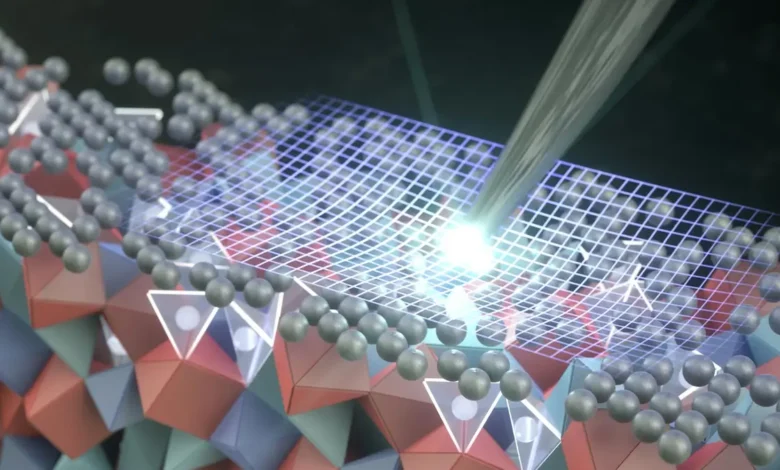
The researchers applied a three-nanometer-thick layer of silver to the ceramic. A heat treatment at around 300 degrees Celsius allowed the silver atoms to migrate into the structure in a controlled manner. There they displaced lithium atoms and stabilized the lattice down to a depth of 50 nanometers. Since silver ions are larger than lithium ions, they further strengthen the crystalline structure.
Fast charging in particular creates dangerous channels that can permanently damage batteries. However, the charged silver ions remain permanently in their shape within the ceramic and strengthen the framework. Silver also blocks harmful lithium deposits in existing defects.
Silver trick also works with alternatives
The treated material can withstand almost five times more mechanical pressure than conventional samples. According to Xin Xu, who now teaches as an assistant professor at Arizona State University, the principle works for many ceramics. This means that the components remain stable even under high electrochemical loads.
So far, research has primarily provided results on local material samples. Upcoming tests on complete cells must demonstrate durability over thousands of charging cycles. The team is also examining sodium-based alternatives to ease the burden on global supply chains.
Other metals such as copper also show a protective effect in initial tests. However, silver provides the most effective protection for the solid-state battery to date. This brings us an important step closer to its use in devices suitable for everyday use.
Also interesting:


