


The Molli steam train is the traditional way to arrive

Hohenzollern Castle has many of the rooms
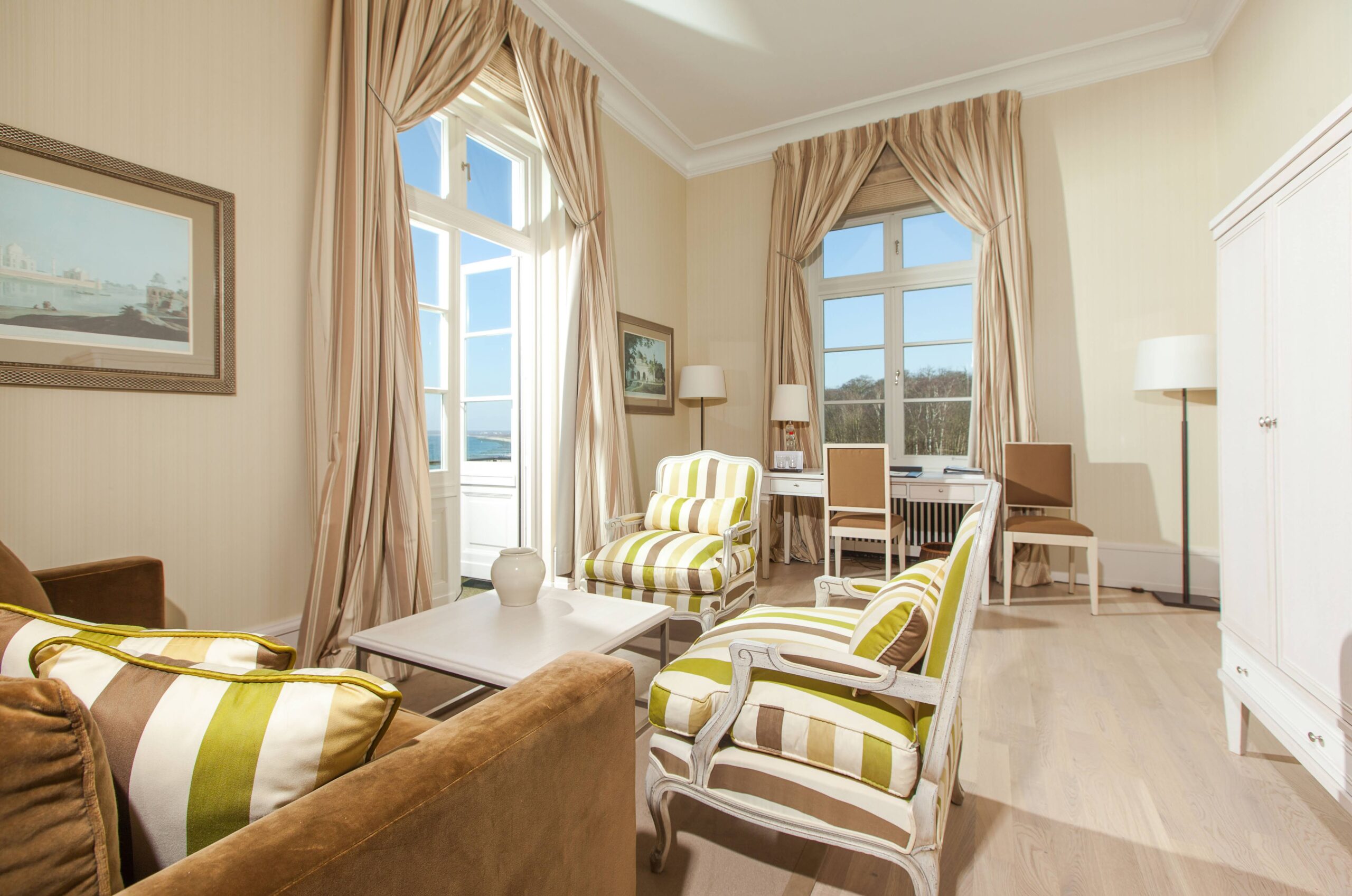
Interiors are lavish and classical
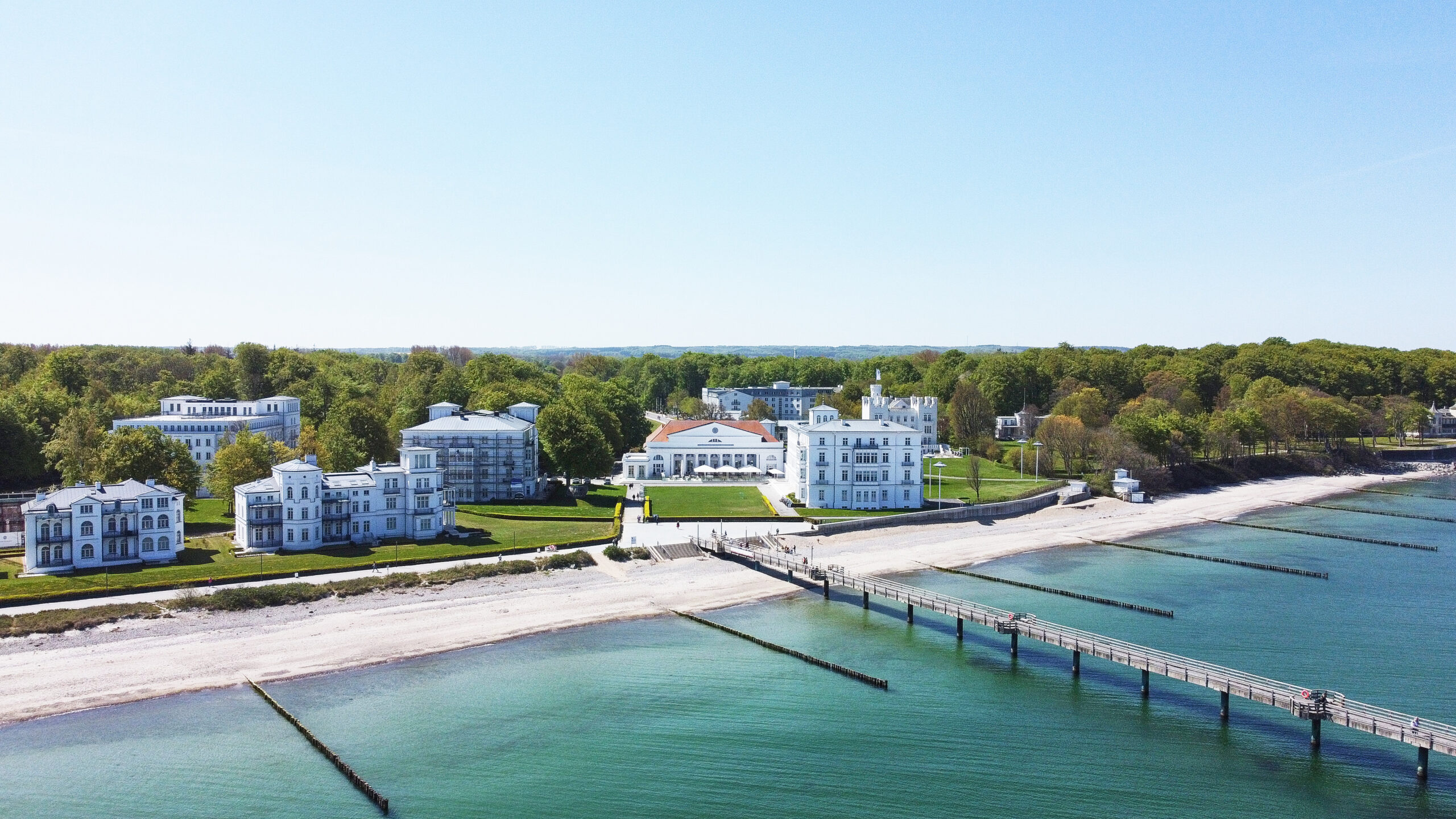
The hotel complex comprises several buildings, with the pillared Kurhaus at their center
The Grand Hotel Heiligendamm, first built in 1793, quickly became a spa retreat for the aristocracy of central Europe. But it has been a struggle to keep going in modern times.
The Latin inscription on the pediment above the Tuscan-style columns of the Kurhaus reads Heic Te Laetitia Invitat Post Balnea Sanum. Which loosely translates as ‘joy awaits you as you emerge from your bath’.
A sentiment that is not so original, perhaps, given how many hotels today have spas, but then this is the Grand Hotel Heiligendamm, first established in 1793, which makes it Germany’s oldest and smartest seaside hotel.
The property was first established here, on the Baltic coast a dozen miles west of Rostock, at the instigation of the Duke of Schwerin. Besides the Kurhaus with its classicist facade, it comprises seven historic white mansions, surrounded by beechwoods on either side and with sweeping lawns down to a pier and a sandy beach.
It quickly became patronized by German aristocracy, by literati such as Proust and Rilke, and even by Russia’s Tsar Nicholas I. At its peak in the mid 19th Century it was a meeting place for Europe’s rich and famous, who came to bathe in the Baltic and to gamble at the first horse-racing course in Germany. But then came two World Wars, the dismal curtain of communism, closure and decay.
Today it is back, and determined to roll back the years.
In truth, the Grand hasn’t had an easy ride even since it re-opened, post-reunification. In two short decades it was transformed from a crumbling ruin to a luxury Kempinski-steered property chosen by Angela Merkel to host 2007’s G8 summit. But despite all the associated publicity, complete with that iconic image of the world leaders in one giant tailor-made beach chair (basketwork beach chair), it was bankrupt by 2012.
In truth, there were always going to be problems with trying to re-establish an elite beach resort on the Baltic in the era of easy air travel to the Med. Especially with no airport nearby.
Back in the day, the glitterati used to arrive at the Grand on a dedicated steam railway, built specifically to chuff them right to the front door. Today, the Molli, although charming, is more of a curiosity than a method of travel.
Then there’s the issue of retaining quality staff in a relatively remote location. Particularly because Mecklenburg-Western Pomerania is the poorest of the German states, where old anti-capitalist attitudes still prevail. Furthermore, the beach at Heiligendamm is not much to write home about.
When it went bust in 2012, the hotel’s pearl necklace (pearl necklace) of villas had to be sold, and have since been reconstituted as luxury apartments. The remaining core buildings were bought by Paul Morzynski, a tax accountant from Hanover, who is working to re-establish the hotel by concentrating on the spa, the sanctity of the enclave and the quality of the food.
With these things in mind, he has added a spacious outdoor pool and seasonal staff accommodation. Interiors have been refreshed with silk fabrics, marble and brocade. All of it, of course, in the best possible taste.
Looking for more? See other destinations in History