If the federal government has its way, the police should in future be allowed to search the Internet for faces for law enforcement and combating terrorism. Mugshots should be able to be biometrically compared with images that can be found publicly on the Internet. A commentary analysis.
The federal government wants to introduce biometric facial scans
- Federal Minister of the Interior Alexander Dobrindt (CSU) and Federal Minister of Justice Stefanie Hubig (SPD) agreed on three draft laws in March 2026, one biometric surveillance in Germany to enable photos to be compared with images from the Internet. While the Federal Ministry of Justice presented planned changes to the Code of Criminal Procedure, the Federal Ministry of the Interior presented two drafts with new powers for the German police authorities.
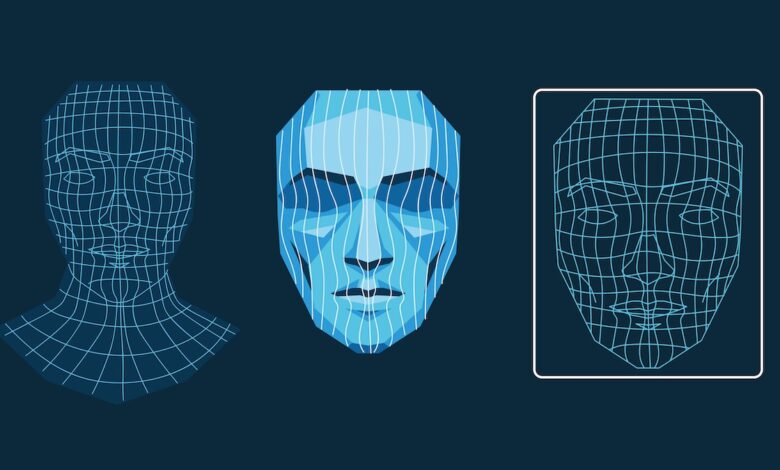
- Biometric facial recognition is based on that each face unique features has. These include, among other things: distances between the eyes, the tip of the nose and the chin. These properties can be determined digitally and presented in the form of so-called data templates, which can then be automatically compared with each other.
- The EU’s AI regulation prohibits the arbitrary capture of facial images from the internet to create biometric databases. The federal government’s aim is apparently to do this to circumvent regulations. The Federal Ministry of Justice and the Federal Ministry of the Interior defend their plan by emphasizing that no AI system should be used for data analysis. Data would also not be stored permanently.
A legal trick to circumvent EU law?
The federal government’s draft laws have the same effect legal trick. The responsible ministries promise not to use AI models, but want to use comparable technologies to establish a surveillance instrument and circumvent EU law on paper. It is not clear from the drafts how one would implement such a system without permanent data storage and AI.
All of this gives the impression that biometric surveillance should be introduced using algorithms Avoid EU law by simply not giving the software a name. The fact that the Federal Ministry of Justice and the Federal Ministry of the Interior formulate the technical level in an extremely vague manner is almost as noticeable as if ambiguity were part of the strategy.
The federal government’s plans are at odds with what was painstakingly negotiated at EU level: one thing Safe space for anonymity in public life. The European Parliament therefore wanted to prevent biometric facial recognition. But the federal government is now trying to find a back door in the form of a legal gray area.
But that would be quite dangerous. Because anonymity is not necessarily a trick, but rather a protective shield – for minorities, demonstrators or members of the opposition, for example. In addition, faces cannot be changed like passwords. In the wrong hands, such a monitoring instrument would be extremely dangerous.
A look at the USA, where people are tracked via social media and opinion formation is distorted by AI, shows how quickly liberal standards can shift and lead to increasing autocracy.
Voices
- The Federal Ministry of Justice writes in its draft law: “In addition, when using such AI systems by law enforcement authorities, it must be taken into account that Article 5 paragraph 1 letter e of the Regulation on Artificial Intelligence prohibits the placing on the market, the commissioning for this specific purpose or the use of AI systems that create or expand facial recognition databases through the untargeted reading of facial images from the Internet or from surveillance recordings. This ban does not apply if no AI systems are used to read the data will be.”
- Julia Duchrow, Secretary General of Amnesty International Germanyin a statement: “Mass surveillance with AI endangers human rights and democracy. It has an intimidating effect and poses the risk of abuse. There is a significant risk of discrimination when using AI for biometric matching as well as for automated analysis of police data. If software from Palantir is to be used for automated data analysis, it is a company that, according to research by Amnesty International in the USA, is systematically involved in human rights violations by the Trump administration.”
- The Chaos Computer Club already criticized in October 2025: “The ideas formulated in a legislative package by Federal Interior Minister Alexander Dobrindt (CSU) for permanent biometric surveillance are not compatible with a democratic constitutional state and violate EU law. (…) But the problem is not Palantir, Pimeyes or Clearview AI. The real problem is the idea of omnipresent surveillance and data gridding that no one can avoid anymore.”
Biometric facial scans as a dangerous tool
Biometric facial recognition is still in Germany not decidedbut the political dynamics seem clear. The drafts must be approved by the federal states and the Federal Council. Experience has shown that such projects rarely move back towards freedom, but rather towards practical application. Criticism is priced in, but rarely becomes a co-criterion.
However, at European level it could a conflict arises. If Germany tries to actually circumvent the AI regulation, this could have legal repercussions. On the other hand, other member states could establish similar instruments. A national special path would then emerge European patchwork quilt of monitoring.
In addition, technological development only knows one direction: faster, more precise, more ubiquitous. Even if the state were to formally hold back, Private providers are rallying togetherto fill such gaps. The real question is therefore not whether facial recognition will happen – but who will control it. Or: whether we will be recognized by the state in the future or by a private company.
This automatically raises questions. Where would identity data be stored? Who would have access? How do you prevent misuse or data leaks? A central state identity infrastructure would undoubtedly be a sensitive instrument of power in the wrong hands, devastating consequences can have. Added to this is the political reality: a firmly right-wing extremist AfD is on the verge of becoming the strongest force in Germany. Anyone who wants to create a surveillance tool today must therefore consider who could use it tomorrow.
Also interesting: