


RIYADH — The closures came without spectacle. Inspectors from Saudi Arabia’s Ministry of Tourism fanned out across the country in recent weeks, reviewing employment records at hotels, furnished apartments, and other hospitality businesses. Their findings — incomplete worker data, missing qualifications, outdated records — were bureaucratic in nature. The response was not.
Thirty-three tourism establishments were shut down. Dozens more were found or forced to comply. In another context, it might have read as a routine regulatory sweep. But in Saudi Arabia today, even minor enforcement actions are freighted with larger meaning.
The Kingdom is attempting to build a global tourism industry at extraordinary speed — even as the geopolitical foundations of that ambition are shifting beneath it. A widening regional conflict involving Iran has disrupted air travel, shaken investor confidence, and recast the Middle East in the eyes of global travelers.
Saudi Arabia’s tourism push was designed for a world of expanding mobility and relative stability. Instead, it is colliding with a more fractured reality. The result is a test not only of policy, but of premise.
Building an Industry at Breakneck Speed
Less than a decade ago, Saudi Arabia barely registered on the global leisure tourism map. International visitors arrived overwhelmingly for religious pilgrimage. Tourist visas were rare. Entertainment was limited. The country’s global identity was defined more by oil and geopolitics than by hospitality.
That began to change in 2016, when Crown Prince Mohammed bin Salman launched Vision 2030, a sweeping effort to diversify the economy away from oil. Tourism quickly emerged as one of its central pillars.
The scale of ambition was striking. Saudi Arabia set out to attract 100 million annual visitors by 2030 — a target it reached years early — and then raised the goal to 150 million. Entire sectors were created almost overnight: entertainment, culture, leisure travel, and international marketing.
Massive investments followed. Airlines ordered fleets worth billions. New airports expanded capacity. Coastlines and deserts were transformed into destinations.
In Riyadh, the capital, construction cranes have become part of the skyline, symbols of a city being reshaped into a global hub.
“It’s one of the most aggressive tourism expansions we’ve ever seen,” said a Gulf-based tourism analyst. “They are compressing decades of development into a few years.” But speed has consequences.
A Region Recast by Conflict
Those consequences are now unfolding against a backdrop that few policymakers anticipated at this scale.
Now the escalating tensions between Iran, Israel, and the United States have erupted into open confrontation. Missile strikes, drone attacks, and retaliatory operations spread across parts of the Middle East, disrupting infrastructure and unsettling global markets.
Airspace closures followed, and flights were canceled or rerouted. Oil prices surged. Insurance costs rose. Travel advisories multiplied. The impact on tourism was immediate.
Travelers, particularly from Europe and Asia, began to reconsider trips to the region. Tour operators suspended itineraries. Airlines reduced frequencies. Even destinations far from active conflict zones felt the effects.
In tourism, geography is often secondary to perception.
“A traveler in Berlin or London doesn’t distinguish between countries in the region,” said a European travel executive. “They see headlines about conflict, and they change plans.”
For Saudi Arabia, the timing is critical.
The Kingdom has not experienced the same level of direct disruption as some neighbors. Its airports remain operational. Its infrastructure is largely intact. Its flagship projects continue to advance. But the perception of risk has shifted. And perception, in tourism, can be decisive.
Control in an Uncertain Environment
In this context, the recent closures of hospitality businesses take on broader significance.
At face value, the violations involved worker data — a requirement that establishments maintain accurate, up-to-date records of employees’ qualifications and roles. But enforcement reflects a deeper strategy.
Saudi Arabia is tightening control over its tourism sector at precisely the moment external risks are rising.
Authorities are not only enforcing compliance; they are reshaping the industry. Regulations now emphasize workforce transparency, service standards, and localization — increasing the share of Saudi nationals employed in tourism roles.
The message is clear: rapid growth must be matched by discipline.
“This is about building credibility,” said a Riyadh-based hospitality executive. “If you want to attract global travelers, you need to show that your system works — that it’s professional, reliable, and accountable.”
The approach marks a shift from the early phase of Saudi tourism development, which focused heavily on expansion. Now, the emphasis is increasingly on governance.
The Architecture of a Tourism State
Unlike many established tourism markets, Saudi Arabia’s tourism industry is being built on a centralized, state-driven model.
At its core is the Ministry of Tourism, supported by a network of institutions responsible for promotion, financing, infrastructure, and air connectivity. Together, they form a coordinated system designed to accelerate growth while maintaining oversight.
Central to this model is diversification. Saudi Arabia is not betting on a single tourism identity. Instead, it is building a portfolio of destinations:
- Ancient heritage sites in AlUla.
- Luxury resorts along the Red Sea.
- Entertainment and sports complexes near Riyadh.
- Futuristic urban developments are tied to broader economic projects.
The strategy is intended to reduce vulnerability. Different types of tourism — cultural, leisure, domestic, religious — respond differently to external shocks.
But diversification does not eliminate risk. It redistributes it.
Airlines as Lifelines
Connectivity is the backbone of Saudi Arabia’s tourism ambitions.
The national carrier, Saudia, continues to expand its network, while a new airline, Riyadh Air, is being positioned as a global connector aimed at transforming the capital into a major aviation hub. Together, they represent a dual strategy: scale and aspiration.
But aviation is also one of the sectors most exposed to geopolitical disruption.
The current conflict has increased fuel costs, complicated flight paths, and introduced uncertainty into route planning. Airlines must navigate shifting airspace restrictions and fluctuating demand.
For Riyadh Air, still in its formative stage, the challenge is particularly acute. Building a network requires stability — something the current environment does not guarantee.
For Saudia, the task is to maintain reliability amid constant change. In both cases, success depends on flexibility.
Mega projects, mega risks
Saudi Arabia’s tourism narrative is inseparable from its mega-projects — vast developments intended to redefine travel experiences and position the Kingdom as a global destination.
These projects are designed for a long-term horizon. They require sustained investment, consistent demand, and stable operating conditions.
Conflict introduces uncertainty into all three.
Analysts warned that prolonged instability could affect timelines, costs, and investor sentiment. Even if projects continue, their commercial viability may depend on how quickly global travel patterns recover.
At the same time, scaling back is not a simple option. Tourism is central to Saudi Arabia’s economic transformation. It is also a key component of its global rebranding effort.
The projects must move forward. The question is under what conditions.
Leadership at the Crossroads
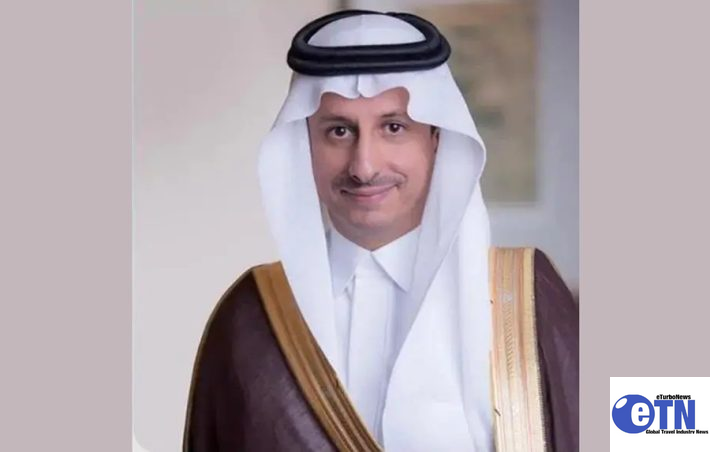
At the center of this transformation is Ahmed Al Khateeb, Saudi Arabia’s Minister of Tourism.
With a background in finance, healthcare, and entertainment, he operates less as a traditional tourism official and more as a system coordinator, linking investment, infrastructure, and policy.
His vision emphasizes diversification, sustainability, and private-sector partnership — principles aligned with global trends.
But the current moment demands adaptation.
Resilience is no longer a secondary consideration. It is central.
“Tourism today is not just about attracting visitors,” said an industry consultant familiar with the region. “It’s about managing uncertainty.”
For Saudi Arabia, that means balancing ambition with pragmatism.
A Changing Global Landscape
The challenges facing Saudi Arabia are part of a broader shift in global tourism.
The industry is increasingly shaped by geopolitical factors. Conflicts, trade tensions, and regional instability influence travel patterns in ways that traditional models struggle to predict.
At the same time, travelers are becoming more risk-aware. Flexibility, safety, and reliability are gaining importance alongside price and experience.
Destinations are competing not only on attractions, but on trust. In this environment, resilience becomes a competitive advantage.
Saudi Arabia’s centralized model may offer some benefits — the ability to coordinate policy, mobilize resources, and enforce standards quickly. But it also requires constant adjustment.
Opportunity in Disruption
For all its challenges, the current crisis also presents opportunities.
Saudi Arabia’s large domestic market provides a buffer against international volatility. Regional travelers, less influenced by global perceptions, may continue to drive demand.
Diversified offerings allow the Kingdom to pivot toward segments that are more resilient in times of uncertainty.


Saudi Tourism News
Tourism News from Saudi Arabia. Stories and news for and by visitors, travel professionals, leaders and stakeholders with a story to tell.
Strong financial resources enable continued investment when others may pull back. There is also an opportunity to redefine the narrative.
Rather than presenting itself as insulated from regional dynamics, Saudi Arabia could position itself as a stable, well-managed destination within a complex environment — one that prioritizes safety, quality, and transparency.
In this light, the recent enforcement actions become part of that story.
The Unresolved Future
For now, Saudi Arabia’s tourism trajectory remains upward — but less certain.
Visitor numbers are growing, but at a more cautious pace. Projects are advancing, but under closer scrutiny. Policies are evolving in response to a changing world.
The Kingdom is still building its tourism industry. But it is doing so under conditions that are more volatile than anticipated.
The closures of a few dozen hospitality businesses may seem minor in comparison to the scale of the transformation underway.
Yet they reflect a broader reality: Saudi Arabia is entering a new phase — one defined not just by growth, but by management.
The ambition remains intact. The environment has changed. And that leaves a question — one that will shape not only Saudi Arabia’s future, but the future of tourism in an increasingly uncertain world:
What will be next for Saudi Tourism?