


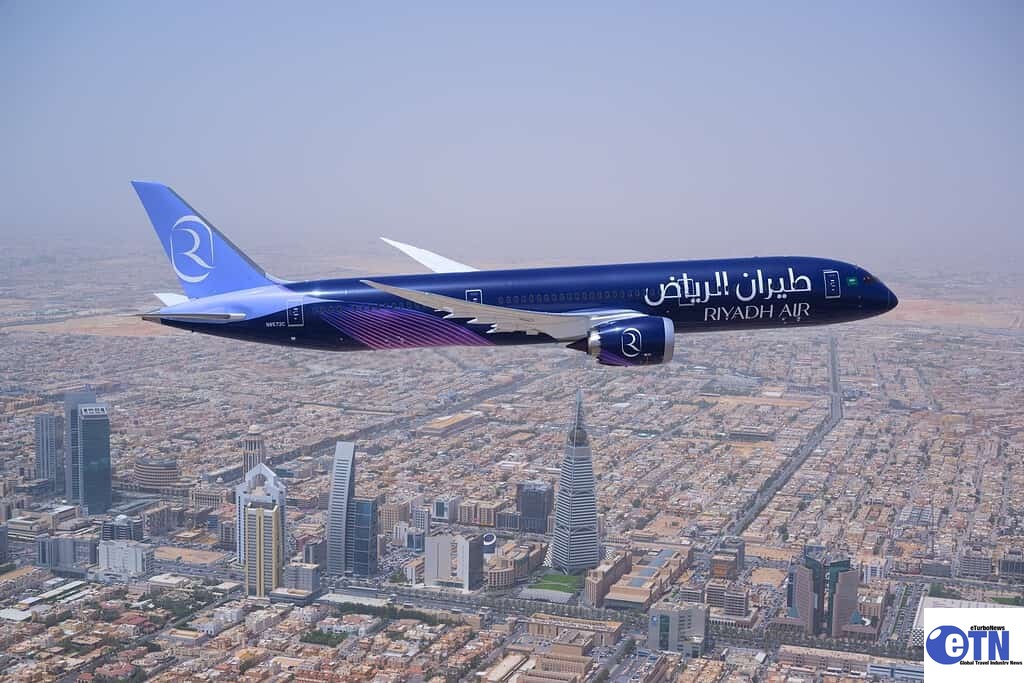
Saudi Arabia’s hospitality sector expanded strongly in the first quarter of 2026 despite regional tensions linked to the Iran war, with licensed accommodation facilities rising 22.7 percent. Religious tourism, robust domestic travel and Riyadh Air’s network expansion helped the Kingdom maintain momentum toward its Vision 2030 tourism ambitions.
RIYADH: Saudi Arabia’s hospitality sector continued to expand in the first quarter of 2026 despite regional geopolitical tensions linked to the Iran war, with new government data showing a sharp increase in licensed accommodation facilities as the Kingdom pressed ahead with its Vision 2030 tourism ambitions.
The figures also suggest that while the conflict has weighed on some international travel demand, Saudi Arabia has so far avoided a major loss of market share in regional tourism, supported by resilient domestic demand, year-round religious travel and continued aviation expansion led by Riyadh Air. (Reuters)
According to the General Authority for Statistics, the number of licensed tourism hospitality facilities climbed 22.7 percent year on year to 6,122 during the first quarter.
Serviced apartments and other hospitality facilities accounted for 3,159 establishments, representing 51.6 percent of the total, while licensed hotels reached 2,963, or 48.4 percent.
The expansion comes as Saudi Arabia accelerates investment in tourism infrastructure after already exceeding its original target of 100 million annual visitors. Under Vision 2030, the Kingdom is now targeting 150 million visitors annually by the end of the decade.
Employment indicators also reflected continued growth. Tourism establishments employing staff increased 9 percent year on year to approximately 177,031, while total employment in tourism activities rose 6.5 percent to more than 1.04 million workers.
Hotel guests stayed an average of 4.2 nights during the quarter, slightly higher than a year earlier, while average stays in serviced apartments edged up to 2.2 nights.
Occupancy trends were mixed. Hotel occupancy eased to 60.8 percent from 63 percent a year earlier, while serviced apartments improved to 51.6 percent. Average daily hotel rates also moderated by 11.4 percent to SR423, suggesting operators prioritized maintaining occupancy as new supply entered the market.
Religious tourism cushions regional uncertainty
The latest hospitality data arrives against the backdrop of the Iran war, which disrupted aviation across parts of the Middle East and prompted airlines to reroute flights and suspend services in several Gulf countries.
Saudi Tourism Minister Ahmed Al-Khateeb acknowledged last month that tourism activity slowed by around 5 to 6 percent during the first five months of 2026 because of the conflict. However, he described the slowdown as manageable, pointing to the Kingdom’s large religious tourism sector as a stabilizing force.
Millions of pilgrims visiting Makkah throughout the year for Umrah, alongside the annual Hajj season, continued to provide a reliable stream of visitors even as regional leisure travel softened.
Industry data also shows domestic travel played an increasingly important role. During the first quarter, domestic trips rose 16 percent to nearly 29 million, accounting for 78 percent of all tourism visits, helping offset a 13 percent decline in inbound arrivals. Overall visitor numbers nevertheless increased 8 percent to 37.2 million, while tourism spending reached SR82.7 billion.
Has Saudi Arabia’s visitor mix shifted?


Saudi Tourism News
Tourism News from Saudi Arabia. Stories and news for and by visitors, travel professionals, leaders and stakeholders with a story to tell.
Available evidence points to a more nuanced picture than a wholesale shift away from Western visitors.
There is no clear evidence that Saudi Arabia’s hotel sector has fundamentally replaced Western guests with visitors from Islamic countries.
Instead, several trends appear to be shaping demand:
- Domestic tourism has become the principal growth engineaccounting for almost four out of every five visits in the first quarter of 2026.
- Religious tourism remains exceptionally resilientinsulating hotel demand in Makkah and Madinah from wider geopolitical uncertainty.
- International arrivals have softenedlargely because of regional security concerns and aviation disruptions rather than a structural change in source markets.
- International visitors continue to be high-value travelers. Although inbound arrivals declined 13 percent, overseas tourists still generated almost 60 percent of total tourism spending, indicating that higher-spending international guests continued to visit.
Recent tourism presentations have identified markets including the US, Egypt, India and Türkiye among important contributors to inbound demand, suggesting Saudi Arabia’s source markets remain relatively diversified rather than concentrated solely in religious or regional travel.
Riyadh Air supports long-term strategy
At the same time, Saudi Arabia has continued expanding air connectivity through Riyadh Air, whose network rollout has proceeded despite the regional conflict.
The airline’s management has said operations have largely avoided the disruptions experienced elsewhere in the Gulf, with Riyadh emerging as a relatively stable aviation gateway during the crisis. The carrier expects to serve 22 destinations by March 2027 as it continues supporting the Kingdom’s tourism diversification strategy.
Taken together, the data suggests Saudi Arabia’s tourism industry has proven more resilient than many regional peers. While geopolitical tensions have reduced inbound volumes, growth in domestic tourism, the enduring strength of religious travel, expanding accommodation capacity and continued airline investment have enabled the Kingdom to sustain momentum towards its long-term Vision 2030 objectives rather than fundamentally altering the composition of its hospitality market.