




Clear market leader: the iPhone
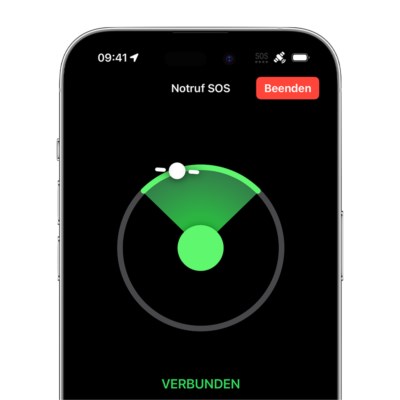
According to Counterpoint Research, a full 71.6 percent of all satellite-enabled smartphones shipped in 2025 bore the Apple logo. Samsung followed with 15.9 percent, Huawei with 6.1 percent, Google with 2.2 percent. Apple, Huawei and Google primarily rely on proprietary solutions that are closely linked to specific devices and services. This already enables concrete functions such as emergency call services, roadside assistance or messages without a mobile network. Large parts of the Android camp – including Samsung, Xiaomi, Oppo, Honor and Vivo – are oriented more towards the emerging 3GPP-NTN standards. In the long term, these should treat satellites more as an extension of classic mobile networks and thus enable broader interoperability.


Head start through early product launch
Apple’s massive lead is primarily explained by its early start and consistent integration. Satellite communication was successfully positioned less as a technical gimmick and more as a security function for everyday life – especially in regions with patchy network coverage. However, Counterpoint points out that the market has so far been almost entirely driven by the premium segment, although this is likely to increasingly shift over the next few years.
Development of mobile phone chips
The chip/modem side also plays a central role. Qualcomm is pushing satellite support with Snapdragon X80 and X85 modems, among other things. At Apple, the corresponding connection has also been integrated into the company’s own mobile communications chips; the C2 modem, which will probably be released in the fall, will also support the general standard NR-NTN (“New Radio Non-Terrestrial Networks”). Unlike proprietary solutions, NR-NTN aims for broader interoperability between modems, network operators and satellite providers.
We discussed in this article what impact Amazon’s takeover of Globalstar will have on the future of satellites.