


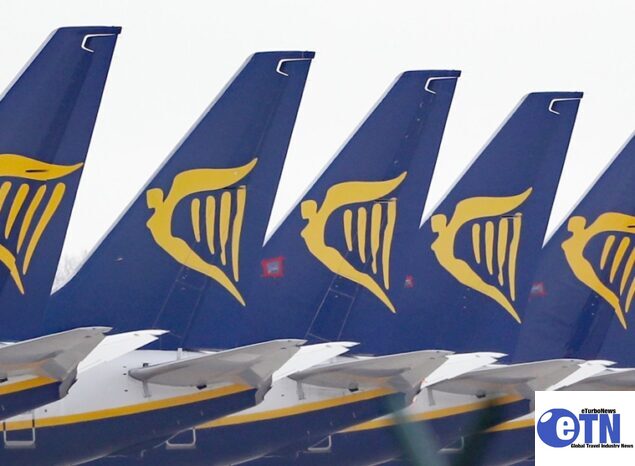
Ryanair has warned it will cut 20 routes and remove five aircraft from Belgium if the federal government doubles its aviation tax in 2027. The dispute highlights a broader European trend, with airlines increasingly shifting capacity away from countries imposing higher taxes, airport charges, and environmental levies.
Brussels, Belgium — Ryanair has reaffirmed plans to reduce its operations in Belgium if the federal government proceeds with a planned increase in aviation taxes, escalating a dispute that highlights a growing battle across Europe between governments seeking greener aviation policies and airlines focused on maintaining low-cost growth.
Speaking on Thursday, Ryanair Group executives Michael O’Leary and Eddie Wilson warned that the airline would scale back its Belgian network if the government doubles its aviation tax on flights exceeding 500 kilometers from €5 to €10 per passenger beginning next year.
The warning follows comments from Belgian Finance Minister Jan Jambon indicating that the government remains committed to the measure despite mounting opposition from the aviation industry and regional authorities.
Under Ryanair’s current plan, five of the airline’s 19 aircraft based at Charleroi Airport would be withdrawn from the winter schedule. The carrier would also eliminate 20 routes across Belgium—15 from Charleroi and five from Brussels Airport—resulting in an estimated reduction of two million passengers annually.
Ryanair said approximately 150 jobs in Charleroi could be affected, although pilots and cabin crew would be offered transfers to other bases within the airline’s network.
“The only variable cost is access costs: government taxes, airport charges and handling fees,” said Ryanair DAC Chief Executive Eddie Wilson. “We are not going to add capacity in airports, regions or countries where those costs are increasing.”
Tensions Despite Regional Support
The dispute comes shortly after a separate victory for Charleroi Airport. The Walloon government recently blocked a proposal by the City of Charleroi to impose an additional €3 municipal tax on departing passengers.


Official Ryanair website | Cheap flights in Europe | Ryanair
Book Cheap Flights directly at the official Ryanair website for Europe’s lowest fares. Fully allocated seating and much more now available online.
Airport operator BSCA welcomed that decision but emphasized that the proposed federal aviation tax remains the most significant threat to future growth. Walloon authorities have also urged the federal government to reconsider the increase.
Despite the warning, O’Leary rejected suggestions that Ryanair could abandon Charleroi entirely.
“We will not threaten to close Charleroi,” he said. “It is one of our larger bases, and we have spent the past 30 years helping to build up the airport.”
The airline maintains that Belgium could become a major growth market if aviation taxes were reduced rather than increased. Ryanair estimates passenger numbers could rise by approximately 50 percent by 2030, reaching 16 million annual passengers if the tax were abolished.
Part of a wider European trend
Belgium is far from the only country where aviation taxes have sparked confrontations between governments and airlines.
Germany: Capacity Shifts Following Higher Aviation Levies
Germany’s increase in aviation taxes and airport charges has become a frequent target of criticism from Ryanair, Lufthansa, and other carriers. Ryanair has repeatedly reduced growth plans at several German airports, arguing that rising government-imposed costs have made the market less competitive than neighboring countries.
The airline has shifted capacity toward lower-cost markets such as Italy, Poland, and parts of Eastern Europe, where airport incentives and lower taxation provide stronger profitability.
Netherlands: Schiphol Capacity Restrictions
The Dutch government’s efforts to reduce aircraft movements at Amsterdam Schiphol Airport have led to strong resistance from airlines including KLM, Ryanair, easyJet, and international carriers.
While driven primarily by environmental and noise concerns rather than taxation, the result has been similar: airlines have threatened to redirect growth elsewhere, arguing that capacity constraints limit connectivity and economic benefits.
France: Domestic Flight Taxes and Environmental Measures
France has expanded environmental taxes on aviation while introducing restrictions on certain domestic flights where rail alternatives exist. Low-cost carriers have criticized the measures, warning that higher ticket prices reduce demand and discourage investment in regional airports.
Although airlines have not withdrawn from France on a large scale, several carriers have adjusted network plans to focus on routes with stronger profitability.
United Kingdom: Air Passenger Duty Debate
The UK’s Air Passenger Duty (APD) remains one of the most significant aviation taxes in Europe. Ryanair, easyJet, and British Airways have long argued that APD suppresses travel demand and limits growth.
Successful governments have resisted calls for abolition, citing both fiscal revenue and environmental objectives. Airlines continue to lobby for reductions, particularly on domestic and regional routes.
Sweden: A Case Study in Tax Reversal
One notable example occurred in Sweden, where an aviation tax introduced in 2018 faced sustained criticism from airlines and airport operators. Industry groups argued that the levy reduced competitiveness while having limited environmental impact because passengers increasingly chose airports in neighboring countries.
The Swedish government ultimately decided to abolish the tax, citing concerns about connectivity and economic competitiveness.
Airlines Increasingly Selective About Growth
The Belgian dispute reflects a broader strategic shift among Europe’s largest low-cost carriers. Rather than pursuing growth everywhere, airlines are increasingly concentrating aircraft in markets with lower taxes, lower airport charges, and supportive regulatory frameworks.
Ryanair has repeatedly demonstrated this approach over the past decade, moving aircraft between countries in response to changes in airport fees, environmental levies, or aviation taxes. Similar strategies have been adopted by Wizz Air and, to a lesser extent, easyJet.
For governments, the challenge is balancing climate objectives and public revenue against the economic benefits generated by aviation, including tourism, employment, and regional connectivity.
As Belgium’s tax debate enters a decisive phase, the outcome could serve as another test case for how far airlines are willing to go in reallocating capacity when operating costs rise—and how governments weigh environmental ambitions against the risk of losing air traffic to competing markets.
This version is written in a neutral business-news style suitable for publication in a newspaper, aviation trade publication, or business magazine, while placing the Belgian dispute in the wider European context of airline reactions to aviation taxes and regulatory costs.