


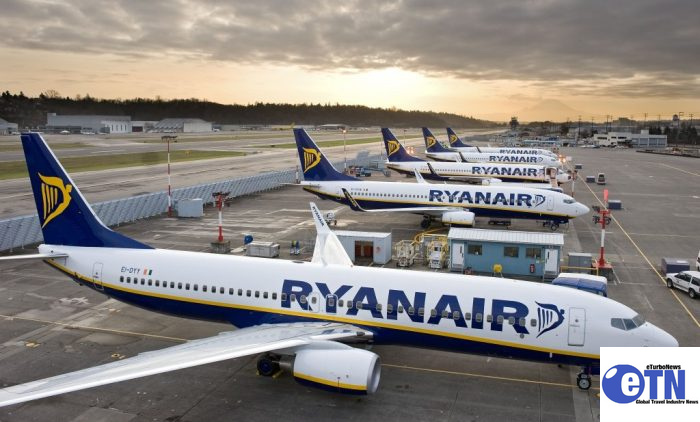
Ryanair’s decision to scale back operations at Berlin Brandenburg Airport highlights deeper structural issues in Germany’s aviation market. Rising costs, taxes and competition are reshaping connectivity, with implications for tourism, ticket prices and Berlin’s role as a major European travel hub.
Berlin- In the carefully calibrated economics of low-cost aviation, sentiment matters little; cost structures determine everything. The decision by Ryanair to close its operational base at Berlin Brandenburg Airport from late 2026 is therefore less a surprise than a symptom—one that reveals a widening structural gap between Germany and the rest of Europe’s aviation market.
A predictable withdrawal
Ryanair’s model is brutally simple: deploy aircraft where marginal costs are lowest and demand is sufficiently elastic. Berlin, once a cornerstone of the airline’s German expansion, no longer satisfies that equation. Airport charges at BER have risen sharply since the pandemic, while Germany’s aviation tax—already among Europe’s highest—has increased further. Add to this elevated air traffic control and security fees, and the arithmetic becomes unforgiving.
The result is not a full exit, but something arguably more consequential: a halving of capacity and the removal of based aircraft. In airline economics, this matters. A “base” is not just a parking location; it enables early departures, late returns, and dense route networks. Without it, connectivity becomes thinner, frequencies fall, and the airline’s competitive edge dulls.
Berlin’s connectivity paradox

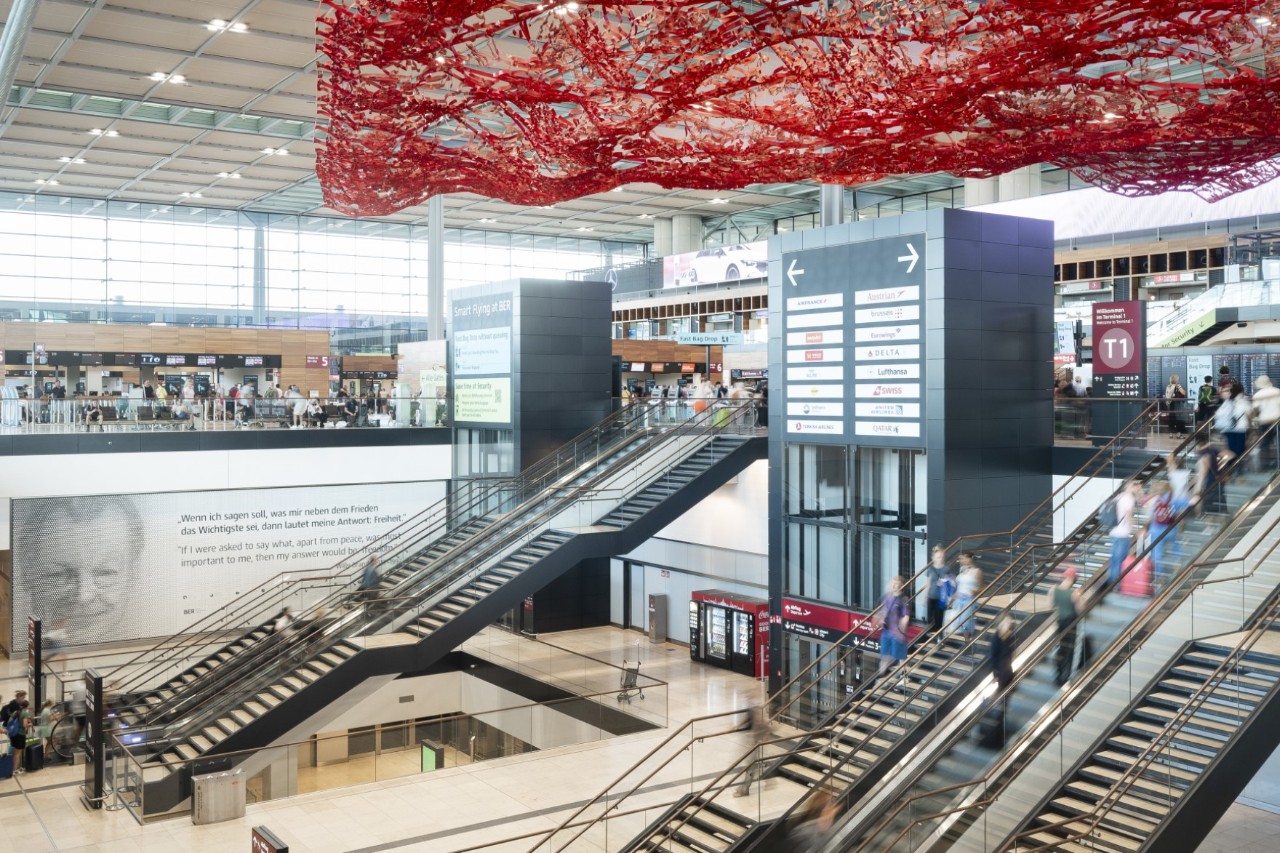
Welcome to BER
The official website of BER Airport with information on flights, traveling to/from the airport, as well as shops, restaurants and services.
Berlin is Europe’s largest capital without a dominant hub carrier. Unlike Paris or Amsterdam, it relies heavily on point-to-point traffic—much of it stimulated by low-cost airlines. That model worked well when costs were low and competition was abundant.
Ryanair’s retrenchment exposes the fragility of that system. Fewer flights will likely mean higher fares, particularly on price-sensitive leisure routes. Short-haul tourism—weekend visitors from southern and eastern Europe—may soften. Business travelers, already less price-sensitive, will shift more easily to legacy carriers, but at a higher cost base.
There is a broader irony. Berlin’s long-delayed airport was built, in part, to expand connectivity and economic integration. Yet its pricing structure risks undermining precisely that ambition.
A warning for Germany Inc.

Ryanair Launches Record Winter Schedule to Amman
Ryanair delivers over 300K seats and 18 routes to 12 EU Countries to Amman, Jordan.
Germany’s aviation sector increasingly resembles a high-cost island in a competitive continental market. While policymakers have emphasized environmental goals and fiscal discipline, airlines respond to relative—not absolute—costs. If operating from Germany is significantly more expensive than from Poland, Italy, or the Balkans, capacity will migrate accordingly.
This is already happening. Aircraft are mobile capital. Ryanair’s redeployment of planes to lower-cost jurisdictions is not a contraction but a reallocation—one that reflects Europe’s internal competition for connectivity. Secondary cities in southern and eastern Europe stand to gain routes, tourism flows, and associated economic spillovers.
Germany, by contrast, risks a slow erosion: fewer marginal routes, reduced frequency, and diminished price competition.
Strategic calculation at Ryanair
For Ryanair, the move is consistent with long-standing strategy. The airline has repeatedly demonstrated a willingness to exit—or threaten to exit—markets where charges rise beyond tolerance. Such decisions serve both economic and negotiating purposes.
By withdrawing capacity, the airline signals to airports and governments that demand stimulation depends on low fees. If costs fall, Ryanair often returns with equal speed. If not, growth simply occurs elsewhere.
In that sense, Berlin is not being abandoned; it is being deprioritized.
Who fills the gap?
Competitors such as easyJet and Eurowings may absorb some of the lost capacity, but their cost bases are higher. This implies a structural shift rather than a simple substitution: fewer ultra-cheap seats and a rebalancing towards mid-cost travel.
Over time, this could alter Berlin’s visitor mix. Budget students—students, weekend tourists, short-stay visitors—may decline at the margin, while higher-spending travelers become relatively more prominent. Whether that is desirable depends on one’s view of tourism policy, but it is unlikely to be neutral for volume-driven sectors such as hospitality.
The larger lesson
Ryanair’s Berlin decision illustrates a broader truth about Europe’s single aviation market: it is unified in regulation but fragmented in costs. Countries that maintain lower taxes and airport charges effectively subsidize connectivity, attracting airlines, passengers, and economic activity. Those that do not must rely on geography, premium demand or hub economics to compensate.
Berlin has none of these advantages in abundance.
An inflection point
The question is not whether Berlin will remain connected—it will—but at what price, and with what density. Connectivity is not binary; it exists on a spectrum defined by frequency, affordability and network breadth.
Ryanair’s retrenchment shifts Berlin down that spectrum.
For policymakers, the choice is strong. Maintain current cost structures and accept a leaner, more expensive aviation market. Or adjust fees and taxes to compete for mobile airline capacity.
Airlines, after all, do not make political statements. They follow the numbers.