


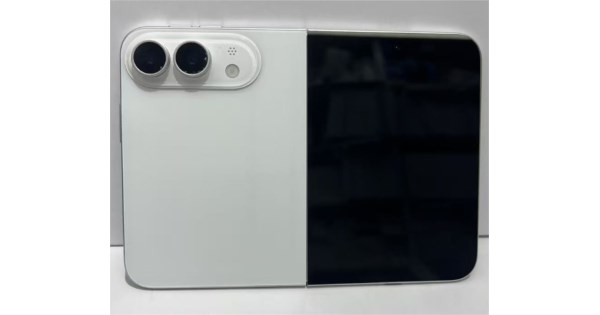


There is a component with 1,921 mAh and another with 2,962 mAh. In total this would be 4,883 mAh. This capacity is significantly higher than that of the Samsung Galaxy Z Fold 7, but lower than that of the Google Pixel 10 Pro Fold. This means that the iPhone Ultra would be almost on par with the current flagship, the iPhone 17 Pro Max, in terms of nominal energy reserves.
Battery capacities of current smartphones
| Model | Capacity (mAh) |
| iPhone 17e | 4,005 |
| iPhone 17 | 3,692 |
| iPhone Air | 3,149 |
| iPhone 17 Pro | 3,988 |
| iPhone 17 Pro Max | 4,823 |
| iPhone Ultra | 4,883* |
| Galaxy Z Fold 7 | 4,400 |
| Pixel 10 Pro Fold | 5,015 |
*: Unconfirmed rumor. All other values: Wikipedia
Capacity is only part of the equation
The pure capacity of the installed energy storage is only one factor that influences the actual running time of the device. The screen usually accounts for a large proportion of energy consumption – the bigger, the more. In everyday life, the actual endurance of a battery charge is also determined by how often the iPhone Ultra is operated using the 7.8-inch foldable display when unfolded, and when users make do with the 5.5-inch touchscreen on the front.
Trimmed for efficiency
When developing the Ultra, Apple is said to have paid particular attention to optimizing components and systems for resource-saving operation. This also fits the rumor that the in-house mobile phone chip C2 is used in some regions. The Apple C1(x) has proven to be comparatively energy efficient in tests. However, Apple is unlikely to save on computing power: the iPhone Ultra will receive the regular A20 chip.