


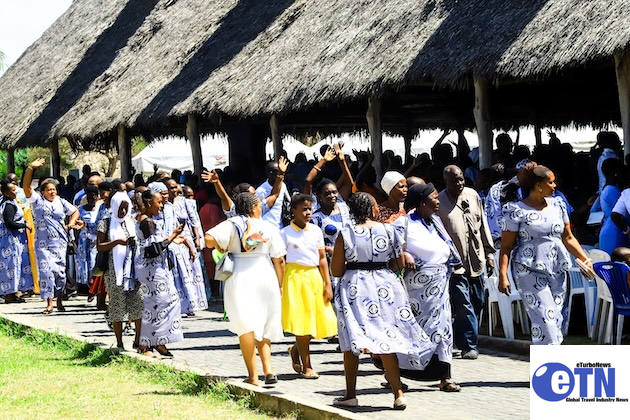
Pope Leo XIV’s recent African tour has sparked renewed interest in faith tourism across the continent. African nations are now developing Christian pilgrimage routes, heritage churches, and missionary trails to attract international and intra-African travelers seeking spiritual experiences, cultural heritage, and historical connections rooted in Christianity’s long presence in Africa.
Just a month after Pope Leo XIV concluded his historic tour of four African nations, several countries across the continent are moving to develop faith-based tourism, creating a new tourism product centered on Christian pilgrimage sites that have long remained underdeveloped.
Pope Leo XIV’s 11-day tour of Algeria, Angola, Cameroon, and Equatorial Guinea from April 13 to 23, 2026, generated positive reactions among African governments and Christian communities. The pontiff’s visit has inspired renewed interest in reviving and promoting Christian pilgrimage destinations throughout Africa.
Home to more than 300 million Catholics, Africa possesses a rich collection of Christian heritage sites, including early missionary trails, historic churches, cathedrals, and mission stations established by Catholic, Anglican, and Lutheran missionaries. Many of these locations, spread across Southern, Eastern, Central, and Northern Africa, have remained largely overlooked despite their historical and spiritual importance.
Church organizations across the continent report growing interest in Christian heritage tourism, with many sites now emerging as attractive destinations for both local and international visitors. Governments and tourism stakeholders are beginning to recognize faith tourism as a viable sector capable of boosting intra-African travel while preserving religious heritage.
During his African tour, Pope Leo XIV focused on issues such as migration, peace, environmental protection, youth empowerment, and family integration. His messages emphasize holistic human development and evangelization, themes that resonated strongly with local communities.
Documented reports from Cameroon, Angola, and Algeria indicate that the Pope’s visit encouraged thousands of Christians, especially Catholic faithful, to travel domestically and regionally to visit Christian heritage sites. Tourism officials in several African nations are now drafting strategies to integrate pilgrimage tourism into national tourism development plans.
Among the notable Catholic heritage destinations is the Statue of Our Lady of the Immaculate Conception in Angola, a major pilgrimage site visited annually by nearly two million people, including Christians, Protestants, and Muslims.
Other prominent Christian heritage sites across Africa include the Sanctuaire Basilique Notre Dame d’Afrique and Alger Cathédrale Sainte Marie in Algeria, Cathédrale Notre Dame du Rosaire in Cameroon, and St. Joseph Cathedral in Techiman, Ghana. Additional spiritual tourism destinations are located in Guinea, Malawi, Nigeria, Mali, South Africa, Tanzania, Kenya, Uganda, and Zimbabwe.
East Africa continues to stand out as one of the leading regions for Christian pilgrimage tourism. Tanzania’s Bagamoyo Roman Catholic Church, established in 1868, is widely recognized as the first Catholic mission in East Africa. Known as the “Christian Entry Gate for East and Central Africa,” Bagamoyo served as the landing point for early missionaries arriving from Europe.
Scottish missionary Dr. David Livingstone is among the most famous religious figures associated with Bagamoyo. A large cross erected along the Indian Ocean shoreline marks the place where early missionaries first set foot on mainland Africa before beginning evangelical missions across Tanzania, Uganda, Rwanda, Burundi, Zambia, Malawi, Zimbabwe, and the Democratic Republic of Congo.
In 2000, the Tanzania Episcopal Conference officially designated Bagamoyo as a Christian pilgrimage center, attracting pilgrims from around the world, particularly during Easter and major Christian celebrations. Nearby Zanzibar also draws faith tourists interested in the region’s religious history.
Another major destination is the Basilica of Our Lady of Peace in Yamoussoukro, Ivory Coast, one of the world’s largest churches and an important symbol of Christian heritage in Africa. These missions, basilicas, and cathedrals not only preserve religious history but also showcase the blend of European architectural styles and African cultural influences.


Kenya’s Mai Mahiu Catholic Church, located along the Nairobi–Naivasha highway, is another unique attraction drawing both local and international tourists. Built in 1942 by Italian prisoners of war during World War II, the tiny church seats only 12 worshipers, symbolizing Jesus Christ’s twelve disciples. Approximately 30,000 tourists, many from Italy, visit the church each year.
Uganda also remains a leading destination for faith tourism, with the Uganda Martyrs Catholic Shrine honoring the Catholic martyrs killed in the late 19th century. The shrine attracts pilgrims from across Africa and beyond, especially during annual commemorative celebrations.
Tourism analysts believe Pope Leo XIV’s visit has opened a new chapter for faith tourism in Africa. By promoting the preservation of Christian heritage and encouraging pilgrimage travel, African nations now have an opportunity to diversify their tourism offerings while strengthening cultural and spiritual connections across the continent.