


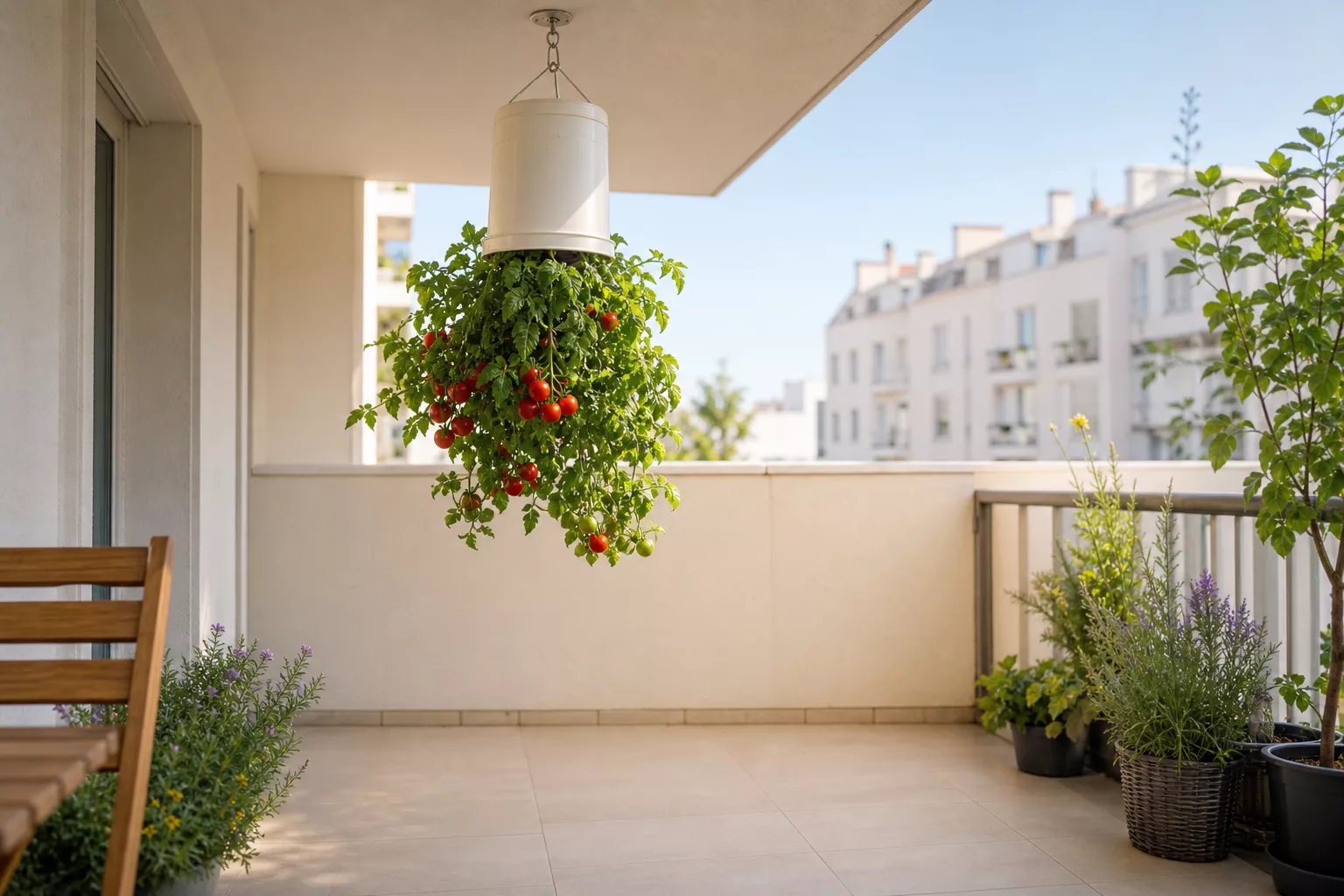
A white bucket dangles from the balcony ceiling, from which a tomato plant grows upside down – densely covered with shiny red cherry tomatoes, while the ground underneath remains clear. It is precisely this image that brings more hobby gardeners to try it themselves every spring. Growing tomatoes upside down is considered a space-saving trick for small balconies and terraces. However, in practice it rarely works as effortlessly as the photos promise. The limited soil volume dries out quickly, and not every variety can tolerate hanging cultivation. Before you hang up the first bucket, it’s worth taking a sober look at what works well – and where there are problems.
In short
- Save space, water more often – Hanging culture clears the balcony floor, but requires daily watering; A watering every few days is not enough here.
- Only compact varieties – Cocktail, cherry and bush tomatoes under one meter high can withstand upside down growth, large stake tomatoes snap off.
- Fastening decides – A fully watered 18 liter bucket weighs a good 20 kilos, and the hook and rope have to carry this permanently.
Why tomatoes upside down even make sense
The most obvious gain is space. Because the bucket or bottle hangs freely in the air, you don’t need a bed or floor pot – the area underneath remains free for a table, chair or a few herb pots. This makes a real difference on a three square meter city balcony. If you’re planning upwards anyway, you can set up a green vertical garden around the hanging tomato and use the wall at the same time.
A hanging container can also be moved around at any time. If shadows move over one side of the balcony in the afternoon, the bucket moves to the sunnier hook; If a storm is forecast, take him under the roof. No buried bed offers this mobility.
Care also becomes easier. There is no need for a trellis because the shoots hang downwards with gravity. Weeds practically have no chance in a closed bucket. And because air circulates freely around the dangling shoots, the leaves dry more quickly after a downpour – this reduces the risk of fungal diseases and pests.

You should know these disadvantages beforehand
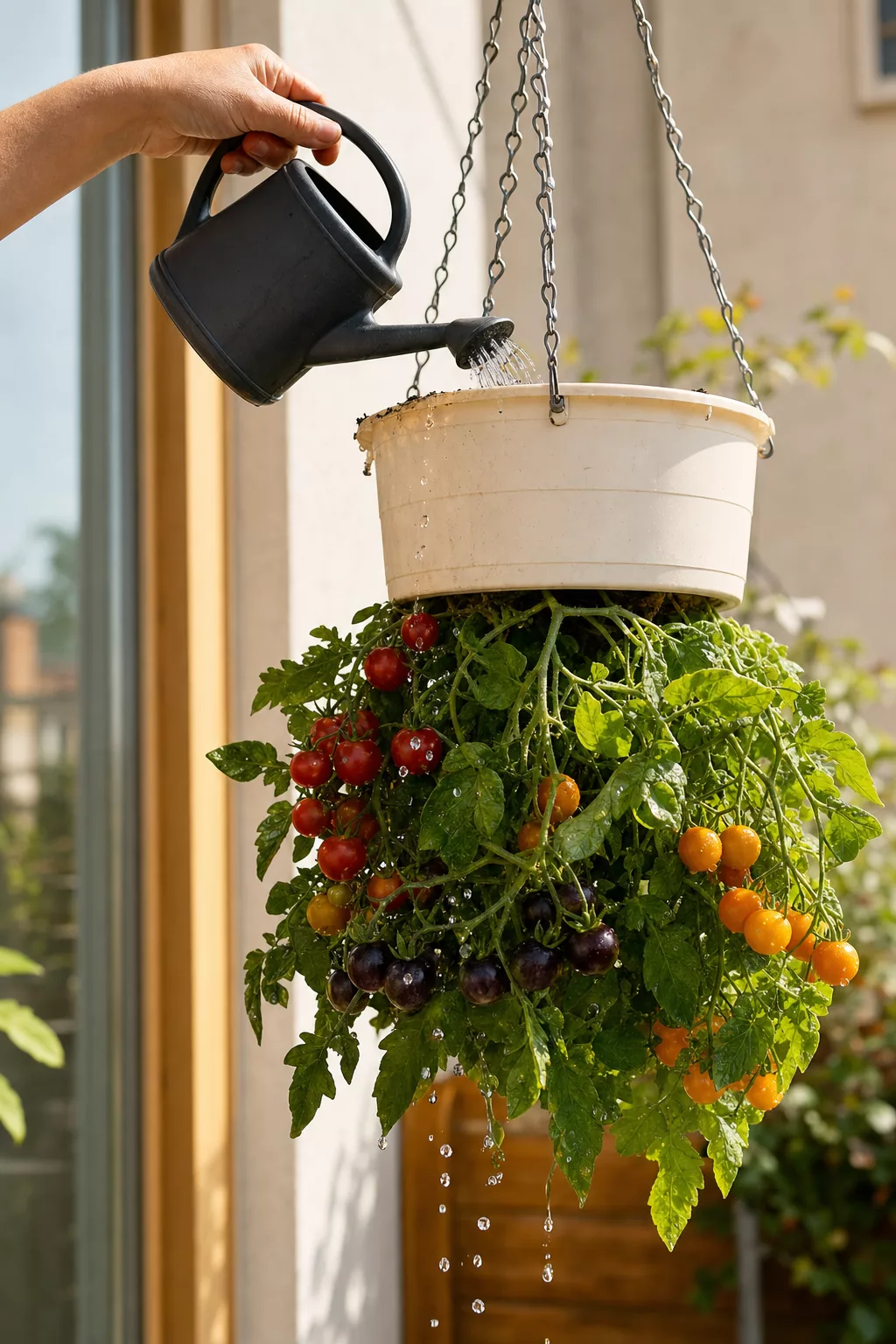
The largest hook hangs directly from the small volume of earth. A bucket full of substrate doesn’t store nearly as much water as the open ground, and on hot days it dries out quickly. In high season this means: water every day, or even twice in hot weather. Anyone who travels a lot or tends to forget to water will find hanging culture difficult.
When you water from above, the water runs through the soil and drips onto the leaves hanging below. If they stay wet for hours, this promotes the very rot that you actually want to avoid. Tried-and-tested home remedies for healthy tomatoes help combat the first signs, but it is more important to water in the morning instead of in the evening so that everything dries out over the course of the day.

Not every variety can grow upside down. Large, heavy stake tomatoes break under their own weight – only compact varieties less than one meter tall are suitable. Added to this is the weight of the container: a fully watered 18 liter bucket quickly weighs over 20 kilos. A dowel screw in the plasterboard ceiling is not enough; a stable hook in the beam or masonry is required.
Two peculiarities regularly surprise beginners. Without support, a strong gust of wind can snap the free-hanging shoots, so a place protected from the wind is mandatory. And some plants grow upwards towards the sun again after a few weeks – completely normal, phototropic behavior and not a sign of a care error.
Bucket or bottle – and which type is right
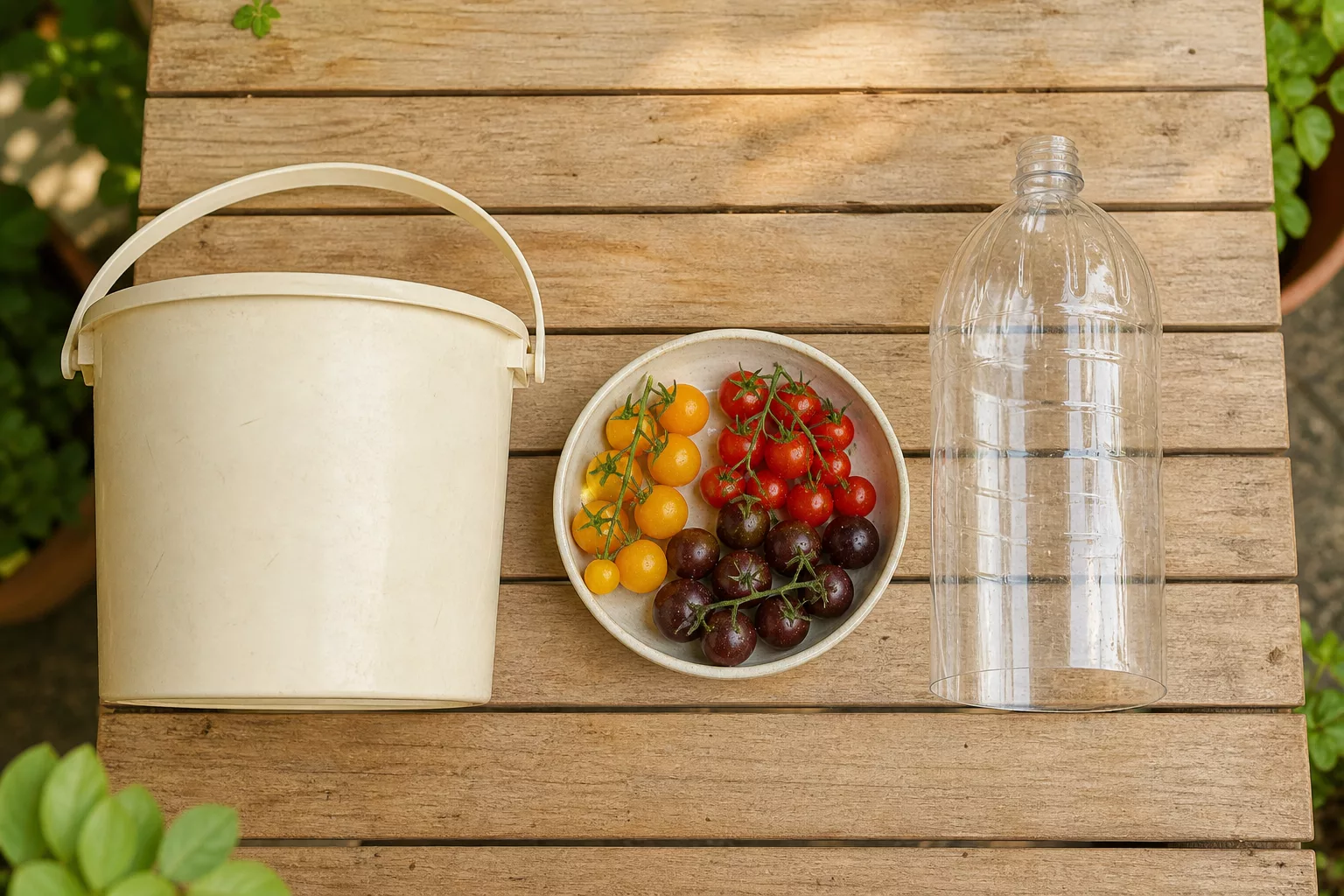
Two variants have been established for the container. The classic is a sturdy plastic bucket with a handle, in the example with a capacity of 18 liters – big enough for a strong plant and a companion plant on top. If you want to start small or don’t want to buy anything at all, turn a plastic bottle of 1.5 liters or more upside down and cut off the bottom. Both work, they just play in different leagues.
| criterion | Bucket (18L) | Bottle (from 1.5 L) |
|---|---|---|
| Earth volume | large, more forgiving if you forget to water | small, dries out even faster |
| hanging | Handle carries heavy weight safely | light, on a cord around the bottle thread |
| Place at the top | Room for marigold and mulch | just the tomato |
| optics | inconspicuous, long-lasting | visibly improvised |
| Good for | the whole season | to try out |
By the way, you don’t have to leave the free top of the bucket unused – our trick for the free top of the bucket shows you how to plant it with herbs or mulch.
These three varieties hang reliably
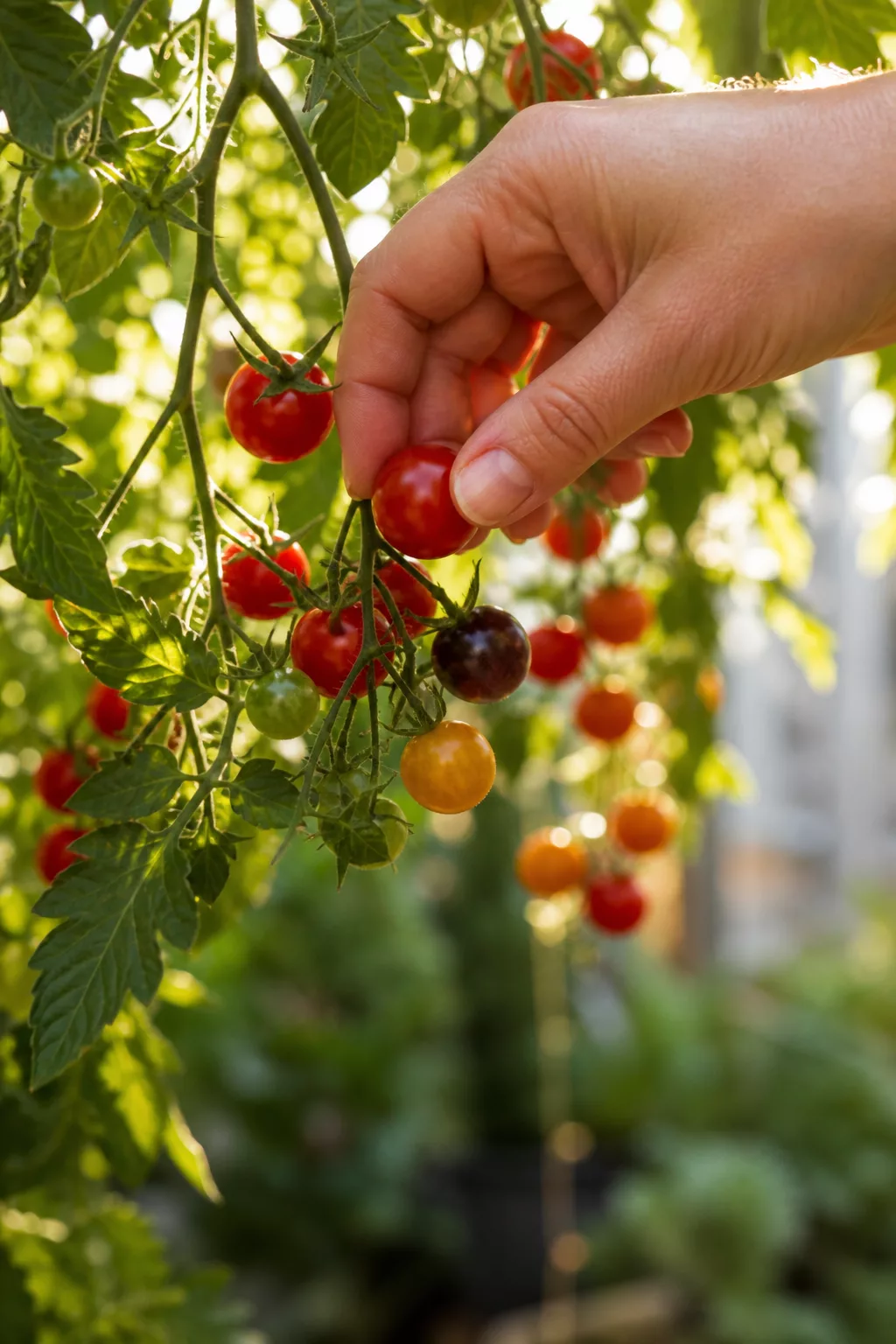
The decisive factor is the variety – and this is where a specific name pays off. Three cherry and cocktail tomatoes with different colors have proven successful: Sungold bears golden yellow, very sweet fruits, Sweet Million forms long clusters of bright red cherry tomatoes, and Indigo Cherry ripens dark purple to almost black. All three remain compact and carry a lot. The rule of thumb is: compact cocktail, cherry or bush tomatoes under one meter in height – large beefsteak and stick tomatoes do not belong on the hook.
How to plant tomatoes upside down – step by step
The setup was completed on a quiet afternoon. The only important thing is that you plan a day’s break between filling and inserting – this saves the young plant some of the stress of moving.
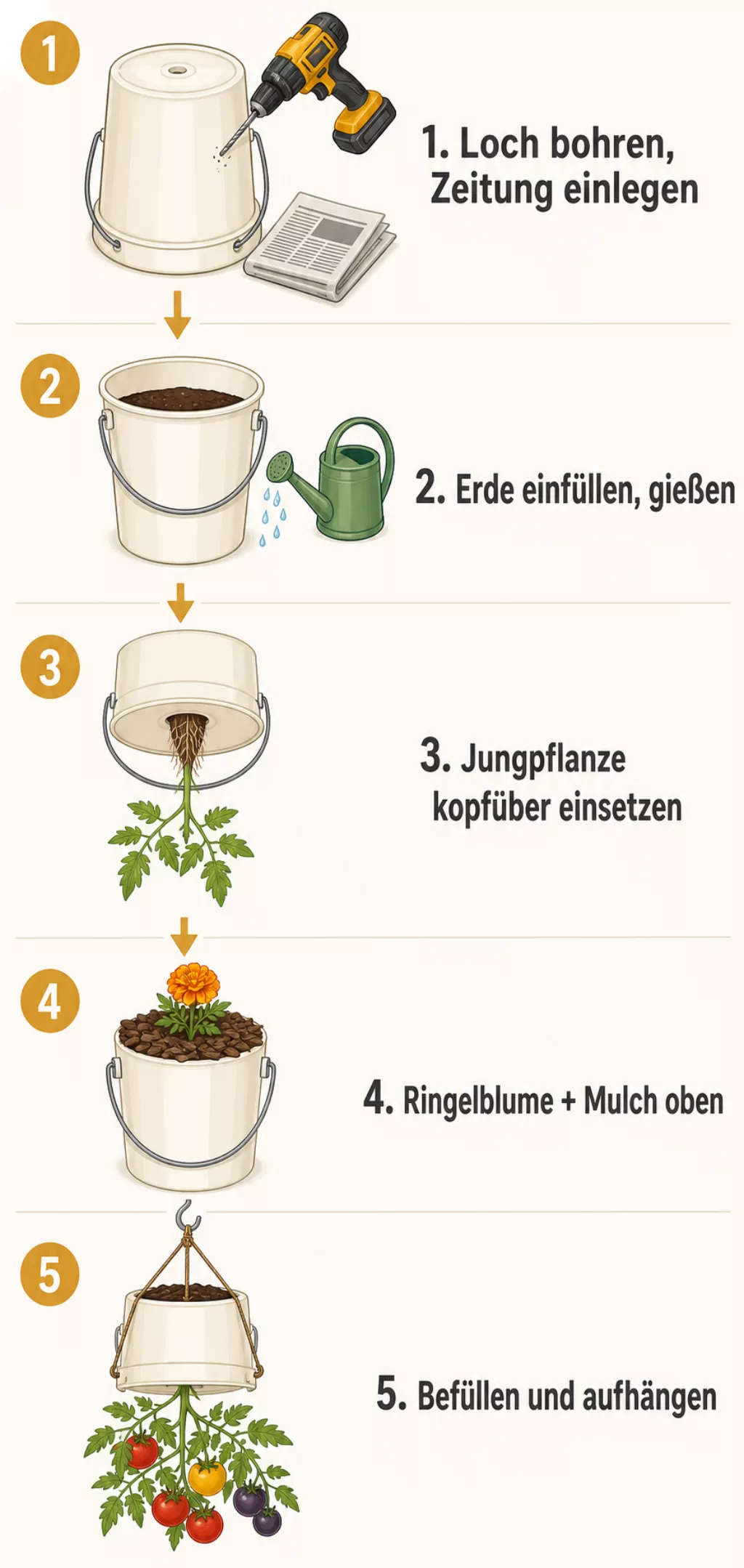
- Drill hole and lay out. Cut or drill a hole around five centimeters in size in the middle of the bottom of the bucket. Line it with some newspaper, this will initially hold the soil back without squeezing the shoot. (There is no need to drill the bottle – here you cut off the bottom and use the neck of the bottle as a hole.)
- Fill halfway and water. Half fill the container with light potting soil, preferably a soil-compost mixture, and water thoroughly.
- Insert young plant. The following day, carefully dig up the tomato, wrap the root ball loosely in newspaper and push it through the hole from the outside so that the plant hangs upside down.
- Plant at the top. Plant a few marigolds on the surface of the soil – they deter pests and weeds – and add a layer of mulch to retain moisture.
- Fill up and hang up. Fill the bucket completely with soil, hang it on a macrame hanging basket or tear-resistant cotton rope and test the suspension with full weight.

Watering, fertilizing, harvesting: the care afterwards
Once the bucket is hung up, almost everything revolves around the water. Water once a day, preferably early, until the first drops appear at the bottom of the hole – then the substrate is completely moistened. On hot summer days it can be done a second time. Liquid fertilizer is added to the irrigation water once a week because the nutrients in the small volume of soil are quickly used up.
What’s Hot

Garden and plants
Olive tree dries up after winter? This is how you can save him
Harvesting takes place as soon as the fruits are fully colored and slightly soft – in the case of cherry tomatoes, often eight to ten weeks after planting. Because the grapes hang freely, you can see ripe fruit immediately and pick them without pushing the leaves aside. However, if the flowers fail, it is rarely due to the upside down principle; Read about the most common reasons why tomatoes don’t bloom.
Professional tips for hanging culture
- There is often no need for austerity: Compact bush and cocktail varieties stay bushy on their own – unlike stick tomatoes, you hardly have to pluck any shoots.
- Test the hook beforehand: Load the suspension with around 25 kilos before the plant moves in – then it will also carry the full bucket.
- Choose slipstream: A place near the wall of the house protects the unsupported shoots from gusts.
- Don’t put anything underneath: Water drips out of the bottom hole after every watering – keep the area underneath clear.
Frequently asked questions
Does the method also work with a plastic bottle instead of a bucket?
Yes. From a volume of around 1.5 liters, one bottle is sufficient: cut off the bottom, turn the bottle over and guide the roots of the young plant through the neck of the bottle from above. However, because the volume of soil is even smaller than in the bucket, you will have to water more often – the bottle is still ideal for an initial test.
Why do some tomatoes planted upside down grow back up?
This is phototropism: shoots naturally align themselves with light. Without a trellis, some specimens bend upwards towards the sun again after a few weeks. There is no care error behind it, and you can still harvest normally – if you want to avoid this, hang the bucket in a place with even light.