


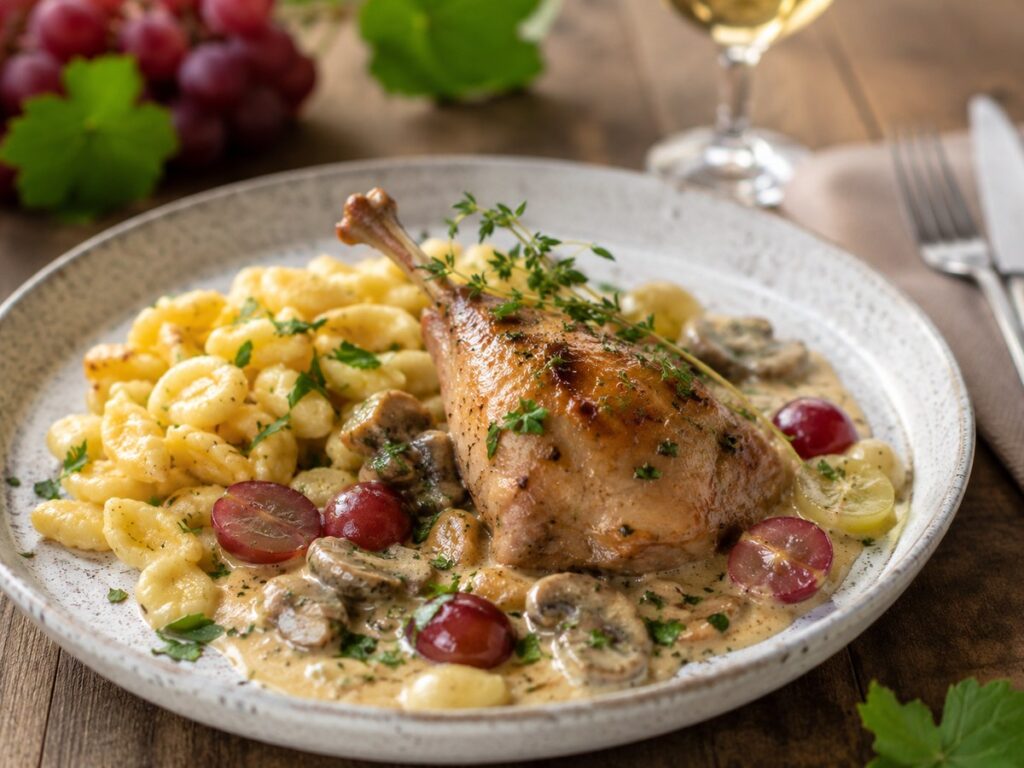


The phrase Type of winemaker means “winemaker’s style,” which usually points to ingredients associated with wine regions: wine in the sauce, grapes for sweetness and freshness, and often mushrooms, cream, or herbs to round everything out. In this recipe, dry white wine gives the sauce brightness, while grapes add a soft fruit note that complements the pheasant without overwhelming it.
This is a beautiful dish for autumn, holiday meals, wine dinners, or any occasion when you want something a little more special than roast chicken but still deeply comforting. Serve it with buttered noodles, potato dumplings, roasted potatoes, or spaetzle, and pour a crisp German white wine alongside.
What Is Pheasant in Winemaker’s Style?
Pheasant in Winemaker’s Style is a German-inspired game dish in which pheasant is cooked with wine and ingredients associated with vineyard cooking. The dish often includes white wine, grapes, onions or shallots, mushrooms, herbs, and a sauce finished with cream or butter.
Because pheasant is leaner than chicken, it benefits from gentle cooking and a moist sauce. The wine helps tenderize and flavor the bird, while the grapes bring a subtle sweetness that makes the finished dish feel festive and seasonal.
Pheasant in Winemaker’s Style
Pheasant in Winemaker’s Style, or Fasan nach Winzerart, is a refined German game bird recipe made with white wine, grapes, mushrooms, herbs, and a light cream sauce. The pheasant is browned, gently braised with wine and aromatics, then served with a silky sauce that reflects the flavors of German wine country.
Ingredients
For the Pheasant
- 2 whole pheasants, about 2 to 2 1/2 pounds each, or 4 pheasant legs and 2 breasts
- salt and freshly ground black pepper, to taste
- 2 tbsp butter
- 1 tbsp neutral oil
- 2 shallots, finely chopped
- 1 small carrot, finely chopped
- 1 small leek, white and light green parts only, cleaned and sliced
- 8 oz mushrooms, sliced
- 1 cup dry German white wine, such as Riesling, Silvaner, or Pinot Blanc
- 1 cup chicken or game stock
- 1 bay leaf
- 3 sprigs fresh thyme
- 4 Juniper berries, lightly crushed optional
- 1/2 cup heavy cream
- 1 cup seedless green or red grapes, halved
- 1 tbsp chopped fresh parsley
Optional garnish
- extra grapes
- fresh thyme
- lemon zest
- toasted almond slices
Instructions
-
Season the pheasant
Pat the pheasant dry with paper towels. Season generously with salt and pepper.If using whole pheasants, tie the legs loosely with kitchen twine so they cook evenly.
-
Brown the pheasant
Heat the butter and oil in a large Dutch oven or deep skillet over medium-high heat.Add the pheasant and brown on all sides, working in batches if needed. The goal is to build flavor, not cook the bird through at this stage.Transfer the browned pheasant to a plate.
-
Cook the vegetables
Reduce the heat to medium. Add the shallots, carrot, leek, and mushrooms to the pan.Cook for 6 to 8 minutes, stirring occasionally, until the vegetables soften and the mushrooms begin to release their moisture.
-
Add wine and stock
Pour in the white wine and scrape up any browned bits from the bottom of the pan.Add the stock, bay leaf, thyme, and juniper berries if using.Bring the liquid to a gentle simmer.
-
Braise the pheasant
Return the pheasant to the pan. Cover and cook gently over low heat until the meat is tender and cooked through.Whole pheasants usually take about 35 to 45 minutes, depending on size. Pheasant pieces may cook more quickly, especially the breasts.If using pieces, check the breasts earlier and remove them once done, allowing the legs to cook a little longer if needed.
-
Rest the pheasant
Transfer the pheasant to a warm plate and cover loosely.Remove the bay leaf, thyme stems, and juniper berries from the pan.
-
Finish the sauce
Simmer the cooking liquid for 5 to 10 minutes to reduce slightly.Stir in the cream and grapes. Cook gently for 3 to 5 minutes, just until the grapes are warmed and the sauce is lightly thickened.Taste and adjust with salt and pepper.
-
Serve
Carve the pheasant if using whole birds.Spoon the mushroom, grape, and white wine sauce over the meat. Sprinkle with fresh parsley and serve immediately.
Notes
Tips for the Best Pheasant
Do not overcook the breast meat. Pheasant breast is lean and can dry out quickly.
Use gentle heat once the wine and stock are added. A slow roast keeps the meat tender.
Add the grapes near the end. They should soften slightly but still hold their shape.
Let the pheasant rest before carving. This helps keep the meat juicy.
Taste the sauce after reducing. Wine sauces can change quickly as they concentrate, so season at the end.
What to Serve with Pheasant in Winemaker’s Style
This dish pairs beautifully with simple German sides that can catch the sauce.
Good pairings include:
- Spaetzle
- buttered egg noodles
- potato dumplings
- boiled potatoes
- roasted potatoes
- braised red cabbage
- sautéed green beans
- cucumber salad
- crusty bread
For wine, serve the same style used in the sauce. Dry Riesling, Silvaner, Pinot Blanc, or a light German Pinot Noir can all work well.
Make ahead and storage
Pheasant in Winemaker’s Style is best served soon after cooking, especially if using pheasant breast. However, you can prepare parts of the recipe ahead.
The vegetables can be chopped in advance, and the grapes can be halved a few hours before cooking.
Leftovers can be stored in an airtight container in the refrigerator for up to 3 days. Reheat gently over low heat with a splash of stock or cream to loosen the sauce.
Avoid boiling leftovers, as the cream sauce may separate and the pheasant may become dry.
Variations
With Riesling
Use Riesling for a bright, aromatic sauce with classic German wine-country character.
With Red Grapes
Use red grapes for a slightly deeper color and a sweeter fruit note.
With wild mushrooms
Replace some or all of the mushrooms with chanterelles, porcini, or oyster mushrooms for a more festive version.
Without cream
Skip the cream and finish the sauce with a small knob of butter for a lighter wine sauce.
With Chicken
If pheasant is unavailable, this recipe can be made with small chicken pieces. The flavor will be milder, but the wine, grapes, and mushrooms will still make a lovely dish.
Frequently Asked Questions
What does Winzerart mean?
Winzerart means winemaker’s style. In cooking, it usually refers to dishes prepared with wine and ingredients associated with wine regions, such as grapes, herbs, or mushrooms.
What is Pheasant according to winemaker’s style?
Pheasant nach Weinzerart means pheasant in winemaker’s style. It is a pheasant dish cooked with wine, grapes, aromatics, and often a light sauce.
Can I use chicken instead of pheasant?
Yes. Chicken can be used if pheasant is unavailable. Use bone-in chicken pieces and adjust the cooking time as needed.
What wine should I use?
Use a dry or off-dry German white wine such as Riesling, Silvaner, or Pinot Blanc. Choose a wine that tastes good enough to drink.
How do I keep pheasant from drying out?
Cook it gently, avoid overcooking the breast meat, and serve it with plenty of sauce. If using pheasant pieces, remove the breasts earlier and let the legs cook longer.
Can I make this dish ahead of time?
It is best freshly cooked, but leftovers can be reheated gently. The sauce can be loosened with a little stock or cream.
What sides go best with pheasant in wine sauce?
Spaetzle, buttered noodles, potato dumplings, roasted potatoes, and red cabbage are all excellent choices.