


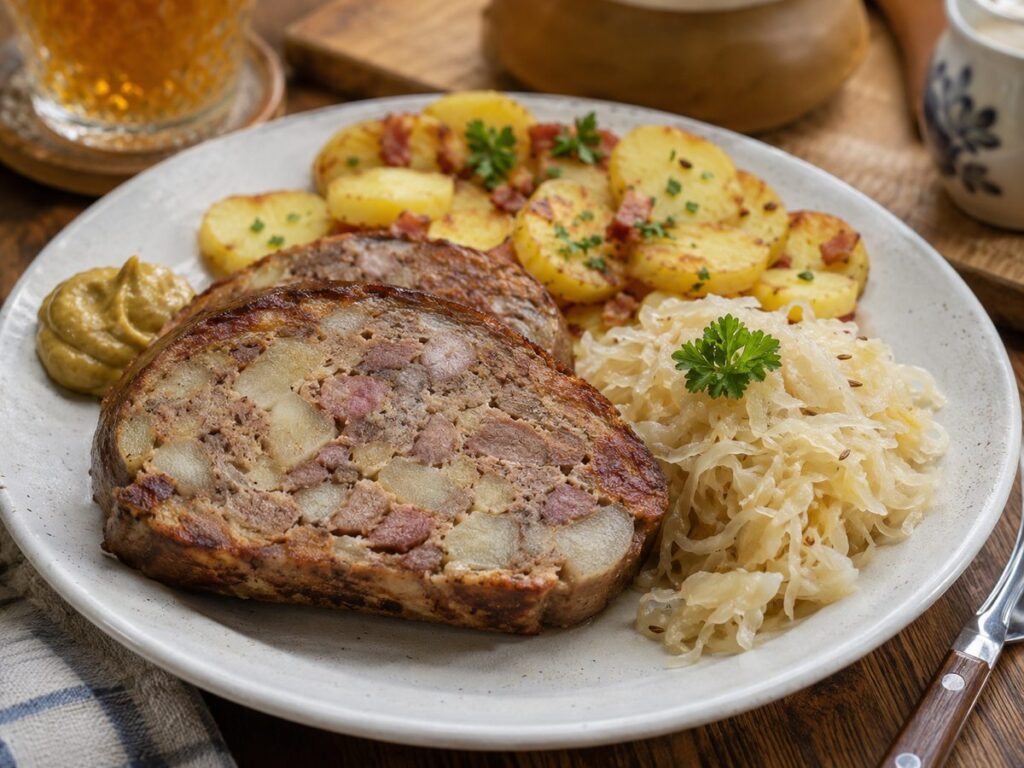


In the Palatinate, Saumagen is not just a recipe. It is a regional calling card. It is served in traditional restaurants, at festivals, and around family tables, usually in thick slices with sauerkraut, mashed potatoes, fried potatoes, or farmhouse bread. The texture is hearty and sliceable, somewhere between a rustic sausage, a potato dumpling, and a meat loaf.
This version is written for home cooks who want to understand and prepare Pfälzer Saumagen in a traditional spirit, with a practical option for using a large sausage casing or oven-safe casing if a cleaned pork stomach is not available.
Palatinate Saumagen
Pfälzer Saumagen is a traditional specialty from Germany’s Palatinate region, made with diced pork, potatoes, onions, herbs, and warm spices stuffed into a cleaned pork stomach or large sausage casing. Once gently cooked, the Saumagen is sliced and often pan-fried until golden, then served with sauerkraut, potatoes, or crusty bread.
Ingredients
- 1 cleaned pork stomach, large sausage casing, or oven-safe cooking casin
- 1 1/2 lbs pork shoulder, cut into small cubes
- 1 lb ground pork or fresh bratwurst filling
- 1 1/2 lbs waxy potatoes, peeled and cut into small cubes
- 1 medium onion, finely chopped
- 2 tbsp 2 tablespoons unsalted butter or neutral oil
- 2 tsp salt, or to taste
- 1 tsp freshly ground black pepper
- 1 tsp dried marjoram
- 1/2 tsp ground nutmeg
- 1/2 tsp ground coriander optional
- 1/4 tsp ground allspice optional
- 2 tbsp chopped fresh parsley
- 1 egg, lightly beaten
- 1/4 cup breadcrumbs as needed
- water enough to cover
- 1 bay leaf
- 1 tsp salt for cooking water
- 6 black peppercorns
Instructions
Prepare the potatoes
-
Bring a pot of salted water to a boil. Add the diced potatoes and blanch for 3 to 4 minutes, just until slightly softened but not fully cooked. Drain well and let cool.
-
The potatoes should keep their shape. If they are cooked too long, they may break down in the filling.
Mix the filling
-
In a large bowl, combine the pork shoulder, ground pork or bratwurst filling, blanched potatoes, cooked onion, salt, pepper, marjoram, nutmeg, coriander, allspice, parsley, egg, and breadcrumbs.
-
Mix gently but thoroughly. The filling should hold together but still show distinct pieces of pork and potato. If it feels too loose, add a little more breadcrumbs.
Fill the pork stomach or casing
-
Rinse the cleaned pork stomach or casing according to your butcher’s instructions. Pat dry.
-
Spoon the filling into the casing, leaving some room for expansion. Do not pack it too tightly, or the casing may burst during cooking. Tie the openings securely with kitchen twine.
Simmer gently
-
Place the filled Saumagen in a large pot. Add enough water to cover, along with the bay leaf, salt, and peppercorns.
-
Bring the water just below a simmer. Don’t boil. Cook gently for about 2 to 2 1/2 hours, depending on size, keeping the water at a gentle poaching temperature.
-
The Saumagen is done when the filling is firm and the center reaches 160°F / 71°C.
Rest and slice
-
Carefully lift the Saumagen from the pot and let it rest for 15 to 20 minutes. Slice into thick pieces.
-
At this point, it can be served as-is, but many cooks prefer the next step.
Pan-fry the slices
-
Heat a little butter or oil in a skillet. Add the slices of Saumagen and fry over medium heat until golden brown and crisp on both sides.
-
Serve hot with sauerkraut, potatoes, mustard, and bread.
Notes
Tips for the Best Sausage
Do not overfill the casing. The filling expands as it cooks, and overstuffing can cause tearing.
Keep the water below a boil. Gentle cooking helps the Saumagen hold together.
Dice the potatoes and pork evenly. This gives the finished slices a better texture and appearance.
Let the Saumagen rest before slicing. Resting helps the filling firm up.
Pan-fry leftovers. Sliced Saumagen is especially delicious the next day, fried until crisp and served with mustard.
What to Serve with Pfälzer Saumagen
Pfälzer Saumagen is traditionally served with hearty, simple sides. Sauerkraut is the classic partner, offering acidity that balances the richness of the pork and potatoes.
Good side dishes include:
- sauerkraut
- mashed potatoes
- fried potatoes
- potato salad
- rye bread
- German mustard
- braised red cabbage
- pickles
Because the Palatinate is a wine region, a dry white wine such as Riesling or Silvaner is a natural pairing.
Make ahead and storage
Pfälzer Saumagen is a good make-ahead dish. Once cooked, let it cool, then refrigerate it tightly covered.
Store cooked Saumagen in the refrigerator for up to 3 days. Slice and pan-fry portions as needed.
For longer storage, wrap slices well and freeze. Thaw overnight in the refrigerator before reheating in a skillet.
Variations
With carrots
Some versions include finely diced carrots for sweetness and color.
With veal
A more delicate version can include minced veal along with pork.
With chestnuts
In autumn, some cooks add chopped chestnuts for a seasonal variation.
Without pork stomach
If using a pork stomach is not practical, prepare the filling in a large sausage casing, oven-safe cooking casing, or loaf-style mold. The result will not be completely traditional, but it is a useful home-cooking adaptation.
Frequently Asked Questions
What does Pfälzer Saumagen mean?
Pfälzer Saumagen means Palatinate sow’s stomach. The name refers to both the region and the traditional pork stomach casing used to hold the filling.
Does Saumagen taste like organ meat?
No. The stomach is mainly used as a casing. The flavor comes mostly from pork, potatoes, onions, herbs, and spices.
Is Saumagen a sausage?
It is cooked somewhat like a large sausage, but it is usually treated as its own regional dish. The filling is coarser and more potato-rich than most sausages.
Can I make Saumagen without a pork stomach?
Yes. A large sausage casing or oven-safe cooking casing can be used as a practical substitute. You can also shape the mixture in a loaf pan, although the result will be less traditional.
How do you serve Saumagen?
Saumagen is usually sliced thickly and served with sauerkraut, potatoes, bread, and mustard. It is also excellent sliced and pan-fried.
What wine goes with Saumagen?
A dry Riesling, Silvaner, or other crisp white wine from the Palatinate works well. Beer is also a good pairing, especially with pan-fried slices.