


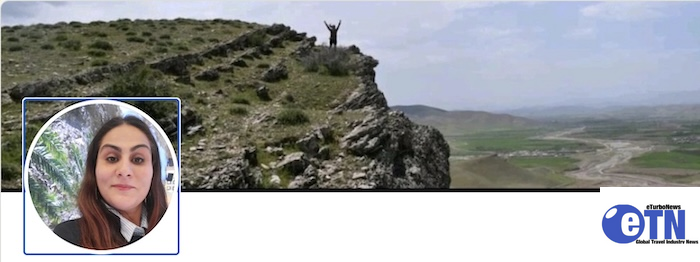
A powerful reflection by eTN Reader Azam Bahrami, PHD on the people of Iran beyond headlines of conflict. This article highlights their deep-rooted culture, resilience, and unmatched hospitality, while exploring how travel and tourism can preserve human connection, amplify unheard voices, and ensure that millions are not forgotten during times of silence and crisis.
eTN reader Azam Bahrami (Barogh), PhD was proud to have been on stage at ITB Berlin’s 60th anniversary. She said: “It was an honor to share the platform with remarkable women who are shaping the future of regenerative tourism and doing outstanding work with communities around the world.”
“I was grateful for the opportunity to highlight regenerative practices from the Middle East and to bring attention to what is happening in Iran and across the region.”
In a time when the world is saturated with images of destruction—bombed buildings, shattered schools, and lives reduced to statistics—it becomes dangerously easy to forget the people behind the headlines. Iran, a country so often framed through conflict and politics, is home to millions whose humanity, warmth, and cultural richness remain largely unseen.
When bombs fall, and communications go dark, when over 1,200 hours of near-total digital silence isolates a nation from the rest of the world, people do not disappear—but they do risk being forgotten.
And that may be the greatest tragedy of all.
Beyond the Headlines: The People of Iran


Iranians are not abstractions. They are poets and engineers, mothers and students, artists and farmers. They are people known for their emotional depth, their resilience, and above all, their extraordinary sense of hospitality.
To be a guest in Iran is to be treated not as a visitor, but as family. There is an unspoken cultural code: the guest comes first, even before oneself. Bread is shared, stories are exchanged, and time slows down in the presence of human connection.
This is not a performance for tourists—it is identity.
Even in times of hardship, this generosity persists. It is woven into everyday life, passed down through generations, and rooted in one of the world’s oldest continuous civilizations. Regardless of political views or geographic distance, Iranians carry a profound pride in their heritage.
Iran: A Civilization That Lives Through Its People


Iran is not just a place on a map—it is a living tapestry of history, culture, and landscape. From ancient cities to vast deserts, from mountain villages to coastal islands like Qeshm Island, the country tells stories that stretch back thousands of years.
But its greatest heritage is not only found in monuments or ruins. It lives in its people—in the way they speak, host, cook, celebrate, and endure.
Travelers who have experienced Iran often speak not first of its landmarks, but of its humanity.
Because to travel through Iran is not just to see—it is to feel.
When Silence Falls in Iran: The Cost of Disconnection
Today, millions of Iranians are living through a reality marked by fear, uncertainty, and isolation. Internet shutdowns have severed their connection to the world, leaving voices unheard and stories untold.

In an era defined by instant communication, this kind of silence is profound.
It means:
- Families unable to reassure loved ones abroad
- Stories unable to reach global audiences
- Individuals rendered invisible in real time
And yet, even in this silence, life continues. People continue to hope, to care, to resist forgetting who they are.
Tourism as a Bridge for Iran, Not an Escape
The travel and tourism industry holds a unique power—one often underestimated. It creates human connections where politics fails. It builds empathy where fear dominates. It reminds us that beyond borders and ideologies, people are fundamentally the same.
Tourism, at its best, is not about consumption—it is about understanding.
It allows travelers to:
- Share meals with strangers who become friends
- Witness both beauty and hardship without simplifying either
- Carry stories across borders that might otherwise remain unheard
In times like these, tourism becomes something quieter but more powerful: a keeper of memory.
Iranian Identity in Motion
To be Iranian today is to carry both pride and pain.
It is to remember a civilization that shaped the world, while navigating a present filled with uncertainty. It is to hold onto culture, language, and connection—even when cut off from the global conversation.
Travel deepens this understanding. It transforms identity from something static into something lived and felt.
As one traveler reflected after a journey through Iran, it is not just history you encounter—it is humanity in its most immediate form.
A Personal Reflection on Iran: Azam Bahrami’s Voice

At the heart of this story is Azam Bahrami, whose life and work embody the connection between people, place, and purpose.
An Iranian scholar now based in the Netherlands, Azam brings both academic expertise and personal experience to her perspective. With a PhD in Environment and Development, specializing in ecotourism and sustainable tourism from the National University of Malaysia, her work has spanned continents—from Southeast Asia to Europe and beyond.
She has collaborated with universities, NGOs, and international organizations, focusing on:
- Community based tourism
- Rural development and empowerment
- Sustainable and regenerative travel models
- Environmental conservation and cultural preservation
Her career is not just academic—it is deeply human. Years of working with local and Indigenous communities have shaped her belief that tourism must be inclusive, respectful, and rooted in the knowledge of the people it represents. And yet, beyond all credentials, Azam speaks first as an Iranian.
A woman connected to her homeland not just through memory, but through love.
The Question We Must Ask about Iran
Azam asks a simple but urgent question:
How many of us are truly aware—and how are we responding?
In a world that moves quickly from one crisis to the next, attention is fleeting. But people do not stop existing when the spotlight fades.
The responsibility, especially for those in travel and tourism, is not just to promote destinations—but to honor the people who define them.
Holding Both Hope and Reality for Iran


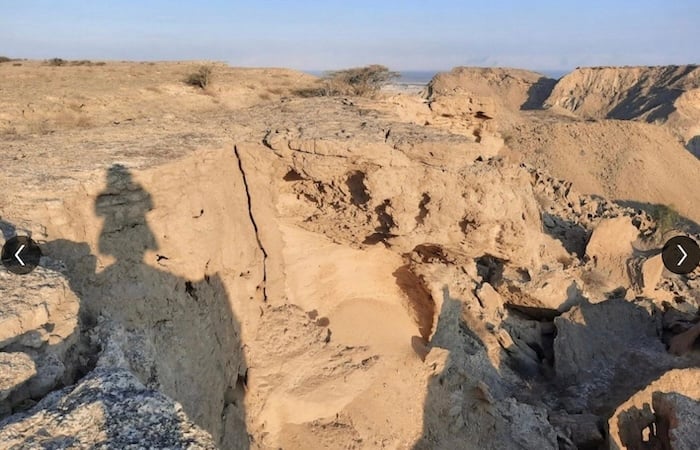
There are moments—standing alone in the mountains of Qeshm, watching the sun dip below ancient landscapes—when everything feels still. When connection to the earth, to oneself, and to something larger becomes undeniable.
These are the moments that remind us why we travel.
Not to escape reality, but to understand it more deeply.
To see both beauty and struggle.
To hold both grief and hope.
To remember what truly matters.
A Final Thought on Iran
Iran is not just a place experiencing a crisis. It is a place filled with people—resilient, proud, and deeply human.
They are not numbers.
They are not headlines.
They are stories waiting to be heard.