


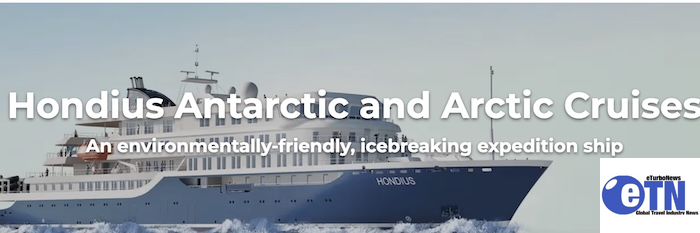
A deadly hantavirus outbreak aboard the luxury expedition cruise ship MV Hondius has triggered international panic, emergency evacuations and renewed fears about disease at sea. Passengers documented isolation, uncertainty and fear in real time, exposing how fragile public trust in cruises, tourism and global health systems remains after COVID.
Passengers whispered through cabin doors. Governments scrambled behind the scenes. And somewhere in the middle of the Atlantic, a luxury expedition cruise became the center of the world’s newest tourism panic.
By the time the MV Hondius appeared off the coast of Tenerife, passengers had already watched three people die.
Currently, the ship has arrived in Tenerife, where the 147 passengers will disembark, under the oversight of a joint multinational task force. The ship will anchor at the Port of Granadilla in the Canary Islands.
For days, the Dutch-flagged expedition cruise ship drifted through the Atlantic under mounting international alarm. Some travelers isolate themselves behind sealed cabin doors. Others wrapped scarves around their faces while waiting for temperature checks in silent hallways. Rumors spread faster than official briefings.
Was the virus airborne? Had people been infected before boarding—or onboard? Would any country even allow them to dock?
On social media, frightened passengers documented the crisis in real time. One Instagram video showed empty corridors and masked crew members delivering meals outside cabin doors. Another captured passenger stared silently through fogged observation-deck windows at the ocean surrounding them.
“This is happening to us right now,” one passenger wrote in a viral Instagram reel.


Yahoo News on Instagram: ““We’re not just headlines. “We’re people.” A passenger aboard the MV Hondius cruise ship is speaking out as a suspected hantavirus outbreak is linked to three deaths onboard and multiple active cases. The cruise ship is anchored off the coast of Cape Verde in the Atlantic Ocean, awaiting help, with no one currently allowed to disembark, according to the Associated Press. The rare virus is typically spread through contact with infected rodent droppings and initially causes flu-like symptoms, which may develop into severe respiratory illness. “While rare, hantavirus may spread between people,” the World Health Organization said. In a video shared from the ship, one passenger pleaded for kindness, saying, “All we want right now is to feel safe.”
A passenger aboard the MV Hondius cruise ship is speaking out as a suspected hantavirus outbreak is linked to three deaths onboard and multiple active cases. The cruise ship is anchored off the coast of Cape Verde in the Atlantic Ocean, awaiting help, with no one currently allowed to disembark, according to the Associated Press.
The rare virus is typically spread through contact with infected rodent droppings and initially causes flu-like symptoms, which may develop into severe respiratory illness. “While rare, hantavirus may spread between people,” the World Health Organization said.
In a video shared from the ship, one passenger pleaded for kindness, saying, “All we want right now is to feel safe.””.
By then, governments across Europe and North America were already preparing emergency repatriation plans. Spain organized controlled disembarkation corridors. Britain arranged hospital isolation procedures. The United States prepared quarantine protocols for returning passengers. Health officials across multiple countries began tracing hundreds of international contacts.
The outbreak aboard the Hondius has become one of the most destabilizing health incidents to hit global tourism since the coronavirus pandemic—not because of the number of infections, but because of what it exposed about modern travel, fragile public trust and the lingering psychological scars of pandemic-era cruising.

:format(webp)/8fa678c6-b67e-42fb-9c19-70ccc13f1a35-hondius-oceanwide-expeditions.jpg_oceanwide-expeditions.jpeg "Death at Sea: Inside the Hantavirus Outbreak That Shook the Cruise World 3 Travel & Tourism News – Global, Trusted, Independent")
Hondius Antarctica and Arctic Cruises | Polar tours
All dates, prices and tour information for the Hondius Antarctica cruises and Hondius Arctic cruises. Click here to find a detailed description, photos, deck plans, to learn more about its crew, and to find all departure dates, prices and discounts!
At the center of the crisis is hantavirus, a rare and potentially deadly disease usually spread by rodents. Most strains do not transmit between humans. But investigators say the outbreak likely involves the Andes strain—the only known hantavirus capable of limited human-to-human transmission.
That possibility transformed a medical emergency into a global tourism crisis.
And it forced the cruise industry into an uncomfortable reality: six years after COVID permanently altered travel, public confidence in cruise ships remains profoundly fragile.
The MV Hondius was designed for exactly the kind of travel modern luxury tourism increasingly markets remote, exclusive and immersive.
The ship departed from Ushuaia, Argentina—the southernmost city in the world—on a polar expedition itinerary through Antarctica and the South Atlantic. Passengers paid tens of thousands of dollars for wildlife encounters, glacier excursions, and rare access to some of the planet’s most isolated regions.
But somewhere during the voyage, passengers started falling ill.
At first, symptoms resembling flu:
- fever,
- headaches,
- muscle pain,
- exhaustion.
Then came breathing difficulties.
Three people—a Dutch couple and a German passenger—died. Several others became critically ill. By the time international health authorities understood they were likely dealing with hantavirus, the ship had already become an international emergency.
Cape Verde restricted normal docking procedures. Emergency evacuations were carried out offshore. Passengers described a growing atmosphere of dread as the vessel sailed towards the Canary Islands under international monitoring.
Reuters later reported that passengers onboard fluctuated between “fear and boredom” during long stretches of cabin isolation. Meals were delivered directly to rooms. Daily routines revolved around temperature checks and medical monitoring. Some passengers watched movies continuously to distract themselves; other obsessively refreshed outbreak updates online. One passenger reportedly described the ship as:
“A waiting room floating in the middle of the Atlantic.”
As official information remained limited, passengers increasingly turned to social media.
American travel influencer Jake Rosmarin posted emotional Instagram videos from onboard that quickly spread internationally. Fighting back tears in one clip, he described the uncertainty consuming passengers onboard.
“There’s a lot of uncertainty, and that’s the hardest part,” he said. “All we want right now is to feel safe, to have clarity, and to get home.”

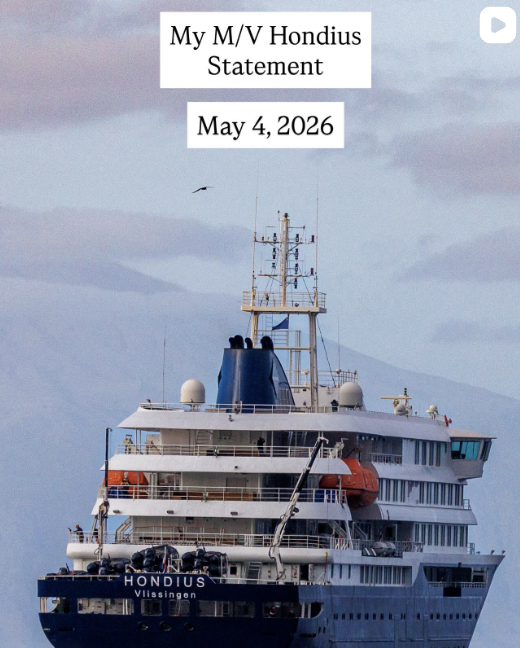
In another widely shared message, Rosmarin pleaded with viewers to remember the human dimension of the crisis: “We’re not just headlines. We’re people.”
Passengers posted:
- quiet hallway footage,
- masked crew delivering food,
- sunset videos accompanied by anxious captions,
- whispered cabin updates,
- empty dining areas,
- ocean views that increasingly resembled isolation rather than adventure.
The contrast was unsettling: luxury polar tourism transformed almost overnight into something resembling a floating quarantine zone.
For many viewers online, the images triggered immediate memories of the COVID-era Diamond Princess outbreak. Reddit cruise forums are filled with comments comparing the Hondius situation in the early days of the pandemic.
Hantaviruses are a family of viruses carried primarily by rodents.
Humans are usually infected after inhaling airborne particles contaminated with rodent urine, saliva or droppings. In the Americas, hantavirus can cause Hantavirus Pulmonary Syndrome (HPS), a severe respiratory illness with a high mortality rate.
Early symptoms can appear deceptively ordinary:
- fever,
- fatigue,
- headaches,
- muscle aches.
But the disease can escalate rapidly into lung failure and shock.