


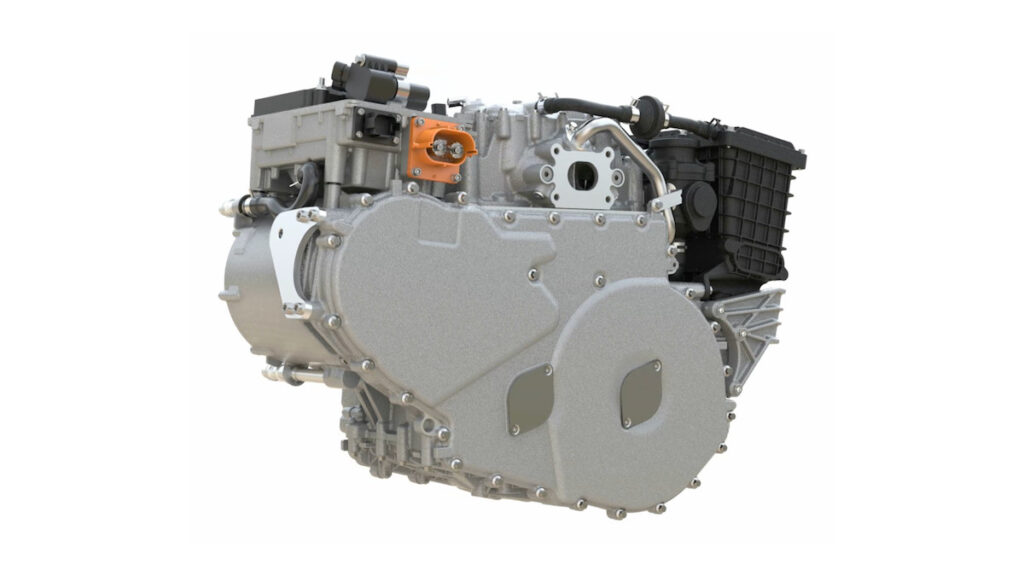
Refuel like a combustion engine, drive like an electric car: methanol fuel cells promise the best of both worlds. The technology converts liquid fuel directly into electricity and could solve two of the biggest weaknesses of electric mobility – limited range and lack of charging infrastructure. But why doesn’t a production vehicle still run on methanol? An overview of how it works, the benefits and the hurdles that still stand in the way.
The transport sector causes a significant proportion of CO2 emissions worldwide and therefore plays a central role in the fight against climate change. More sustainable alternatives to the classic combustion engine have therefore become increasingly important in the automotive industry in recent years.
In the past, electromobility has increasingly established itself as a central technology and is steadily gaining in importance. But other types of drive, such as a methanol drive, can also enable emission-free road traffic.
In the car: How a methanol fuel cell converts fuel into electricity
A methanol drive can be used as an alternative drive technology for vehicles. As the name suggests, methanol is used as an energy source.
This can then be used either through direct combustion in the engine or to generate electricity in a fuel cell. In the combustion engine, methanol functions similarly to gasoline and releases energy through combustion. Although the substance burns cleaner, it can deliver less energy per liter.
In the fuel cell, the methanol is not burned, but is converted into electrical energy in a controlled electrochemical reaction. To do this, methanol and water are passed to a special membrane that separates two electrodes from each other.
The methanol is broken down at the anode, producing protons, electrons and, as a byproduct, carbon dioxide. Since the electrons cannot pass through the membrane directly, they are conducted via an external circuit. It is precisely this flow of electrons that forms the electric current that later drives the electric motor.
At the same time, the protons migrate through the membrane to the other side, i.e. to the cathode, where they combine with oxygen from the air and the returned electrons. Water is created as another byproduct.
What are the advantages of methanol as a fuel?
Vehicles with methanol fuel cells offer interesting advantages, especially compared to classic battery vehicles and combustion engines. A central point here is the liquid energy source methanol. Methanol can be filled up and transported in the vehicle in a similar way to gasoline.
This opens up the possibility of making comparatively easy use of an existing infrastructure that could be based on the current gas station network. In comparison to electromobility, no comprehensive expansion of charging infrastructure would be necessary.
Due to the higher energy density of methanol, these fuel cells can also achieve higher efficiency. This enables a greater range and eliminates the need for long charging times because the energy source can be easily refilled.
The methanol fuel cell also scores points when it comes to environmental friendliness. Because only small amounts of carbon dioxide and water are emitted during operation. Methanol can also be produced from renewable energies such as biomass.
The lighter design compared to battery-electric drive means the vehicle weight can also be reduced, which can have a positive effect on efficiency and range. In addition, methanol fuel cell systems generally require less heavy storage materials than large battery packs, which also allows the vehicles to be designed more flexibly.
The Association of the Automotive Industry VDA responded to a query from the BR political magazine Kontrovers: “Germany can only achieve the EU’s 2030 climate target with a high proportion of electric cars. All other options are “not available in ‘large-scale production’ until then.”
Ronald Humbert, engineer and former Audi manager, is meanwhile convinced of the technology: “We can install this concept in any car, a Polo with 50 hp or a long-haul truck with 40 tons. We are vastly superior to normal battery-powered cars.”
Risks: Why no production vehicle runs on methanol yet
Despite the promising-sounding benefits, the technology is not without its challenges. In practice, methanol fuel cells still have several limits.
These concern, for example, the question of how climate-friendly the fuel can actually be produced and provided. Despite the numerous production options for methanol, its availability is still limited in reality.
In order for the technology to become established, production capacities would first have to be increased. The manufacturing processes would also have to be changed so that they can be climate-neutral.
Due to the technology’s lack of market maturity and the lack of standard products, the production of methanol fuel cells is currently still very cost-intensive. Since development is still in an early phase, there are high production costs, which could only be reduced through technological advances and larger quantities.
Also interesting: