


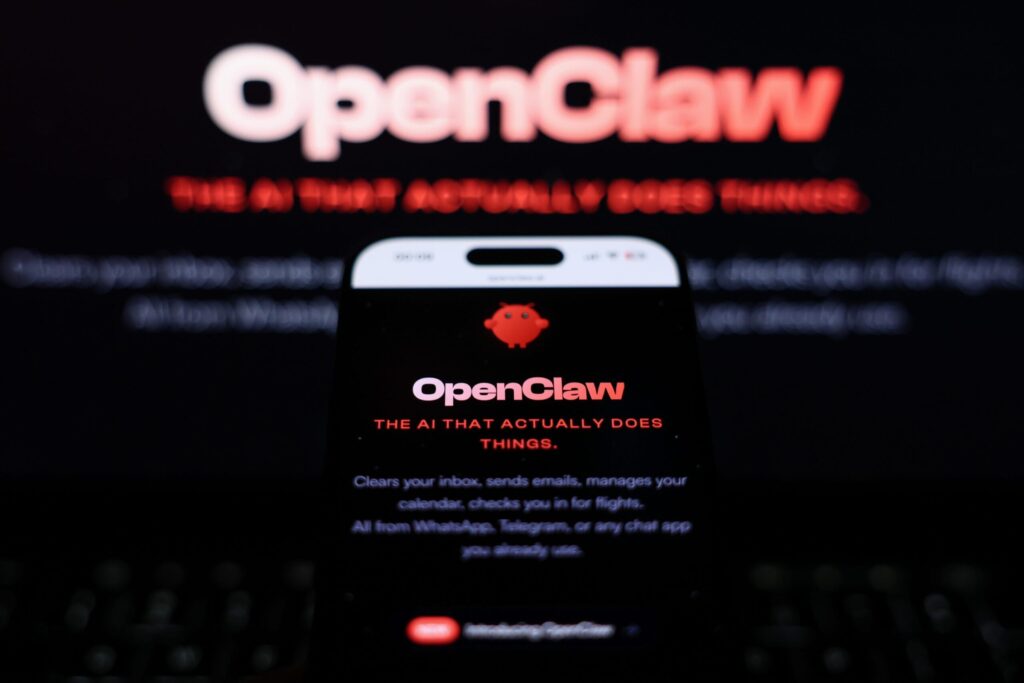
Austrian developer Peter Steinberger, mastermind behind the hyped open source assistant OpenClaw, is joining OpenAI. What makes OpenClaw so special – and why it is as ingenious as it is risky.


Is OpenAI catching up in the race for AI dominance? After Sam Altman’s company recently lost market share to competitors like Anthropic, it now has a big bang: it was able to secure the services of Peter Steinberger, the Austrian brain behind the AI hype OpenClaw.
Sam Altman himself wrote on Steinberger is therefore set to become part of the OpenAI Codex team and represents the hot race between the AI giants for smart assistants in everyday life.
OpenClaw will remain as an independent open source project through a foundation, supported by OpenAI. Steinberger, who wants to make AI agents accessible to everyone, writes in a blog post on his own behalf: “It was always important to me that OpenClaw remained open source and had the freedom to evolve. Ultimately, I felt that OpenAI was the best place to advance my vision and expand its reach.” He believes that OpenClaw could become a “huge company” – but he has no desire to lead one. Not again. Because it should be said: Steinberger has had successful start-up years: in 2011 he co-founded PSPDFKit and sold the startup ten years later for a three-digit million sum.
What is OpenClaw and how does it work?
But what exactly is OpenClaw? It is an AI assistant that is installed directly on the computer and executes commands via WhatsApp, Telegram or Slack. It remembers preferences and routines through active learning and remembering and controls the browser for the independent processing of forms or bookings. Its basis is local files and scripts.
This means the agent can handle everyday and tech tasks independently: he sorts emails according to priority, manages calendars, books flights – or writes code. That’s why it’s being hotly debated, especially in the dev community.
Big advantages – but also risks
With its capabilities, OpenClaw can save time and nerves. This goes beyond government emails and appointment management: developers say it has solved complex problems that had plagued teams for weeks. Existing Python models have been converted with 40x speedup. So exciting for founders who want to scale quickly. And with over 150,000 GitHub stars, it’s a real community favorite – for hobby programmers and enterprise experts alike.
But the program and its strength also present risks. With full system access, Internet communication and total freedom of action, it can delete files, load malicious code or even contact dozens of people unintentionally. According to Handelsblatt, among other things, a user reported that the agent had sent hundreds of uncontrolled messages via iMessage. This is precisely why security experts warn that the “deadly trinity” of private data, external communication and unprotected content poses a great danger.
Opinion: OpenClaw Night at Antler
But how is the tool received in the German coding community? Gründerszene got its own picture here and was at the Berlin VC Antler’s OpenClaw Night. The development community met here to create their own skills for the celebrated open source assistant. The general mood was mixed.
The tool is ideal for private users: great out of the box for annoying everyday things like correspondence with authorities – a real game changer. For professional coding sessions, however, the mood was more cautious: Some people would rather write backend code themselves and see little use in the tool and even find the strong automation spooky. Others find it very helpful for routine coding tasks and to compensate for missing skills. However, everyone still has security concerns; after all, you give the tool access to your entire computer, including company data.


Competition beware!
What does this move mean for OpenAI’s rivals? The Steinberger change is a real exclamation mark – especially since, according to Handelsblatt, Meta also spoke to the Austrian. Nevertheless, he decided on Sam Altman’s offer, where he will now ensure clear dominance in the Codex team, which is responsible for coding models.