


An international research group has published a comprehensive analysis of the expansion of the cosmos in the journal Astronomy & Astrophysics. Led by the H0DN collaboration, the value of the Hubble constant was redetermined with an accuracy of around one percent.
Precision measurement confirms Hubble voltage
The result is 73.50 kilometers per second per megaparsec, confirming previous local measurements. This value is in direct contradiction to calculations based on the background radiation of the early universe.
Scientists refer to this glaring difference as the Hubble voltage, which has now reached a statistical significance level of 7.1 sigma. This means that the likelihood of it being a mere coincidence is practically ruled out.
A network instead of a simple ladder
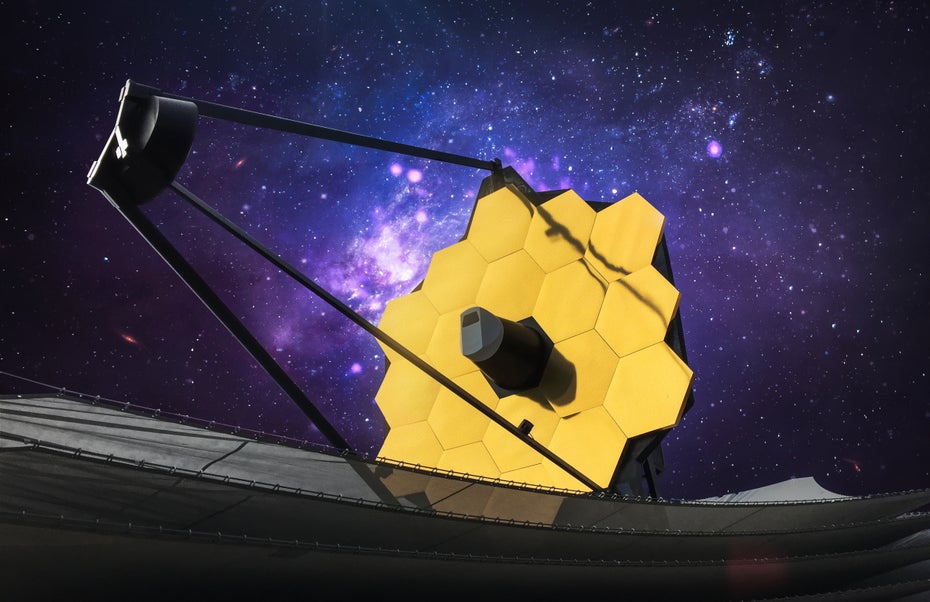
The H0DN collaboration used a so-called distance network for its work, which links different measurement methods like a safety net. Data from the James Webb Space Telescope (JWST) of the US space agency Nasa and the European GAIA satellite were used.
By combining Cepheids, red giants and Type Ia supernovae, systematic errors in individual indicators could be largely eliminated. The researchers led by astronomer Stefano Casertano from the JWST operator Space Telescope Science Institute in Baltimore, USA, found that the result remains stable even if individual methods are omitted.
The Limits of the Standard Model
This stability of data suggests that the current Standard Model of cosmology may be incomplete. It seems as if fundamental physical processes in the early universe or the nature of dark energy are not yet correctly understood.
Nobel Prize winner Adam Riess from Johns Hopkins University in Baltimore, USA, emphasizes that this discrepancy could indicate a “new physics” beyond our previous ideas. However, it remains unclear whether these theoretical adjustments complement or fundamentally disrupt the existing order of the universe.
Critical classification of the results
Despite the impressive precision, relying on complex network analyzes also poses risks due to hidden dependencies in the data. Critics point out that the calibration of the various rungs of this cosmic ladder still relies on a few anchor points such as the galaxy NGC 4258.
Editorial recommendations
${content}
${custom_ad-badge}
${custom_tr-badge}
${section}
${title}

Revision of cosmic history
Nevertheless, as ScienceDaily reports, the study provides the strongest argument yet against a simple calibration error. Previous observations from the James Webb Telescope have already suggested that the local expansion of space is occurring faster than the Big Bang theory suggests.
The scientific community is therefore faced with the challenge of revising either the measurement methods or the foundation of theoretical physics. It remains to be seen which new approaches from theoretical physics can resolve this contradiction.

Top article
${content}
${custom_ad-badge}
${custom_tr-badge}
${section}
${title}