
TikTok parent company ByteDance has presented a new AI model that generates hyper-realistic videos using text input. But while Seedance 2.0 is going viral in China, Hollywood is already sounding the alarm and talking about a virtual heist. Because: AI knows no limits when it comes to copyright. A commentary analysis.
What is Seedance 2.0?
- Seedance 2.0 is a generative AI model from ByteDance that allows users to create realistic videos. The browser app processes Instructions via text, video, audio or image input. Short clips with a length of up to 15 seconds can currently be created. Seedance 2.0 can be used via the international ByteDance platform Dreamina-Capcut. There are already numerous unofficial websites circulating under the name Seedance to lure users into misleading subscriptions.
- The new ByteDance AI can generally be used free of charge. After registering, users receive a certain credit quota, which is renewed after 24 hours. If you want to create more videos, you have to take out a subscription. However, caution is advised when spreading itbecause Seedance 2.0 doesn’t seem to know any copyright. While numerous clips flood the digital media feeds in China, massive resistance is already forming in Western countries.
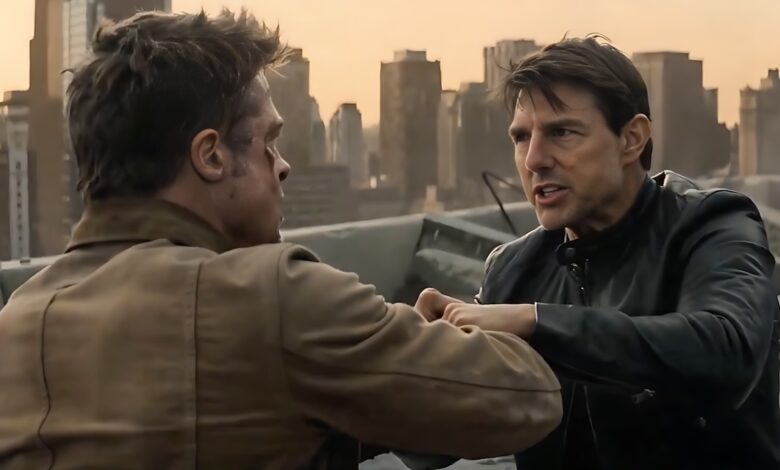
- With Seedance 2.0, users can specifically control parameters such as shadows, lighting and even camera movements. A video apparently created with ByteDance AI and the actors Brad Pitt and Tom Cruise in a fightattracted a lot of attention. On the one hand, because it probably represents a copyright infringement. On the other hand, because the dialogue is also shocking. “You killed Jeffrey Epstein, you animal! He was a good person!” said Fake-Pitt. The fake Cruise then replies: “He knew too much…”
Seedance 2.0 has no copyright
With Seedance 2.0, China is once again leaving the global AI competition flexing his muscles. The current hype is similar to that surrounding the AI chatbot DeepSeek, which was supposed to compete with ChatGPT. What both AI models have in common: Beijing does not control Chinese companies at every turn, but it does set the general rules of the game.
True to that populism strategy “Flood the zone with shit”, China and ByteDance are primarily concerned with clicks and attention. In contrast to DeepSeek, which also made big promises but was unable to keep them, this time the tactic was exposed more quickly.
Seedance 2.0 was released shortly after its release received massive criticism – especially from Hollywood. A comparison with the video AI Sora 2.0 from OpenAI, which has also been in the copyright spotlight for a while, reveals similar functionality, but with completely different rules.
Because while OpenAI is now acting more cautiously, Seedance plows through Western copyright law. While Hollywood protests, China simply continues programming. Especially in the video sector, AI can hardly be stopped, but it can be designed responsibly.
Voices
- A ByteDance spokesperson told CNBC: “ByteDance respects intellectual property rights and we have noted the concerns regarding Seedance 2.0. We are taking measures to strengthen current security measures and are working to prevent unauthorized use of intellectual property and images by users.”
- Charles Rivkin, Chairman of the Motion Picture Association (MPA)which includes Netflix, Universal and Disney, said in a statement: “In a single day, Seedance 2.0 made large-scale unauthorized use of copyrighted works from the United States. By launching a service that operates without effective protections against infringement, ByteDance is disregarding the established copyright law that protects rights and secures millions of jobs in the United States. ByteDance should immediately cease its illegal activities.”
- Journalist and lawyer Jonathan Handel told Al Jazeera: “Until the courts make a landmark decision, AI-generated videos will have a significant impact on the film industry. Digital technology is evolving very quickly and in a few years we will already be seeing feature-length films generated using AI.” However, he sees “copyrights, trademark rights and all of these rights affected”.
Creativity and emotions are the responsibility of people
AI chatbots such as ChatGPT and Co. have already received particular attention in the media Reputation as a job killer attached. The reality: Although artificial intelligence will fundamentally change many professions, it will only bring a few jobs around the corner. Because exaggerated hype has always been followed by disillusionment – at least to a certain extent.
The film industry is likely to suffer a similar fate. AI models are currently delivering impressive results, but fortunately copyright is still a valuable asset. But Hollywood and Co. will can’t get past AI. Specifically, this means that many productions may become more affordable and repetitive, but not soulless.
Because AI tools will only be able to take on routine tasks in the film industry, while real ones Creativity and emotions are the responsibility of actors, directors and cameramen remains. Thanks to Western copyright law. But: Anyone who fundamentally rejects AI could fall behind.
If used correctly and in a legally sensible manner, artificial intelligence can also be efficient in the film industry and even that enhance the formulated experience. Keyword: CGI. But while streaming giants see AI as a tool, studios and actors see it as a threat – and not without good reason. However, ByteDance is surfing this disagreement and China’s loose regulatory wave. Possibly also to sow discord.
Also interesting:

🤝 25 euros for free!
Open yours now free NIBC daily money and receive up to 2.75 percent interest on your money! And on top of that there is even more 25 euros free!
Secure interest now
Requirements apply, advertisement