


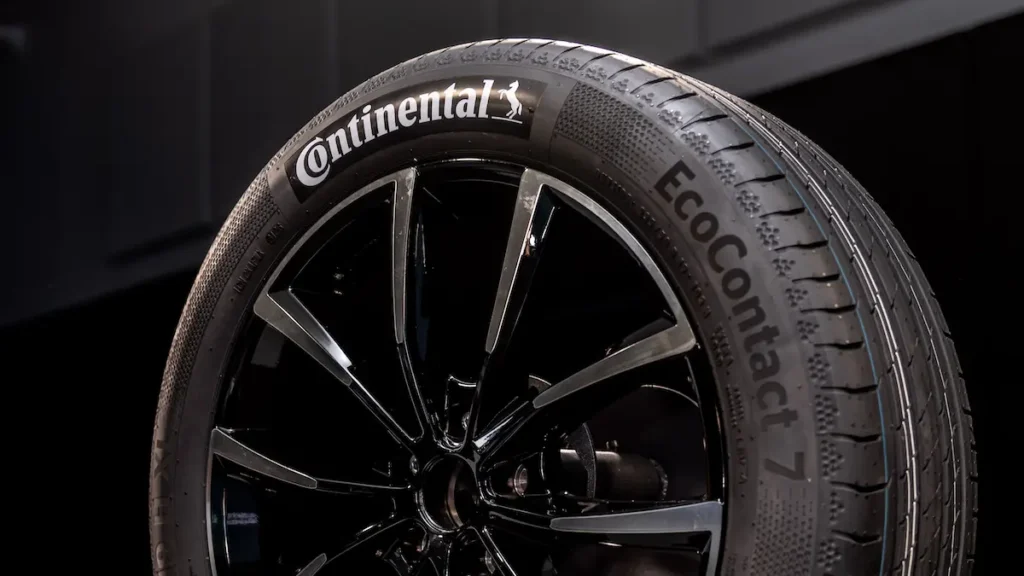
With many electric cars, every kilometer of range counts. Automotive suppliers Continental and Renault have therefore jointly developed a tire that is said to achieve up to 30 kilometers more per charge thanks to lower rolling resistance alone.
The basis for the new tire from Continental and Renault is the EcoContact 7 tire from Continental. The company tailored the model specifically to the requirements of the Renault Group. For this purpose, the engineers developed a specially modified tread rubber compound. A tailor-made sidewall concept and an optimized tire construction complement the technical adjustments.
Continental tires promise 30 kilometers more range for electric cars
The Renault R-Space Lab concept vehicle is already equipped with the new Continental tires. According to the manufacturer, the modifications reduced rolling resistance by up to 35 percent and thus below the value for the top grade A in the EU tire label. With a battery range of 500 kilometers, this corresponds to around 30 kilometers of additional range per charge.
When developing tires together, the companies relied on virtual testing procedures. The focus was on the so-called driver-in-the-loop driving simulator from Continental. The Renault Group’s ROADS digital driving simulator was also used in the tests. These digital systems reproduce real driving conditions in virtual space.
The increased use of these methods should support more efficient tire development. The approach also significantly reduces the need for physical test tires. According to Continental, the company now saves up to 10,000 test tires annually by using virtual processes.
Why tires account for up to 30 percent of energy consumption
Around 20 to 30 percent of a car’s energy consumption is due to rolling resistance. The lower this value, the less energy is lost during the natural deformation and friction of a tire on the road. For electric cars, this has a direct impact on energy consumption. Because: A lower resistance increases the usable range of the battery charge.
At the same time, the tires remain safety-relevant as they form the only contact points between the vehicle and the road. Continental and Renault want to optimize the driving performance and range of electric cars in the future with specially tailored tires. Nicolas Champetier, Vice President Innovation at Renault Group, said in a statement:
Very low rolling resistance is crucial to further increase the range and efficiency of electric vehicles. With Continental we have a strong partner at our side: Thanks to our long-standing collaboration in original equipment, we can jointly develop solutions that have the potential to bring real added value to our customers.
Also interesting: