


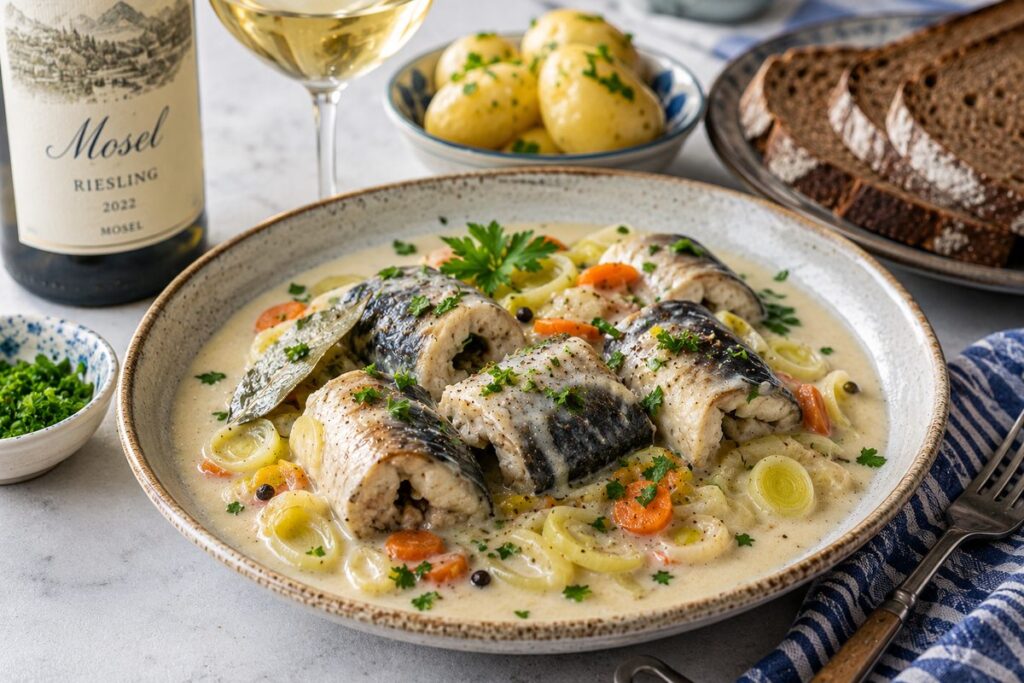


Eel has a rich, firm texture and a naturally full flavor, so it can stand up to a lively white wine sauce. Riesling keeps the dish from feeling heavy. Leeks, carrots, onion, bay leaf, parsley, and a little cream round out the broth, turning the poaching liquid into a gentle sauce that tastes both rustic and elegant.
This is a traditional-style German fish recipe for cooks who enjoy regional dishes with history. It is especially good served with boiled potatoes, crusty bread, and a glass of the same Riesling used in the pot.
What Is Mosel Eel in Riesling?
Mosel Eel in Riesling is a German fish dish made by cooking pieces of cleaned eel in a white wine broth, usually with vegetables, herbs, and aromatics. The wine is not just a cooking liquid. It gives the dish its regional identity and balances the richness of the eel.
The finished dish can be served in several ways. Some versions are kept brothy and simple. Others are finished with cream or thickened lightly into a sauce. This version keeps the sauce delicate so the flavor of the eel and Riesling remains clear.
Because eel is not as common in many modern kitchens, this recipe also includes sourcing notes and substitution ideas.
Mosel Eel in Riesling
Mosel Eel in Riesling, or Aal in Riesling, is a regional German fish dish inspired by the Mosel wine country. Pieces of cleaned freshwater eel are gently poached with Riesling, leeks, carrots, herbs, and aromatics, then finished with a light cream sauce. Serve it with boiled potatoes, rye bread, or a crisp green salad for a traditional-style meal from one of Germany’s most famous wine regions.
Ingredients
For the Eels
- 2 lbs cleaned freshwater eel, skinned if preferred, cut into 2-inch pieces
- 1 tbsp lemon juice
- salt and white pepper, to taste
For the Riesling Broth
- 2 tbsp unsalted butter
- 1 small onion, finely diced
- 1 leek, white and light green parts only, cleaned and sliced
- 1 carrot, peeled and finely chopped
- 1 small celery stalk or small piece of celery root, finely diced
- 1 1/2 cups dry or off-dry Riesling
- 1 cup fish stock or light vegetable broth
- 1 bay leaf
- 4 parsley stems
- 4 black peppercorns
- 1 small strip of lemon peel
For Finishing
- 1/2 cup heavy cream
- 1 tsp German mustard optional
- 1 tbsp chopped fresh parsley
- 1 tsp lemon juice, or to taste
- salt and white pepper, to taste
Instructions
-
Season the eel
Pat the eel pieces dry. Sprinkle them with lemon juice, salt, and white pepper. Let them rest while you prepare the vegetables.
-
Cook the vegetables
Melt the butter in a wide, heavy pan or shallow Dutch oven over medium heat. Add the onion, leek, carrot, and celery.Cook gently for 5 to 7 minutes, stirring often, until the vegetables soften but do not brown.
-
Add the wine and stock
Pour in the Riesling and fish stock. Add the bay leaf, parsley stems, peppercorns, and lemon peel.Bring the liquid to a gentle simmer and cook for 5 minutes to let the flavors come together.
-
Poach the eel
Add the eel pieces to the pan in a single layer if possible. Reduce the heat so the liquid barely simmers.Cover and cook gently for 12 to 18 minutes, depending on the thickness of the pieces, until the eel is firm and cooked through. Fish should reach 145°F / 62.8°C in the thickest part.Don’t boil the eel. Gentle poaching keeps the texture tender.
-
Remove the eel
Carefully lift the eel pieces from the pan and place them on a warm plate. Cover loosely to keep warm.Remove the bay leaf, parsley stems, peppercorns, and lemon peel from the cooking liquid.
-
Finish the Riesling sauce
Increase the heat slightly and simmer the cooking liquid for 5 to 8 minutes, until reduced a little.Stir in the cream and mustard, if using. Simmer gently for another 2 to 3 minutes. Taste and season with lemon juice, salt, and white pepper.
-
Serve
Return the eel to the sauce just long enough to warm through, or spoon the sauce over the eel onto serving plates.Sprinkle with chopped parsley and serve with boiled potatoes, rye bread, or cucumber salad.
Notes
Tips for the Best Eel in Riesling
Use gentle heat. Eel is firm, but it still benefits from careful poaching.
Do not let the wine sauce boil hard after adding the cream. A gentle simmer keeps the sauce smooth.
Button before adding extra lemon. Riesling already brings acidity, so season gradually.
Use the same wine for cooking and serving. This makes the meal feel complete and keeps the flavors connected.
Ask the fishmonger for help. Eel can be slippery and difficult to clean at home, so it is best to buy it already prepared.
What to Serve with Mosel Eel in Riesling
Mosel Eel in Riesling is rich enough to serve as a main dish, but it likes simple sides.
Good pairings include:
- boiled potatoes
- buttered potatoes with parsley
- rye bread
- cucumber salad
- steamed leeks
- green salad
- braised cabbage
- roasted carrots
For wine, serve a dry or off-dry Riesling. The acidity and fruit help balance the richness of the eel.
Sourcing and Substitutions
Fresh eel can be difficult to find in some places. Buy only legally sourced eel from a reputable fishmonger and ask about origin and sustainability.
If eel is unavailable, this recipe can be adapted with another firm fish. Trout, catfish, monkfish, or firm white fish can work, although the flavor and texture will be different. Adjust cooking time as needed because thinner fish fillets will cook faster than eel pieces.
This recipe is written for fresh eel, not smoked eel. Smoked eel has a very different flavor and is already cooked, so it should not be poached in the same way.
Make ahead and storage
Mosel Eel in Riesling is best served soon after cooking, when the sauce is fresh and the fish is tender.
Leftovers can be stored in the refrigerator for up to 2 days. Reheat very gently over low heat so the sauce does not split and the fish does not overcook.
This dish is not ideal for freezing because the cream sauce and fish texture may suffer.
Variations
Without cream
Skip the cream and finish the broth with a little butter and lemon juice for a lighter, clearer sauce.
With More Herbs
Add tarragon, chervil, or dill for a more herb-forward version.
With mushrooms
Sauté sliced mushrooms with the leeks for an earthier sauce.
With mustard cream
Increase the mustard to 2 teaspoons for a slightly sharper sauce.
With Trout or Catfish
Use the same Riesling sauce with trout or catfish if eel is unavailable. Reduce the poaching time as needed.
Frequently Asked Questions
What does Aal mean in Riesling?
Eel in Riesling means eel in Riesling. It refers to eel cooked in a Riesling-based wine sauce.
Is eel common in German cooking?
Eel has a long place in European river and coastal cooking, including regional German dishes. It is less common today in many home kitchens but remains part of traditional fish cookery.
What does eel taste like?
Eel is rich, firm, and flavorful. It is oilier than many white fish, which is why it works well with bright wine, lemon, and herbs.
Do I need to use skin eel before cooking?
That depends on preference and how the eel is prepared by your fishmonger. If you are unsure, ask for cleaned, skinned eel pieces.
Can I use smoked eel?
Not for this version. Smoked eel is already cooked and has a strong smoky flavor. This recipe is designed for fresh eel.
What wine should I use for Mosel Eel in Riesling?
Use a dry or off-dry Riesling. A Mosel Riesling is especially fitting, but any good German Riesling can work.
Can I do this with another fish?
Yes. Trout, catfish, monkfish, or firm white fish can be used, although the dish will no longer have the same traditional eel character.
How do I know when eel is cooked?
The eel should be firm and opaque, and the thickest part should reach 145°F / 62.8°C.