


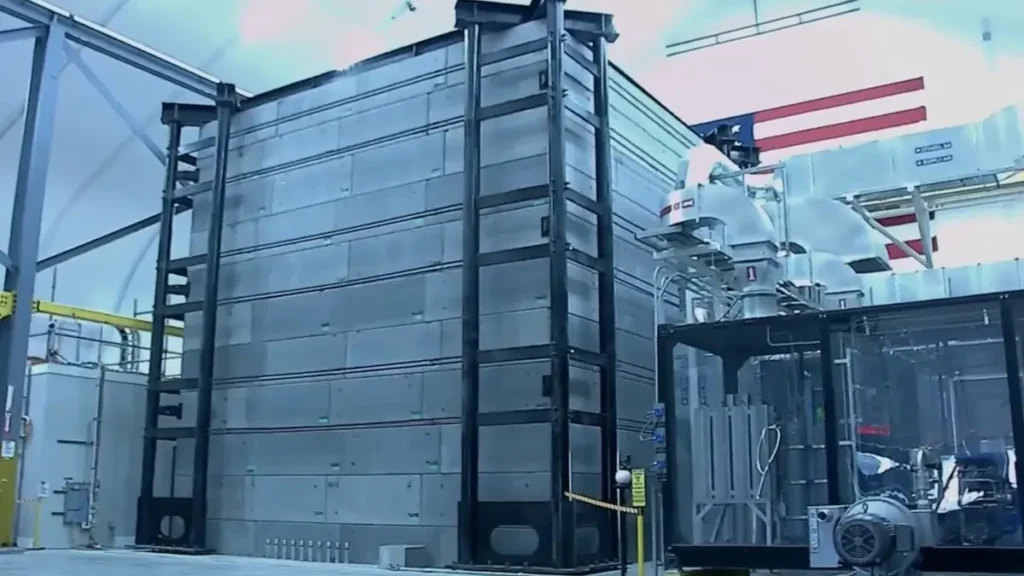
The US start-up Valar Atomics claims to have reached a milestone in the energy supply of data centers. In an initial test operation, a new type of mini-nuclear reactor delivered electricity directly to an AI accelerator. But: the costs go beyond all standards.
Valar Atomics has said in a LinkedIn post that the company’s new mini-nuclear reactor has generated electricity for the first time. To date, project partners have invested around $130 million in the project. The goal is to make nuclear energy usable for future data centers and AI chips.
According to an official DOE announcement, a prototype called “Ward 250” reached so-called criticality in early June 2026 on the site of the San Rafael Energy Lab in the US state of Utah. With the successful test run, the company met a July 4, 2026 deadline enshrined in a May 2025 presidential executive order. Competitor company Antares Nuclear had previously met this schedule with its Marko reactor. US Energy Secretary Chris Wright said:
Today marks another historic moment for America’s nuclear energy renaissance. (…) Valar Atomics achieves achievements that mark a revolutionary moment for advanced nuclear energy in this country. The Trump Administration is proud to support the revitalization of America’s nuclear energy industry, ensuring Americans have access to affordable, reliable and safe energy for generations to come.
How Valar Atomics’ mini nuclear reactor works
The advanced high-temperature reactor is based on highly efficient helium cooling and uses the extremely temperature-resistant Triso nuclear fuel. Due to this robust design, the system works at an operating temperature of 750 degrees Celsius. The entire system is the physical size of a conventional shipping container and is encased in a concrete shell around two meters thick for operation.
In the first test operation, the system generated a thermal output of 100 kilowatts, from which an estimated 40 to 50 kilowatts of electrical power were generated after deducting significant efficiency losses. This electricity directly powered an Nvidia Spark desktop AI accelerator. In the long term, the company aims to work closely with Nvidia in order to operate future data centers without any water cooling. The final overall system should achieve an output of 30 megawatts.
Economic doubts and enormous challenges
Despite the technological milestone, the company currently operates one of the most expensive power plants in history in terms of the small amount of electricity actually generated. In order to achieve the output of a single typical large power plant, around 14,000 of these so-called small modular reactors (SMRs) would be necessary. The hypothetical total cost of this would be up to $2 trillion.
The real economic benefit of the system cannot therefore be measured at this early stage. In order to be truly competitive on the market, construction costs would have to be reduced by up to 400 times through industrial mass production. In addition, it remains technically unclear how electricity generation from reactor heat will work in the long term without using any water.
Also interesting: