


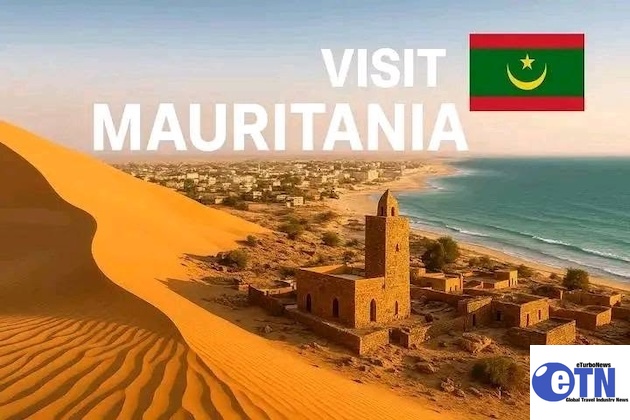
Mauritania is emerging as one of the world’s last authentic tourism frontiers. With the mysterious Eye of Africa, ancient desert cities, improved security, and growing government support, the country offers unique opportunities for travelers and investors seeking an untouched destination poised for sustainable tourism growth.
Why One of the World’s Least-Visited Countries Could Become Africa’s Next Great Travel Story
By any measure, Mauritania remains one of the world’s last truly undiscovered tourism destinations.
In an era when even the most remote corners of the planet are crowded with influencers, luxury resorts, and overtourism concerns, the vast deserts of Mauritania offer something increasingly rare: authenticity.
From the mysterious Eye of Africa in the heart of the Sahara to ancient caravan cities, endless dunes, Atlantic coastlines, and a culture that has changed little over centuries, Mauritania may represent the final frontier for travelers seeking genuine exploration.
Yet despite possessing some of the most spectacular landscapes on Earth, the country receives fewer visitors annually than many European museums welcome in a single day.
Now, after years of stability, government reforms, and renewed international interest, Mauritania stands at a crossroads. The question is no longer whether tourism can develop, but how quickly and sustainably it can do so.
The Eye of Africa: A Symbol of Untapped Potential
Inside a traditional tent near the Richat Structure, known worldwide as the “Eye of Africa,” Fatima Cheikh Mohammad Bouya waits for visitors.

Office National de Tourisme de Mauritanie – International Social Tourism Organisation
All ISTO members: host, tourism operator, national or regional government agency, academic institution, network, holiday support organization,…
The 49-year-old caretaker and entrepreneur has turned her family’s desert land into a simple tourism enterprise. She sells locally collected stones shaped like the Richat, hosts travelers under the stars, and offers visitors a glimpse into traditional Saharan life.
The Richat Structure is among Africa’s most extraordinary natural wonders. Measuring approximately 40 kilometers (25 miles) in diameter, the giant circular formation rises from the Adrar Plateau like an enormous eye visible from space.
Scientists describe it as a geological dome eroded over millions of years. Adventurers and mystics tell another story: that it may be the legendary lost city of Atlantis.
Whatever its origin, the Richat represents Mauritania itself—magnificent, mysterious, and largely unknown.
Bouya is among a growing number of local benefit entrepreneurs coming from a slow but noticeable tourism revival.
A Golden Age Interrupted
Mauritania was not always absent from global tourism maps.
During the late 1990s and early 2000s, the country enjoyed a modest tourism boom. Charter flights brought thousands of European visitors directly into the Adrar region each winter.
French tourists filled desert camps.
Adventure travelers crossed the Sahara.
The famous Dakar Rally passed through Mauritania, exposing millions of television viewers to its dramatic landscapes.
Ancient cities such as Chinguetti, Ouadane, Tichitt, and Oualata attracted historians, photographers, and cultural travelers fascinated by centuries-old Islamic scholarship and caravan routes.
Then everything changed.
Beginning in the mid-2000s, extremist groups including Al-Qaeda in the Islamic Maghreb (AQIM) and the Salafist Group for Preaching and Combat (GSPC) expanded operations across the region.
The turning point came on Christmas Eve 2007 when four French tourists were killed near Aleg. The attack shocked the international travel industry and immediately damaged Mauritania’s reputation.
Tour operators with Drew.
Charter flights disappeared.
The Dakar Rally left Africa entirely.
International tourism collapsed almost overnight.
The Security Transformation
Mauritania’s response became one of Africa’s least-discussed security success stories.
The government invested heavily in military modernization and border security. Elite units were deployed across vulnerable regions. Large sections of frontier territory became controlled military zones.
But Mauritania also pursued a softer strategy. Religious leaders were enlisted to counter extremist narratives. Prison rehabilitation programs engage suspected militants. Religious schools received greater oversight. Educational opportunities expanded.
At the same time, authorities recognized that security and development were interconnected. Rural infrastructure investments accelerated. Communities gained access to electricity, clean water, healthcare facilities, telecommunications, and schools.
The result has been remarkable. Mauritania has not experienced a major terrorist attack since 2011.
Today, many tourism professionals describe it as one of the safest countries for Sahara exploration—a remarkable achievement given ongoing instability in neighboring Mali and parts of the wider Sahel region.
Why Travelers Are Returning
In a world increasingly dominated by mass tourism, Mauritania offers experiences difficult to find elsewhere.
Visitors can:
- Ride the legendary Iron Ore Train, one of the world’s longest trains.
- Explore UNESCO-listed ancient desert cities.
- Sleep under some of the darkest skies on Earth.
- Cross vast Saharan landscapes with almost no other tourists in sight.
- Experience authentic nomadic culture.
- Discover the Richat Structure.
- Visit remote Atlantic beaches and fishing communities.
- Follow ancient trans-Saharan trade routes.
Most importantly, travelers report something increasingly rare: genuine encounters.
There are no crowds.
No queues.
No commercialized attractions.
No manufactured authenticity.
For many adventure travelers, Mauritania feels like traveling back in time.