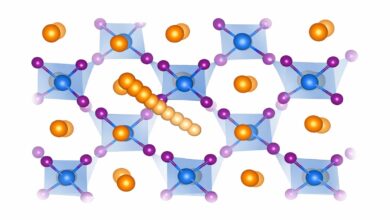
Researchers at Yale University have developed a manganese catalyst that is intended to convert CO2 into a valuable fuel source. The background is the acid formate, which can store hydrogen.
Imagine if we could easily turn CO2 into fuel. Researchers at Yale University recently demonstrated that this is exactly what is possible. In a study published in January 2026, they outline a way to convert the greenhouse gas into a chemical energy source.
The two researchers Justin Wedal and Kyler Virtue led the investigation and published their results in the journal Chem. Together with other scientists, they stabilized catalysts made from manganese to convert carbon dioxide into formate. Manganese is a widely used metal that costs less than standard precious metals. The approach could simplify the production of clean hydrogen.
Challenges in CO2 conversion
Professor Nilay Hazari prioritizes the use of atmospheric carbon dioxide to replace fossil feedstocks with renewable chemical feedstocks. However, this process is proving challenging as the industry needs affordable methods of large-scale production and storage.
Many previous approaches failed because they were either too expensive or the materials used failed under the harsh reaction conditions. Until now, there was a problem with using inexpensive metal catalysts: they often decomposed quickly.
While precious metals such as platinum work stably, they are rare, expensive and often exhibit toxicity. Researchers have therefore long been looking for a way to extend the lifespan of common metals such as manganese.
Manganese catalyst converts CO2 into fuel
Justin Wedal and his team found a solution to this chemical hurdle. The scientists stabilized the entire catalyst using a novel design of the so-called ligands. Ligands are atoms or molecules that bind to a metal atom and influence its reactivity. The researchers added an additional donor atom to this structure, which increased the stability of the manganese compound.
This technical adaptation extends the life of the catalyst to such an extent that its productivity exceeds most precious metal variants. The team used so-called pincer-ligated manganese complexes with hemilabile ligands. This chemical trick ensures that the catalyst remains active over a period of time without losing its structure. The United States Department of Energy provides financial support for the research.
Formate as an efficient energy supplier
Formate is used, among other things, as a preservative in foods. Leather jackets also benefit from this in production, as industrial tanning or antibacterial treatments use the fabric for processing. To date, the industry has been producing formate using fossil fuels, which is not a sustainable option in the long term.
In the future, the useful raw material could also be obtained from CO2. In the form of formic acid, formate also serves as an efficient storage for hydrogen. Hydrogen fuel cells use this storage to convert chemical energy into electricity for engines or electrical devices. The researchers see their approach as a blueprint that can be applied to many other chemical transformations beyond CO2 hydrogenation.
Also interesting: