


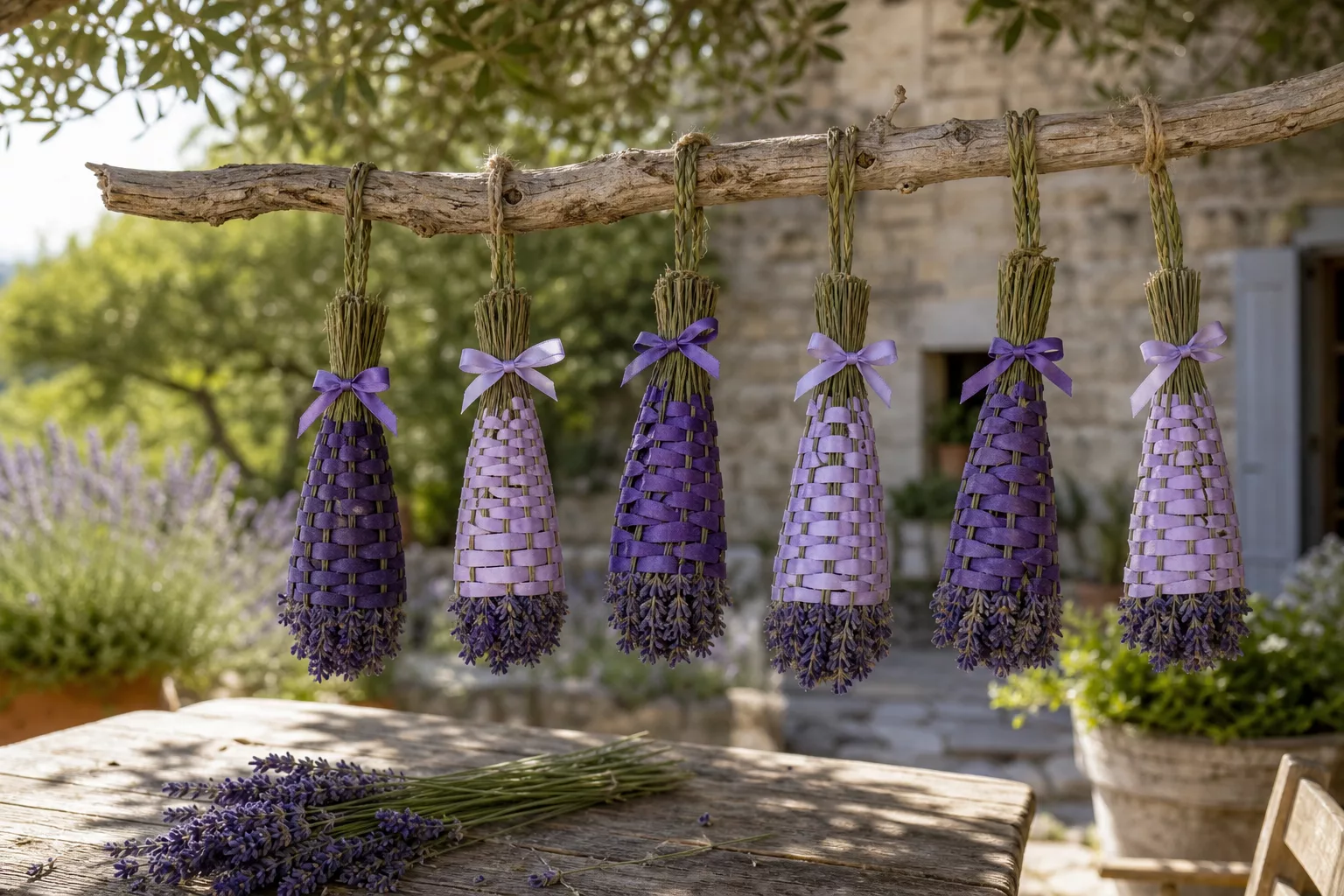
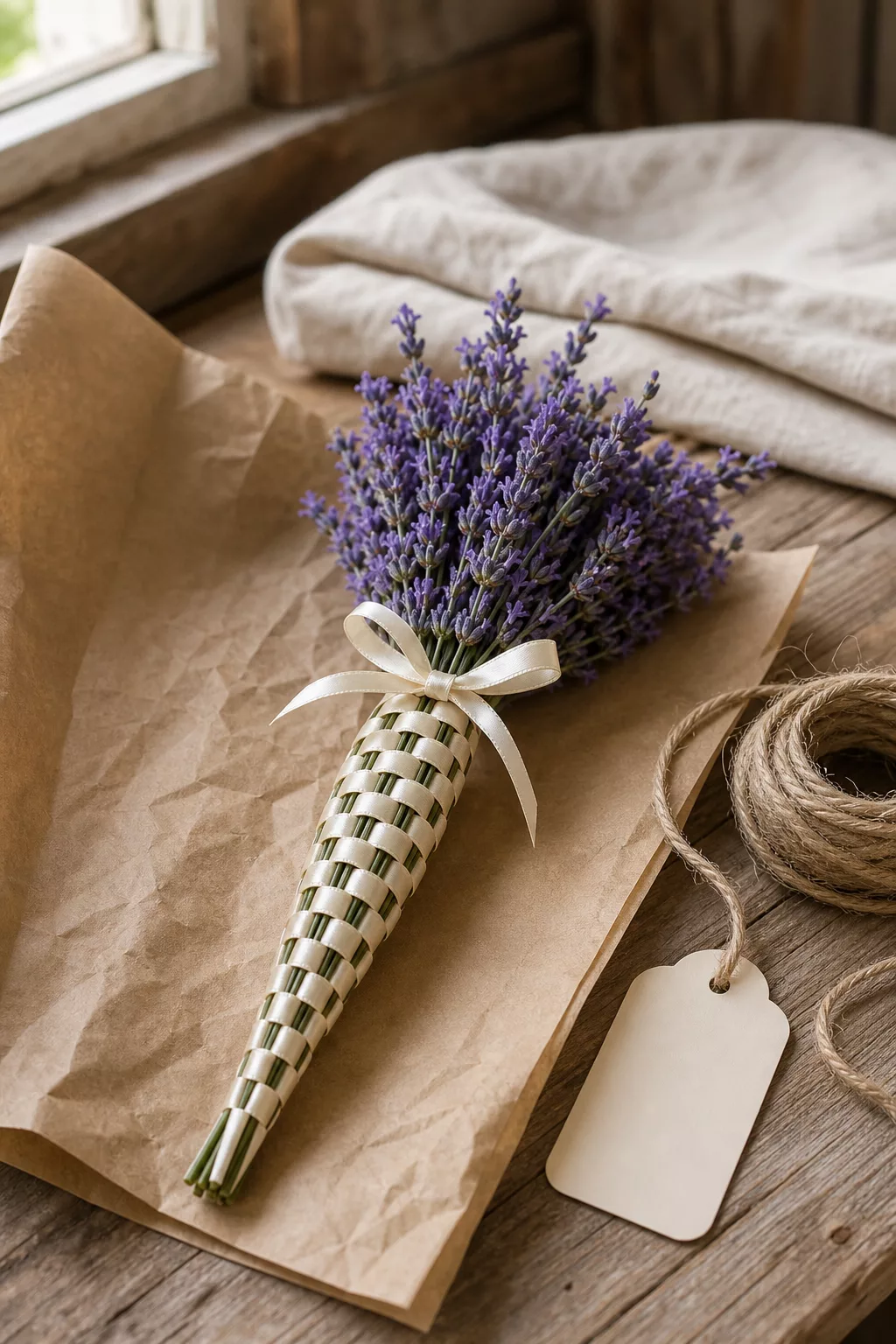
A bunch of freshly cut lavender smells great just standing in a vase. But you can get more out of it. If you have a Make lavender basketstransform the long stems into a small woven scented lantern that lasts for weeks and smells like Provence. The technique is old, originally from France and was once used to preserve the scent of lavender beyond the summer. Today it is one thing above all: a beautiful, quick DIY that is suitable as decoration and as a souvenir.
In these instructions you will receive concrete quantities – how many stems, how much ribbon – and a step-by-step description that even beginners won’t fail.
In short
- material – 15 to 21 fresh long-stemmed lavender stems plus 2 to 3 meters of narrow satin ribbon.
- Technology – Tie the bouquet, turn it upside down, alternately braid the ribbon over and under the folded down stems.
- Length of time – about 20 to 30 minutes once you get the hang of it.
- Fresh instead of dried – only fresh stems are flexible enough; They later dry in the braid and retain their shape and scent for months.
What you need to make a lavender basket
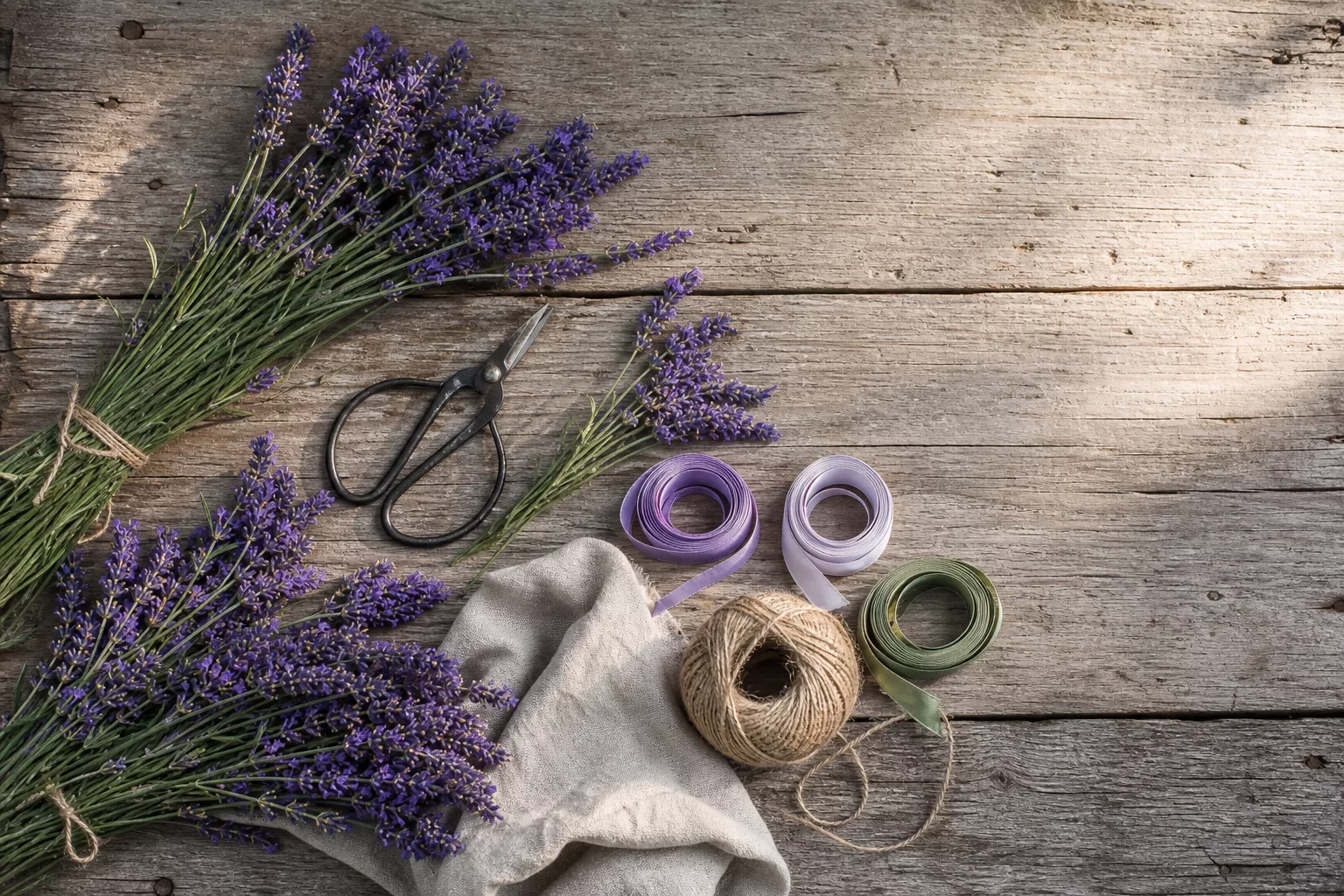
The materials list is short, and a lot of it is probably in the drawer anyway. What is particularly important is the quality of the stems: they must be fresh, long and flexible.
- Fresh lavender: 15 to 21 stems with stems as long as possible (at least 20 centimeters below the flower). An odd number is tradition – and when braiding it ensures that the ribbon pattern comes up neatly.
- Narrow satin or decorative ribbon: 2 to 3 meters long, 0.5 to 1.5 centimeters wide. Narrower appears more delicate, wider is faster.
- A small pair of scissors for cutting the stem ends.
- Optional a second decorative ribbon for the bow at the end.
It’s better to allow for a few more stems. One or two of them will bend on the first try and a basket that is too thin will become unstable. If you like, you can add natural materials such as jute cord: If you make decorations yourself from natural materials, linen and natural tones harmonize particularly beautifully with the purple.
The right time: When to cut lavender?
Success is decided before the first step – namely when harvesting. Freshly cut lavender has soft, elastic stems that can be bent without breaking. This is exactly what you need for braiding.
Cut the lavender on a dry summer day, preferably in the late morning when the dew has evaporated. The flowers should just be opening, but not yet faded – this is when the scent is most intense. And then the following applies: process it immediately. If the lavender has only been left for a few hours, the stems will begin to wilt and become brittle. A broken stem cannot be saved.
Weaving lavender baskets – step by step
Now comes the real part. Read the steps through completely before you get started – then the somewhat unusual trick of folding the stems will immediately make sense.
- 1. Tie a bouquet: Gather all the stems together so that the flower heads are at the same height. Tie the ribbon tightly around the bundle just below the flowers, leaving a short end overhanging.
- 2. Turn upside down: Turn the bouquet over so the flowers are facing down. Now fold the stems down over the flowers one by one – like a cage that encloses the flower heads.
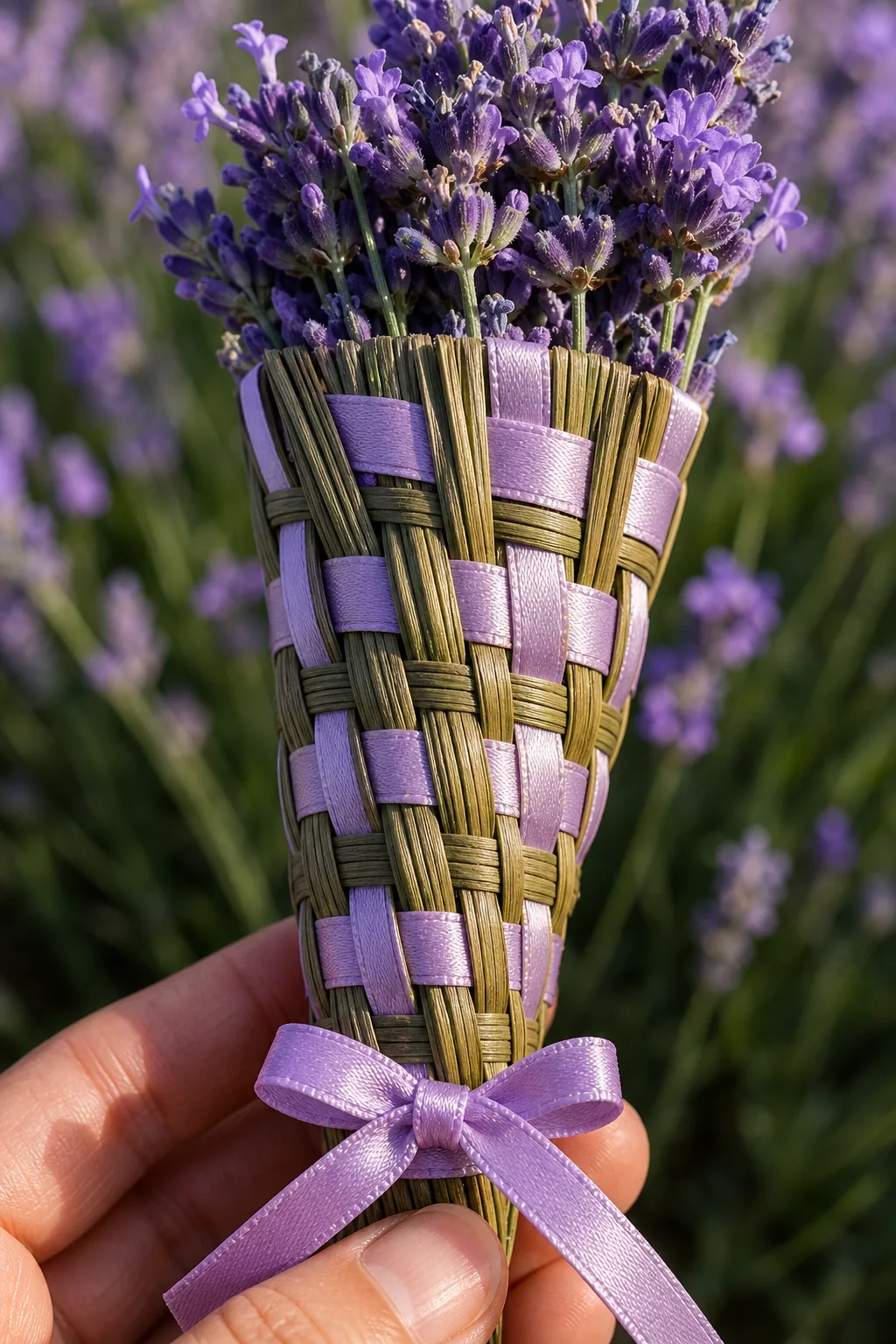
- 3. Weave in ribbon: Take the long end of the ribbon and pass it alternately in front of and behind the folded down stems. Before the first, behind the second, before the third – always alternating all around.
- 4. Repeat rows: Once the round is finished, gently pull the band tight and start the next row. The typical basket pattern grows line by line until the flowers are completely covered.
- 5. Complete: Wrap the remaining ribbon around the stems below the braid a few times and tie the ends into a bow.
Keep the ribbon under noticeable tension as you weave, but do not pull with force – otherwise you will crush the stems. It should be tight, not tight.

Attach the handles and complete the basket
The handle that gives it its name is made from the stems that protrude below. Find two strong stems that are opposite each other, bend them together over the basket and tie them in place with a leftover ribbon. Use scissors to shorten the remaining stems to the same length – so the basket stands clean when you want to put it down.
And your first scented basket is ready. It will slowly dry out over the next few days while retaining its shape. The scent stays – often for months.
Fresh or dried: which is better?
This question comes up almost every time, and the answer is clearer than you think. For braiding itself, fresh lavender clearly wins. Only its moist, elastic stems can be bent into the tight basket pattern. Dried stems are glassy and break when they are first folded over.
Dried lavender only shows its strength afterwards: Once the freshly woven basket has dried through, it is just as durable as one that was dry from the start – only without the risk of breakage. In short: you braid fresh and then let it dry. The best of both worlds.
Where to put the finished lavender basket?
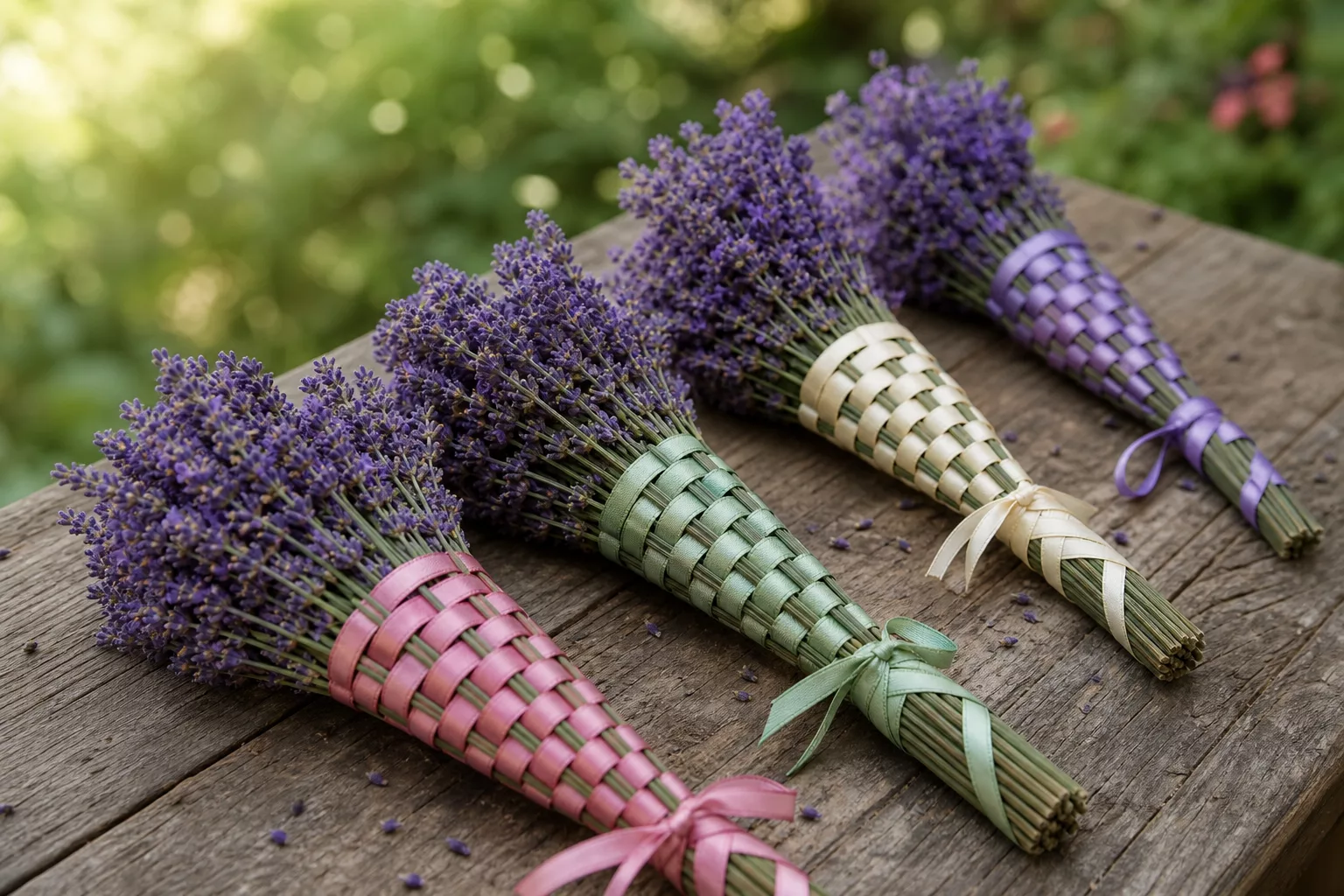
A single basket makes a difference, several together are a little highlight. On the set table it replaces the classic scattered flower decorations and fits wonderfully into the country house style if you make creative table decorations yourself. Hung on the window handle or on a string, it becomes a summery backdrop – inspiration can be found on how to make your own summer window decorations.
And as a gift? Hardly anything is as well received as something homemade from your own garden. A lavender basket is a fragrant souvenir for the hostess, a pretty addition to the bouquet or a personal gift – it is one of the most beautiful ideas if you are looking for personal gift ideas from the heart.
What’s Hot

Garden decoration
Make your own XXL dandelion for the garden – instructions
Pro tips
- Take enough stems: Below 15 stems the weave becomes thin and the basket becomes wobbly – better 19 or 21 than too few.
- Keep the band tight: If the band is too loose, the rows will slip apart and individual flowers will fall out. Re-tighten after each round.
- Never harvest too late: If the stems are already dry, they will break when folded over. Process immediately after cutting.
- Pay attention to odd numbers: If the number of stems is even, the band is in the same place in each row – the pattern looks less clean.
As soon as the first basket is successful, most people want to continue straight away – with different ribbon colors, larger bundles or as a whole row for the window. Don’t take the little frustration of the first few rows to heart: after the second attempt, the handle fits and the scent of freshly cut lavender accompanies you throughout the afternoon.
Frequently asked questions
How many lavender stems do you need for a lavender basket?
For a sturdy basket, count on 15 to 21 stems. An odd number is traditional and allows the braided ribbon pattern to unravel more neatly. Less than 15 stems make the basket unstable.
Does the instructions also work with dried lavender instead of fresh?
Not for braiding. Dried stems are brittle and will break as soon as you fold them over. Use fresh lavender and then let the finished basket dry – then it will be just as durable.
How long does a lavender basket last and does it retain its scent?
A well-woven basket will last for many months. The scent lasts longest if it is placed in a dry, not too sunny place. Gently pressing the flowers refreshes the aroma every now and then.
What is the best time to cut lavender for crafts?
Prune on a dry summer day when the flowers are just opening. By late morning the dew has evaporated and the scent is particularly intense. Process the stems immediately after harvesting while they are pliable.