


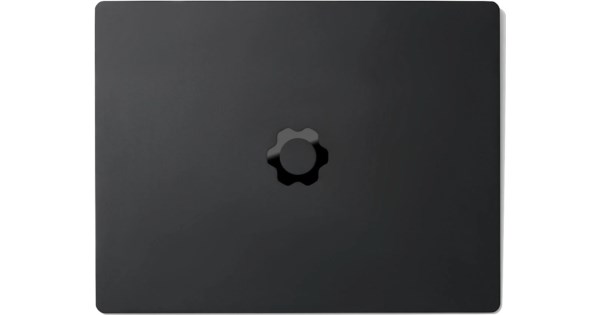


The first noticeable change concerns the housing: a CNC-milled aluminum chassis is used for the first time. That’s not the only similarity that makes the Pro model resemble the Apple model: The touchpad is haptic, so it gives noticeable feedback when you click. The integrated battery has a significantly higher energy density; The resulting 74 Wh capacity should be enough to cover 20 hours of normal use. The screen has a variable refresh rate of 30 to 120 fps.
Compromises in color and brightness
Even though the screen with a resolution of 2,880 x 1920 pixels is a significant improvement over the standard model introduced five years ago, it cannot keep up with Apple: the color space is limited to 8 bits (sRGB), while the P3 range (10 bits) is standard in MacBook Pro and Air. The maximum brightness of a framework screen is 700 cd/m². This makes it brighter than a MacBook Air (500 cd/m²), but nowhere near the MacBook Pro level (1,000 cd/m²).
But touchscreen
Instead, the Framework 13 Pro relies on a capability that doesn’t yet exist in Apple’s laptops: the screen is touch-sensitive. When configuring a laptop, customers have many options to optimize the device to their own needs. The “DIY Edition” comes without RAM, SSD, port adapter and Windows and costs €1349 with the standard CPU (Intel Core Ultra 5 325). Once assembled, you can get a Framework 13 Pro from 2369 euros. Anyone who pre-orders now will receive their device in July – the first six batches are already sold out.

Swap and combine
Almost all components are backwards compatible with the still available Framework 13. One exception (in addition to the larger battery) is the RAM: The new Intel mainboards use a new design in which the latches are not inserted into a socket, but are pressed onto a contact surface. A nice side effect of modularity: If you decide to replace the mainboard in the framework laptop, you can continue to use the old one as a mini computer – similar to the Raspberry Pi board computer, there are cases for connection to use as a living room PC or instructions for crafting cyberdecks.