


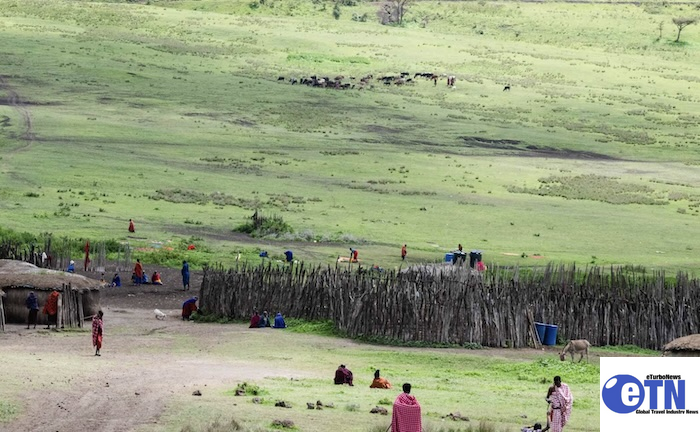
Tourism and conservation projects are increasingly displacing Indigenous communities, from Tanzania’s Maasai lands to the Amazon rainforest. As global travel markets “pristine wilderness,” critics warn that the expansion of safari tourism and protected areas is driving evictions, violence, and existential threats to Indigenous peoples worldwide.in
Northern Tanzania: Tourism and Displacement
On the sweeping plains of northern Tanzania, where safari jeeps idle at dawn and પ્રવાસ itineraries promise encounters with “untouched wilderness,” the land tells two very different stories.
One is sold to the world: lions moving through golden grass, the Great Migration, a landscape without people.
The other is lived: villages under pressure, grazing routes cut off, and a people—the Maasai—facing the prospect of removal from lands they have inhabited for generations.
Recent press materials from Survival International describe how Tanzanian government-backed proposals could lead to the mass eviction of Maasai communities from key conservation areas, including the Ngorongoro Conservation Area—one of Africa’s most iconic tourism destinations.
The justification is conservation. The reality, critics say, is more complicated.
The Quiet Expansion of a Global Industry
Tourism is one of Tanzania’s most important economic sectors, drawing hundreds of thousands of international visitors each year. National parks and conservation areas are central to that appeal—and increasingly, to land-use decisions.
According to Survival International, the expansion of tourism infrastructure and conservation zones has coincided with tightening restrictions on Indigenous land use. In some areas, access to water, grazing land, and basic services has been limited, creating conditions that effectively force communities to relocate.
Maasai representatives argue they are being blamed for environmental degradation while the ecological footprint of tourism—roads, lodges, vehicle traffic—receives less scrutiny.
The contradiction is stark: landscapes marketed as “pristine” may depend on the removal of the very people who have long sustained them.


Latest news
News articles about Indigenous peoples from across the world
Conservation Without People
The idea of protecting nature by excluding human populations has deep colonial roots. But in places like Ngorongoro, it is also a relatively recent shift.
The area was originally designed as a multiple-use landscapewhere wildlife conservation and Indigenous livelihoods could coexist. That balance is now eroding.
New policy recommendations call for ending residence and traditional pastoralism in certain zones—effectively redefining human presence itself as incompatible with conservation.
For the Maasai, whose culture is built around livestock and seasonal movement, the consequences are existential.
Losing land is not simply relocation. It is the loss of identity, economy, and autonomy.
A Pattern Beyond Tanzania
Global Pressure on Indigenous Lands

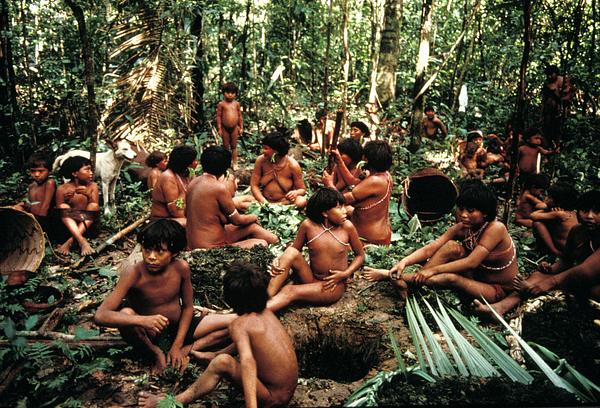
The tensions unfolding in Tanzania are part of a broader global pattern.
Across the Amazon, Southeast Asia, and parts of Africa, Indigenous territories—often among the most biodiverse regions on Earth—are increasingly targeted by:
- Mining and logging
- Agribusiness expansion
- Energy projects
- Conservation and tourism development
Survival International reports a rise in violence linked to these pressures. In Brazil, for example, armed attacks on Indigenous communities have resulted in killings tied to land disputes. Elsewhere, illegal mining and deforestation are driving both environmental destruction and humanitarian crises.
Particularly vulnerable are the world’s uncontacted tribeswho have little immunity to outside diseases. Even limited encroachment into their territories can trigger catastrophic population loss.
Advocates warned that without stronger protections, entire communities could disappear within decades.
Tourism’s hidden role
While extractive industries often draw the most criticism, tourism is emerging as a less visible—but increasingly significant—driver of displacement.
In Tanzania, land set aside for wildlife viewing, safari concessions, and conservation-linked tourism has expanded alongside pressure on Indigenous residents.
Critics argue that this creates a paradox:
- Tourism depends on biodiversity and cultural heritage
- Yet its expansion can undermine both
In some cases, land cleared of its original inhabitants is rebranded as wilderness—its human history erased to meet visitor expectations.
Two Visions of Nature
At the heart of these conflicts is a fundamental disagreement about what nature is—and who belongs in it.
One model, dominant in global tourism, imagines nature as a place without people: protected, scenic, and separate.
The other, embodied by many Indigenous communities, sees humans as part of the ecosystem—participants in its balance rather than threats to it.
Research has increasingly shown that Indigenous-managed lands often have equal or higher biodiversity than protected areas without human presence.
Yet policy frameworks and commercial incentives continue to favor exclusion.
The Stakes for the Travel Industry
For the global tourism sector, the implications are growing harder to ignore.
Travelers are increasingly drawn to experiences marketed as sustainable and ethical. But the situation in Tanzania and elsewhere raises difficult questions:
- Can tourism be sustainable if it displaces local communities?
- Who benefits economically from conservation landscapes?
- And whose stories are left out of the narrative?
The industry’s future may depend on how it answers those questions.
A turning point
Back in northern Tanzania, the plains remain as vast and beautiful as ever.
Tourists continue to arrive. Wildlife continues to roam.
And the Maasai continue to resist.
Their struggle reflects a larger global reckoning—one that extends far beyond a single country or industry. It is about land, identity, and the competing visions of how the world’s most valuable places should be protected.
For now, those visions remain in conflict.
But the outcome may shape not only the future of Indigenous peoples—but the future of travel itself