


The startup Lilium grew rapidly. As a result, setbacks, capital pressure and growing pains increased. We spoke to former employees and ex-CEO Klaus Roewe.


On February 27, 2020, Lilium employees heard a hissing noise in the factory halls. Then a popcorn sound. The battery on one of the prototypes caught fire. Manager Christian Pfitzner sent the employees out of the hall and pressed the fire brigade button. This is how he describes the situation looking back a few years later.
No one was injured in the fire, but the prototype was a total loss. The Federal Aviation Accident Investigation Board did not classify the fire as an “accident or serious incident.” But the fire came at a time when media reports were questioning Lilium’s technology. It said Lilium’s promises for the jet were not feasible. Lilium denied the allegations, but the narrative remained in the public eye.
Read too


However, for a deeptech startup that is not yet selling a finished product, trust is one of the most important currencies: with investors, talent, partners and later also with customers. And they continued to believe in Lilium. The company continued to raise money. In March 2020, 224 million euros of fresh capital flowed into the startup. Shortly thereafter, Lilium achieved unicorn status and was valued at at least a billion dollars.
Lilium went public
On paper, this milestone is something of an accolade for startups. In reality, it is primarily a bet that an ambitious technology will eventually become a viable business.

This means that anyone who collects a lot of capital has to deliver – become faster, bigger and more visible. At Lilium that meant: more staff, more structures, more expectations. The startup became a scaleup even before the product was ready for the market. This is not unusual for deep tech startups. They need a lot of time for research and development, so they don’t make any sales, but they need even more capital.
Audio player not available
In order to display embedded audio content, your consent, which can be revoked at any time (via the switch or via “Revocation tracking and cookies” at the bottom of the page), is required for the processing of personal data. Data can be transferred to third countries such as the USA (Art. 49 Para. 1 lit. a GDPR). By switching to “on” you agree. You can find further information in our data protection declaration.
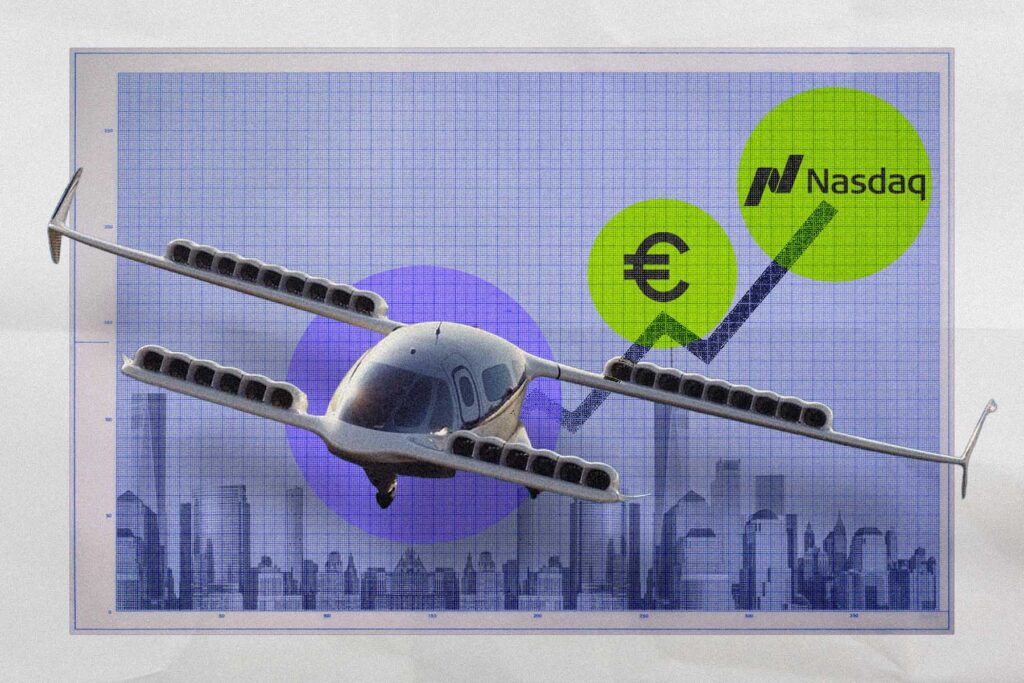
Lilium therefore decided to go public. Because a classic IPO is difficult for a company without sales and a finished product, Lilium chose the route via a Spac (Special Purpose Acquisition Company). This is a publicly traded corporate shell that merges with a private company. In September 2021, Lilium was listed on the Nasdaq technology exchange. The deal netted the startup about $584 million instead of about $800 million, less than originally hoped.
More bureaucracy, less pioneering spirit
At the same time, Lilium changed from within. Today, a few years later, former employees describe how the startup grew rapidly. Because Lilium increasingly hired experienced managers from large corporations such as Airbus and Rolls Royce. The goal: become more professional, get approval faster and turn the first prototypes into an industrial, mass-market product.
Read too

However, this also led to a kind of culture clash within the company. Corporate growth met employees who were characterized by the initial startup spirit. Employees describe to Gründerszene that Lilium had gradually lost its pioneering spirit, had become slower and was no longer as agile as it was at the beginning. Several former Lilium employees say that the initial joy of experimentation increasingly gave way to bureaucratic madness.
Did Lilium grow too fast?
Lilium had the experience that some startups have to go through. There is always an area of tension in growth. The structures that are supposed to make a company stable later can paralyze it too early: more processes, more coordination, more hierarchy. This is also known as growing pains.


Aviation development is extremely expensive, highly regulated and lengthy. An eVTOL cannot simply be tested on the market like software and improved later. Aviation startups cannot afford to make mistakes at the expense of safety.
Therefore, Lilium needed experienced people and robust processes. The only question was: when – and at what pace? Various people from the company’s environment told Gründerszene that Lilium might have been able to carry out its first manned test flight even if the costs had been lower. The startup used up to 30 million euros a month to keep operations running.
Fundraising: The main task of CEO Klaus Roewe
In 2022 there was also a personnel change in the top management at Lilium. Klaus Roewe took over the CEO position from founder Daniel Wiegand. When Roewe came to Lilium, the startup was already listed on the stock exchange. The pressure on Lilium – not only to develop technology but also to set up production – was enormous.
Fundraising became Roewe’s main tasks. “The negative surprise for me was the dominance that this topic of fundraising had, perhaps not from the first day, but from the third day,” says Roewe. “During peak times, I probably spent 80 percent of my time fundraising. And that wasn’t what I expected. But there was no other way.”
Audio player not available
In order to display embedded audio content, your consent, which can be revoked at any time (via the switch or via “Revocation tracking and cookies” at the bottom of the page), is required for the processing of personal data. Data can be transferred to third countries such as the USA (Art. 49 Para. 1 lit. a GDPR). By switching to “on” you agree. You can find further information in our data protection declaration.
In addition, as a listed company, Lilium could no longer just sell visions. Quarterly reports, investor communication and public price movements set the pace and also changed communication to employees, because the rules of the stock exchange require that investors be informed first. Otherwise, employees will become insiders.
Investors also have expectations: What once appeared to be an ambitious plan later became targets against which the startup had to be measured.