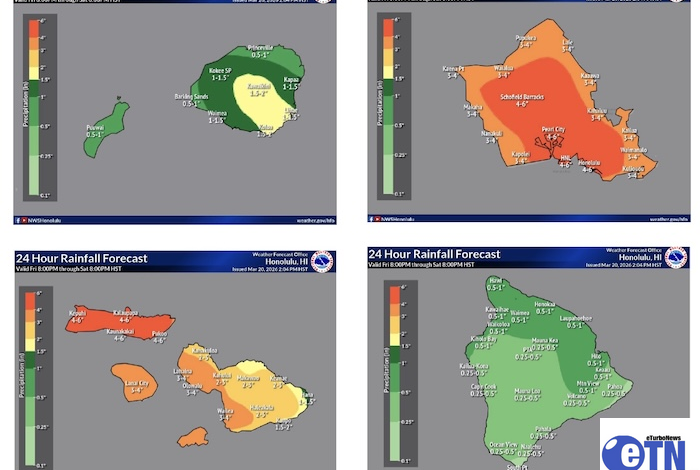
A powerful Kona low storm is battering Hawaii with heavy rain and dangerous flooding, particularly on Oʻahu and Maui. Evacuations, travel disruptions, and strained tourism infrastructure are impacting visitors, while authorities urge caution. Conditions are expected to peak through the weekend before gradually improving early next week.
Honolulu, Hawaii — A powerful Kona low weather system is continuing to lash the Hawaiian Islands with torrential rain, triggering widespread flooding, evacuation warnings, and significant disruptions to tourism across the state.
According to the National Weather Service, a statewide Flood Watch remains in effect through Sunday, with the storm expected to intensify overnight and peak on Saturday. Already saturated ground conditions have increased the risk of dangerous runoff, landslides, and flash flooding—particularly across Oʻahu and Maui.
Critical Conditions Across Key Tourist Areas
On Oʻahu, authorities are encouraging residents and visitors to stay off the roads unless absolutely necessary. The island’s popular North Shore—a major draw for surfers and tourists—has been hit particularly hard.
Floodwaters have inundated areas including Haleʻiwa and Waialua, prompting officials to advise visitors to shelter in place. Emergency alerts warn that conditions may deteriorate rapidly, with possible evacuation orders if rainfall intensifies further.
Meanwhile, on Maui, evacuation warnings have been issued in Kīhei and ʻĪao Valley due to rising floodwaters. Parts of Lahaina remain under advisory as authorities monitor conditions closely.
Tourism Infrastructure Under Strain
Despite the severe weather, Hawaii’s major airports remain operational—for now. However, airlines are warning of potential delays and cancellations as weather conditions worsen. Travelers are strongly advised to check flight statuses before heading to the airport.
Road closures, localized power outages, and flooding in key resort zones are beginning to strain tourism infrastructure. Access to popular beaches, hiking trails, and scenic routes has been restricted in several regions, particularly on Oʻahu and Maui.
Hotels and resorts are largely operating but are implementing contingency plans, including advising guests to remain indoors and limiting non-essential services. Tour operators have begun canceling excursions, especially those involving ocean activities.
What This Means for Tourists
For visitors currently in Hawaii:
- Safety is the top priority — follow all local advisories and avoid flood-prone areas
- Shelter in place if instructedespecially in high-risk areas like the North Shore
- Stay informed through official channels and hotel staff
- Avoid unnecessary travelparticularly at night when flooding risks increase
For those planning to travel to Hawaii:
- There is no immediate need to cancel trips scheduled for later next weekas conditions are expected to improve once the Kona low system moves north
- Travelers should remain flexible and monitor updates from airlines and local authorities
Economic and Industry Impact
Short-term disruptions are inevitable. The storm is expected to impact:
- Visitor arrivalsdue to flight delays and traveler hesitation
- Local tourism businessesespecially small operators dependent on daily excursions
- Transportation networksincluding roads and inter-island logistics
However, tourism officials emphasize that Hawaii’s infrastructure is resilient, and recovery is expected to be swift once the storm passes.
Looking Ahead
Forecast models indicate gradual improvement beginning early next week as the Kona low system weakens and shifts northward. Authorities remain cautiously optimistic but warn that lingering impacts—such as muddy conditions, debris, and infrastructure repairs—may persist for several days.
Tourism officials continue to stress that Hawaii remains open, but visitors must exercise caution and stay informed as this weather event evolves.