
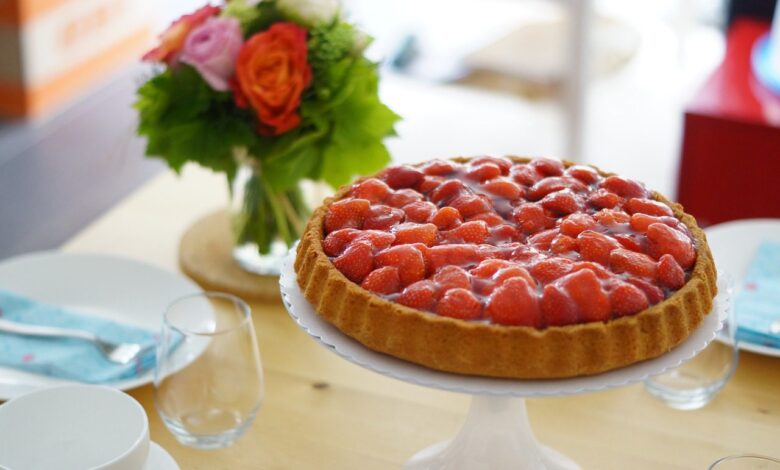
Who has ever lived in Germany or is German knows that this is a very popular cake, especially in summer when the fruit is ripe. The German Fruit Cake, or also called Shortcake, is the best when using ripe and fresh fruit. The base cake (it’s like a sponge cake) can be bought in every German supermarket but not in the USA. No worries! We show you how you can make the entire cake from scratch in your kitchen.
The fruit will be placed on top and is layered with a glaze. In Germany we love to serve the cake with whipped cream as well. It’s so easy to vary this cake: Use strawberries, raspberries, blue berries, combine with peaches, mandarins, sour cherries, pears, kiwis or red currant berries – you can practically use any fruit for this cake (not mango, pine apple or any other tropical/exotic fruit). Happy Baking!
Ingredients German Fruit Cake
2/3 cup flour
1/2 cup sugar, or less – sweeten to taste
3 eggs
1/4 cup sunflower oil (taste neutral oil)
1 tbsp baking powder
1 package vanilla sugar, 0.3oz or 1 tbsp – How to make Vanilla Sugar
(alternatively some real vanilla extract)
some bread crumbs or flour and butter for the form
Baking Instructions German Fruit Cake
– Preheat oven to 350 F.
– Combine all ingredients and mix well. You should get a somewhat runny dough.
– Pour dough into a well greased tart/flan pan, diameter 11 inches (the best is from the German brand Zenker which is different from the US pie pans). Sprinkle the bottom with bread crumbs or flour.
– Bake for 4-6 minutes. Test with a toothpick after 4 min: Stick tooth pick into cake and see if some dough sticks or not. Cake is done when no dough sticks. The base cake should not be brown; it should have a light golden color.

– When cooled off completely remove from pan and place on a bigger plate (must be bigger than the cake).
– Now the cake is ready for some fruit that you place on top. You place the fruit on the side that was facing the bottom of the pan.

Use fresh strawberries, raspberries, pear, blackberries, blueberries, pineapple or a mix of fruit. Cut large fruit like pear or strawberries in half or in slices.
Glaze
The cake is finished with a glaze which is available from Dr. Oetker – Find it Here – You can get this glaze in red, clear, with sugar or without. Make the glaze according to instructions on the package.
It is easy to make the glaze. See the recipe below:
HOW TO MAKE THE GLAZE
We received this recipe from a loyal FB fan – Thank you! Make sure to visit our FB page
Related