


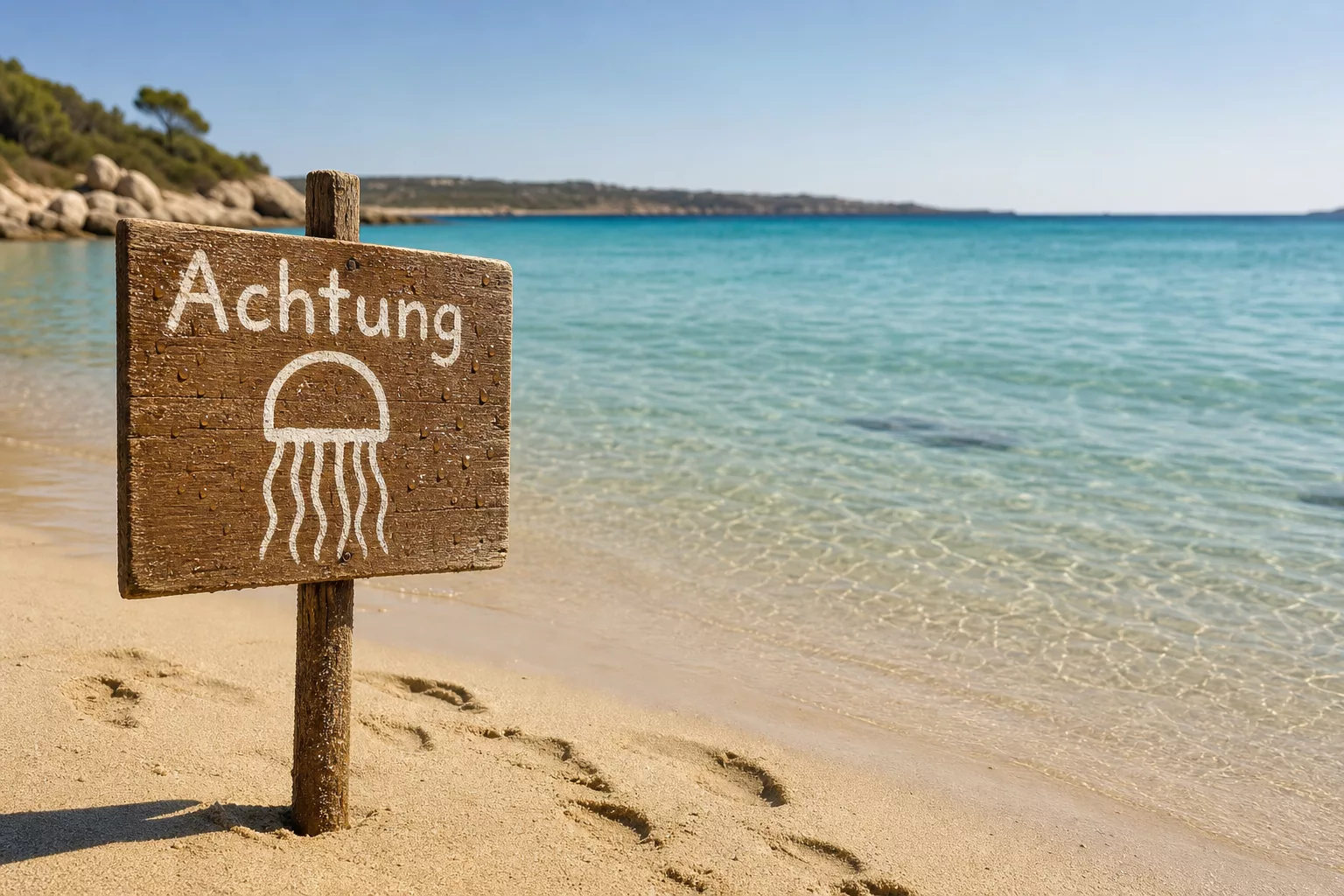
They wade into the shallow water, the sun is high, and suddenly a burning pain spreads across their calves. A sting – jellyfish or sea urchin? Anyone planning their beach vacation in Italy, Spain or Greece in 2026 should consider the most important things Jellyfish in the Mediterranean before he puts his first toe in the water. The good news first: The vast majority of species are harmless, and even a painful sting can be easily treated with the right steps. This overview shows which animals are really dangerous, where you need to be particularly careful and what helps in an emergency.
In short
- Mostly harmless – The most common jellyfish, such as the moon jellyfish, can hardly harm humans.
- Luminous jellyfish – It is the most common really painful species in the Mediterranean from May to October.
- Portuguese galley – In rare cases, your sting can become life-threatening – get out of the water immediately.
- First aid – Always rinse with sea water, never with fresh water, and do not remove residue with your bare fingers.
Why there will be more jellyfish in the Mediterranean in 2026
It is no coincidence that bathers on many coasts are more often annoyed by slimy visitors. The Mediterranean is warming faster than most other seas, and warmer water is a paradise for jellyfish: They reproduce earlier in the year, stay active longer and form larger swarms.
Added to this is overfishing. In the absence of natural predators such as tuna and sea turtles, the jellyfish population grows unchecked and currents wash entire carpets onto the coasts. The classic holiday destinations of Italy, Spain, Greece and France, and increasingly Croatia, are particularly affected. If you go to the most beautiful, popular Mediterranean travel destinations, you will see the animals almost everywhere – just not to the same extent everywhere.
Identifying poisonous jellyfish species in the Mediterranean
Only a handful of species actually cause problems. You should be able to classify these at a glance.
Luminous jellyfish (Pelagia noctiluca)
The small, purple-pink shimmering luminous jellyfish is the most common and at the same time most unpleasant jellyfish in the Mediterranean. It occurs from May to October, often in large flocks, and its umbrella usually only measures a few centimeters. The sting burns immediately, leaving reddened welts and sometimes small blisters. Sensitive people also experience nausea or circulatory problems.
Portuguese galley (Physalia physalis)
Strictly speaking, it is not a jellyfish at all, but a colony – and it actually belongs in the Atlantic. However, wind and currents are increasingly washing them into the western Mediterranean. Their shimmering bluish swim bladder floats on the surface, while their tentacles reach down to a distance of up to 50 meters. Their venom is strong: heart palpitations, shortness of breath and circulatory shock are possible; in very rare cases a sting can be fatal. If you see one, get out of the water immediately and warn others.
Compass jellyfish and nomad jellyfish
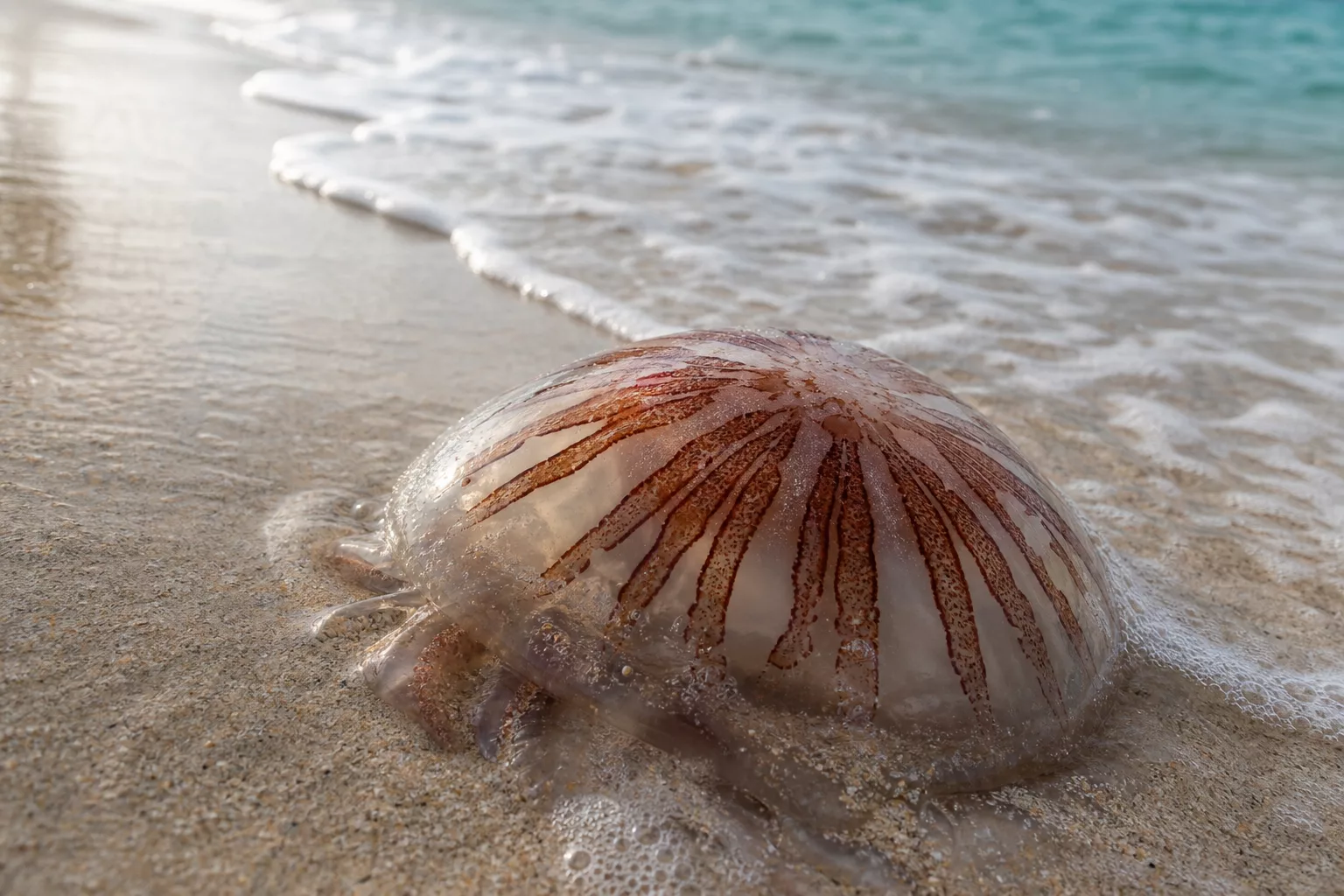
The compass jellyfish has brown, radially arranged stripes on its screen – hence its name. Their bite is not life-threatening, but it can itch and burn for days. The nomad jellyfish originally comes from the Red Sea and migrates via the Suez Canal; It is particularly causing problems for Greece and is causing a lot of irritation.
Harmless jellyfish that you don’t have to worry about
Most jellyfish you encounter are harmless to humans. Anyone who recognizes them will save themselves unnecessary shock.
- Moon jellyfish (Aurelia aurita): the most common type of all, almost transparent, with four ring-shaped “ears” inside. Their stinging cells are too weak to penetrate human skin.
- Pulmonary jellyfish (Rhizostoma pulmo): large, pink-orange colored, with short tentacles. Common in Italy and France, the stinging sensation is weak at best.
- Fried egg jellyfish (Cotylorhiza tuberculata): With its yellow hump, it actually looks like a fried egg in water – and is completely harmless.
- Sea walnut (Mnemiopsis Leidyi): a ctenophore without stinging cells. It feels slippery and nothing else happens.
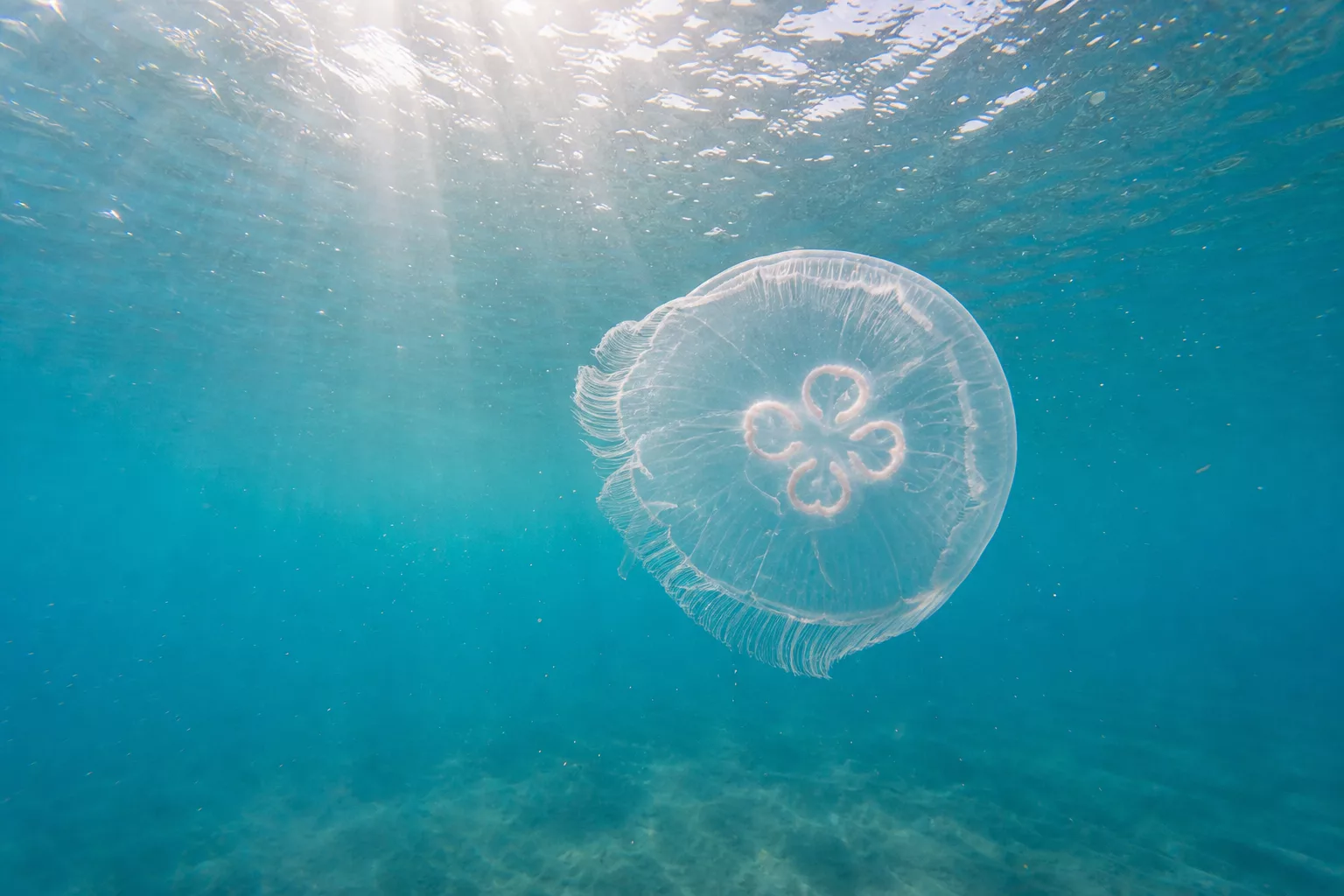
A trick from the editors: If a jellyfish does not have long, thready tentacles, but only a compact, mushroom-shaped body, it is almost always harmless. However, you shouldn’t touch any of them – even washed-up animals still sting.
Sea urchins: the invisible danger between the rocks
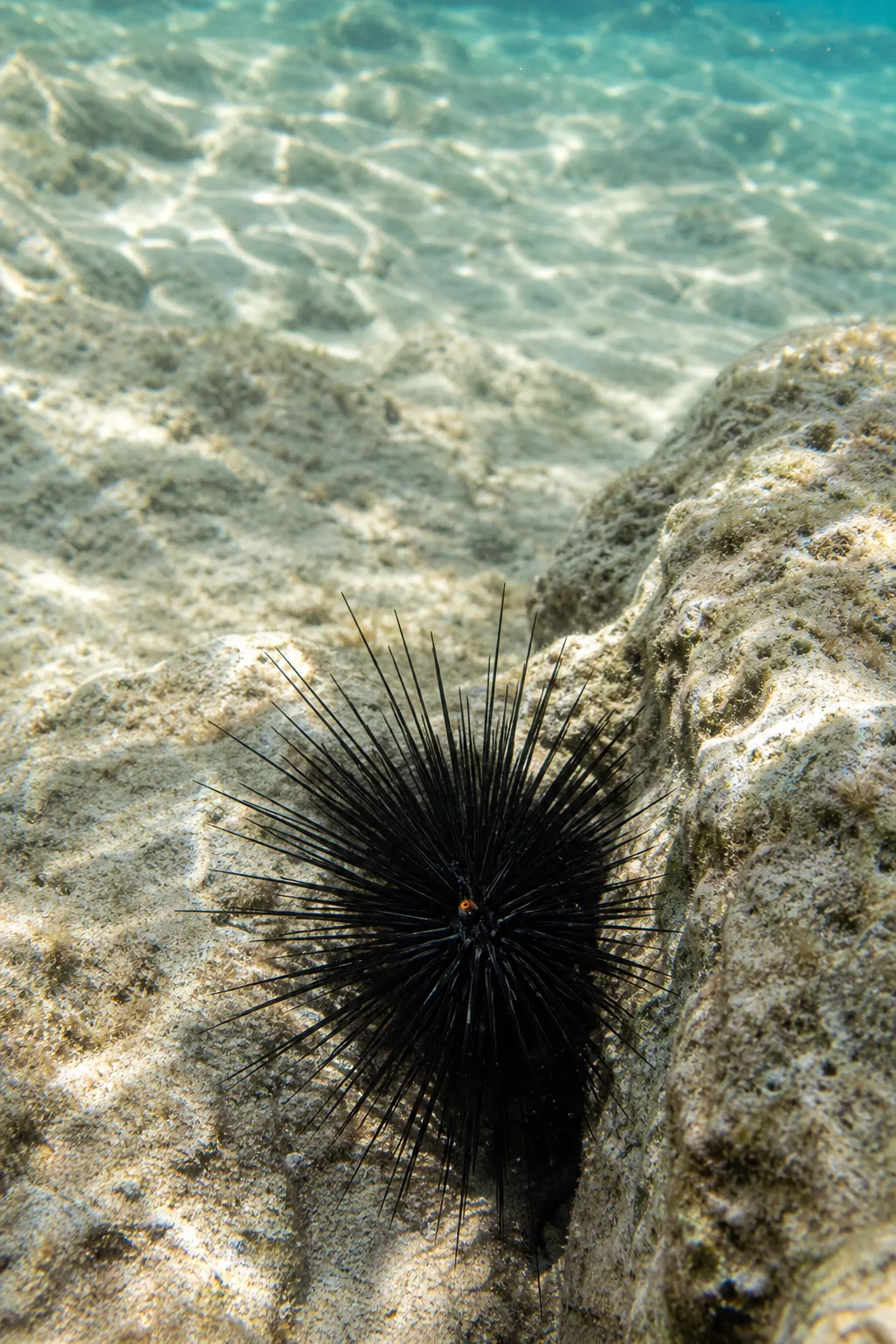
You can see jellyfish coming, sea urchins rarely. During the day, the black diadem sea urchin hides in rocky crevices and shallow, rocky bays – exactly where people like to step when getting in and out of the water. Its long, thin spines break off easily on contact and then stick deep into the skin. Because they are constructed like barbs, they are difficult to pull out completely and any residue left behind quickly ignites.
A particularly high number of sea urchin injuries occur on the beaches of the Aegean Sea, on the Amalfi Coast, in Liguria, in the Dalmatian bays and on the Costa Brava. The most effective protection is banal but crucial: sturdy bathing shoes. In rocky terrain, they belong on every foot, including children’s. You should be similarly careful on some coasts anyway – as our article on the shark alarm in Egypt shows, it’s always worth taking a look at the local situation before you travel.

Where in the Mediterranean to pay particular attention in 2026
The burden varies from coast to coast. This overview helps with travel planning.
- Italy: The Tyrrhenian Sea off Campania, Calabria and Sicily is rich in jellyfish; In the northern Adriatic between Venice and Rimini there are occasional carpets of algae.
- Spain: The Portuguese galley continues to expand, especially on the Costa del Sol and the Balearic Islands.
- Greece: Crete, Rhodes and the Dodecanese Islands are affected. Late summer marks the peak of the stinging season here.
- France: On the Côte d’Azur there is an official warning system with flags that specifically warns of jellyfish.
- Croatia: Compass jellyfish, ear jellyfish and glow jellyfish are the main species found here – the situation is usually more relaxed, but not jellyfish-free. If you like it quieter, you will find good alternatives on our insider tip beaches on Rab.
First aid for jellyfish and sea urchin stings
If it does happen, every minute counts – but above all the correct order. Here’s what to do if you get a jellyfish sting:
- Rinse with sea water, never with fresh water. This is the most important point and at the same time the most common mistake. Tap or mineral water causes the stinging cells still on the skin to burst and release additional poison. Sea water doesn’t do that.
- Carefully remove any remaining tentacles. Use the edge of a plastic card or tweezers to scrape off stuck-on threads – never with your bare fingers, otherwise it will sting there too.
- Do not rub or scratch. Friction activates additional stinging cells.
- Warmth against the pain. A warm water bath or a compress at around 45 °C for 20 to 45 minutes breaks down the heat-sensitive poison and noticeably relieves the pain.
At a Sea urchin stitch The following applies: If deep or broken spines are stuck in the skin, have them removed by a doctor instead of drilling yourself. You can remove any superficial sting residue with tweezers and then disinfect the wound thoroughly. If splinters remain, there is a risk of painful inflammation.
Get medical help immediately if shortness of breath, rapid heart rate, dizziness, severe facial swelling or signs of an allergic reaction occur – or if Portuguese galley disease is suspected. If in doubt, you should react more quickly to children and older people.
What’s Hot


Health
Mediterranean Diet Weekly Plan: What to Eat for 7 Days
Pro tips for a beach day
- Check warning systems: Before swimming, check beach flags and apps like Medusa or local jellyfish reporting services – many coasts update daily.
- Pack bathing shoes: In rocky bays, they reliably protect the whole family from sea urchins.
- Be careful after a storm: Offshore wind and waves wash entire schools onto the shore – wait a day or two for the water to calm down.
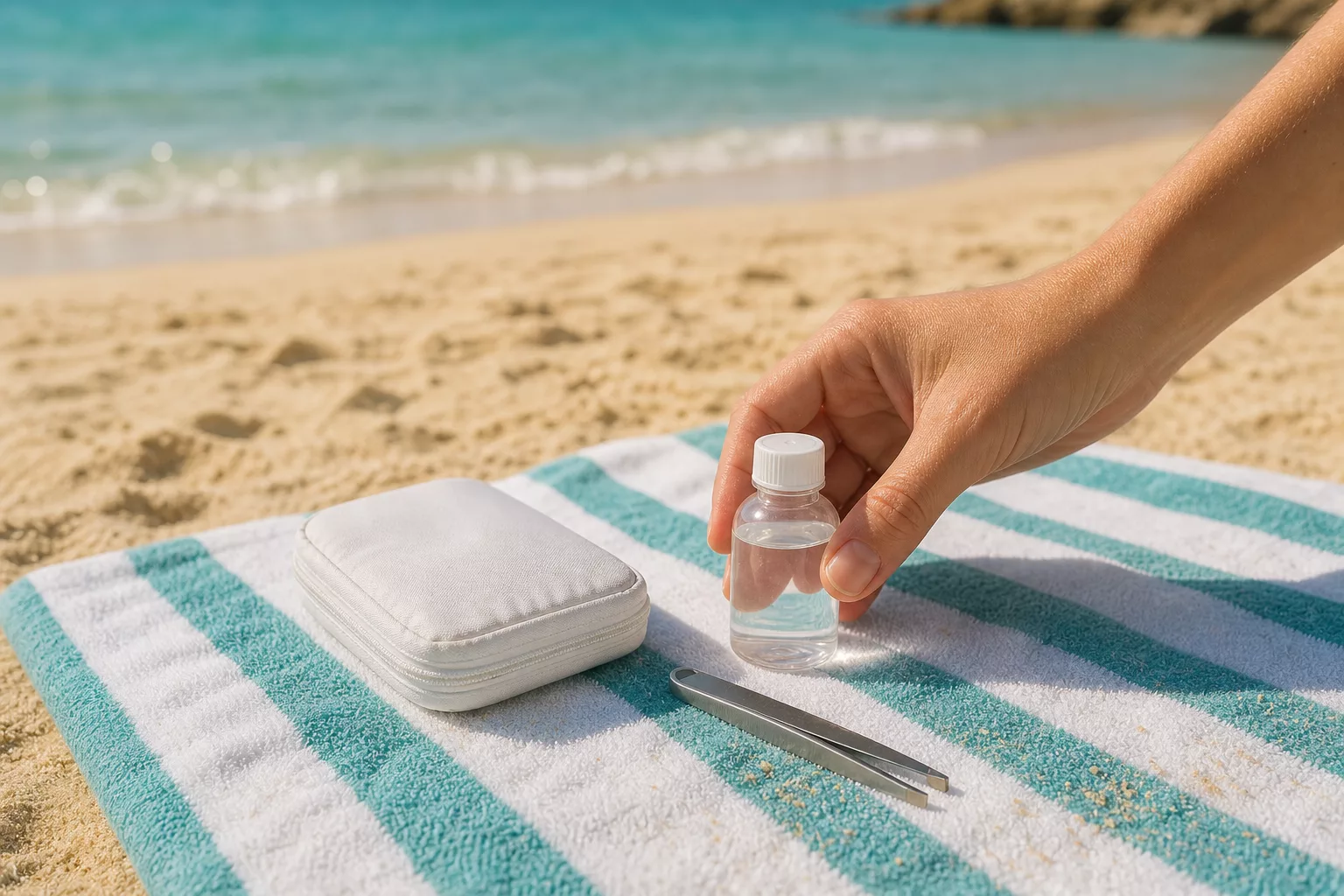
- Have mini set with you: A small pair of tweezers and some vinegar in your beach bag cost almost nothing and will help immediately in an emergency.
Conclusion
Jellyfish and sea urchins are part of the Mediterranean, and their numbers will increase rather than decrease in 2026. That’s not a reason to forego a beach vacation. Anyone who recognizes the few dangerous species, packs bathing shoes, takes a quick look at the warning flags and, in an emergency, reacts with sea water instead of fresh water, is well prepared. Then the memory of the vacation remains of turquoise water – and not of a stitch. All you need to complete a relaxed end is a plate of light, Mediterranean cuisine.
Frequently asked questions
What to do if you get stung by a jellyfish in the Mediterranean?
Rinse the area immediately with sea water, never fresh water. Remove any remaining tentacle residue with the edge of a card or tweezers, do not rub, and then apply a warm compress at around 45°C for 20 to 45 minutes.
Which jellyfish in the Mediterranean is most dangerous?
The most painful and common is the glow jellyfish. However, the Portuguese galley, which occurs primarily in the western Mediterranean, is considered potentially life-threatening and whose sting can trigger circulatory shock.
Is a Portuguese Galley sting dangerous?
Yes. Their venom can cause rapid heartbeat, shortness of breath and, in rare cases, circulatory shock. Leave the water immediately, do not remove tentacles with your bare hands, and seek immediate medical attention if symptoms become severe.
What to do if you step on a sea urchin?
Gently pull out superficial spines with tweezers and disinfect the wound. Deeply stuck or broken spines should be removed by a doctor as any residue left behind can easily become infected. Bathing shoes prevent the problem from the start.