


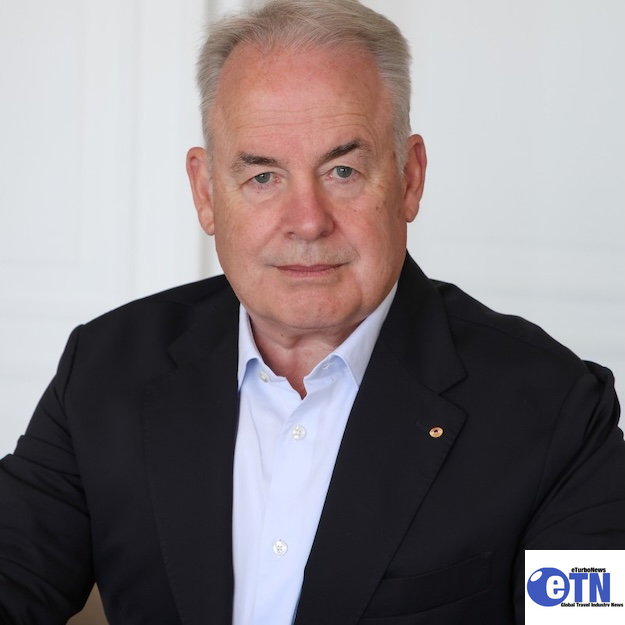
Former Etihad Airways CEO James Hogan warns Gulf airlines including Emirates, Qatar Airways and Etihad may require up to two years to recover after regional conflict ends. Industry experts say disrupted airspace, weakened travel confidence and operational challenges could reshape Middle East aviation despite the carriers’ long-term resilience.qatarairlaiu
Former James Hogan has warned that the Gulf aviation sector could need as long as two years to fully recover once the current regional conflict subsidies, underscoring the enormous strain placed on the Middle East’s globally connected airline hub system.
Speaking in recent interviews and industry discussions, Hogan said the recovery of carriers such as Etihad Airways, Qatar Airways, and Emirates is “a matter of when, not if,” estimating the rebuilding process could take between 12 and 24 months after hostilities end.
The comments come at a pivotal moment for Gulf aviation, an industry that has transformed the Middle East into one of the world’s most important long-haul transit regions over the past two decades.
War Shock Hits the Global Hub Model
According to Hogan, the conflict has disrupted the core strength of Gulf carriers: their ability to connect East and West through geographically strategic mega-hubs in Abu Dhabi, Dubai and Doha. Airlines across the region have been forced to reroute aircraft, suspend destinations and reduce schedules amid airspace restrictions and security concerns.
Hogan estimated that the Gulf’s three largest airlines removed roughly 5.4 million seats and 18,000 flights from schedules during the height of the disruption.
The impact reaches far beyond ticket sales.
The Gulf carriers operate one of the world’s most interconnected aviation ecosystems, linking tourism, airport retail, cargo, hospitality, aircraft financing and business travel. A prolonged conflict affects not only passenger confidence but also aircraft utilization, staffing, logistics, and investment planning.
Yet Hogan insists the fundamentals of the Gulf airline model remain intact.
“The region’s strategic geography, premium service offering and global connectivity remain difficult for rivals to replicate,” Hogan said in remarks reported by aviation industry media.


Knighthood Global | Investments & Advice
Knighthood Global is a leading advisory services and investment company set up by principals James Hogan and James Rigney.
A Veteran Voice in Gulf Aviation
Hogan’s assessment carries weight because few executives shaped Gulf aviation more profoundly.
The Australian-born executive first led Gulf Air before taking over Etihad in 2006. Under his leadership, Etihad expanded aggressively into Europe, Asia, Australia and North America, becoming a symbol of Abu Dhabi’s ambitions to compete directly with Emirates and Qatar Airways. (
During Hogan’s tenure, Etihad built a global network and pioneered an “equity alliance” strategy, investing in airlines including Air Berlin, Alitalia, Air Serbia and Virgin Australia. While some investments later produced major losses, Hogan helped establish the Gulf carrier model as a dominant force in global aviation.
His leadership also coincided with the explosive growth of long-haul hub aviation in the Gulf, driven by massive aircraft orders from Boeing and Airbus and supported by state-backed infrastructure expansion.
Why Recovery Could Take Years
Industry analysts say Hogan’s timeline reflects several structural realities.
Passenger Confidence Must Return
Wars and geopolitical instability tend to depress international travel demand long after fighting stops. Corporate travelers and high-end tourists — a core market for Gulf carriers — often delay bookings until insurance, routing and security concerns stabilize.
Airspace Disruptions Are Expensive
The Gulf carriers rely heavily on precise routing efficiency. Detours around restricted airspace increase fuel burn, crew costs, and scheduling complexity.
For ultra-long-haul operations, even modest rerouting can erase profit margins.
Fleet and Capacity Planning Takes Time
The major Gulf airlines operate large fleets of widebody aircraft, including the Airbus A380 and Boeing 777. Restoring suspended routes requires aircraft repositioning, crew recertification and renewed slot approvals at foreign airports.
Analysts note that rebuilding network confidence often takes multiple seasonal schedules.
Tourism Ecosystems Need Rebuilding
Dubai, Abu Dhabi, and Doha have developed into integrated tourism and business hubs. Reduced aviation traffic impacts hotels, exhibitions, shopping and cargo supply chains.
The airlines may recover operationally before the broader visitor economy fully rebounds.
Gulf Carriers Have Survived Crises Before
Despite the current challenges, Gulf airlines have a strong history of resilience.
The sector rebounded from the aftermath of the September 11 attacks, the global financial crisis, regional diplomatic disputes, and the COVID-19 pandemic.
Indeed, just weeks before the latest conflict escalated, Emirates reported record annual profits, reinforcing the financial strength many Gulf airlines built after the pandemic recovery.
Hogan argued that skeptics have repeatedly underestimated the Gulf aviation sector.
“I shake my head when people doubt that the Gulf will come back,” he said in comments carried by Arabian Gulf Business Insight.
Competitive Advantage Still Intact
One of Hogan’s strongest arguments is that Gulf airlines still possess advantages competitors struggle to match:
- Geographic positioning between Europe, Asia and Africa
- Modern fleets
- High service standards
- Large-scale airport infrastructure
- Government-backed aviation strategies
Industry observers say that while European and Asian rivals may temporarily gain market share during instability, replicating the Gulf hub model would require decades of infrastructure investment and political coordination.
Hogan has long defended Gulf carriers against criticism from Western airlines, which for years accused Middle Eastern airlines of benefiting from unfair state support. Even during earlier disputes, Hogan argued Gulf airlines succeeded because they embraced new technology, fleet modernization and premium customer service.
The Next Phase for Gulf Aviation
The real test may not be survival, but adaptation.
The region’s airlines are increasingly investing in sustainability initiatives, digital transformation and diversified revenue streams beyond passenger traffic.
Meanwhile, tourism megaprojects in Saudi Arabia and continued expansion in the UAE suggest Gulf governments still see aviation as central to long-term economic diversification.
For now, however, the industry remains focused on stabilization.
Hogan’s forecast of a two-year recovery may ultimately prove optimistic or conservative depending on how quickly geopolitical tensions ease. But his core message is clear: the Gulf aviation model has been bruised before — and each time, it has returned stronger.