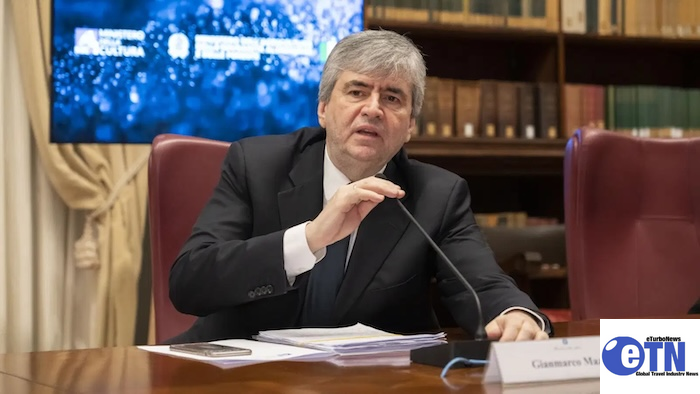
Italy’s new Tourism Minister Gianmarco Mazzi steps into office amid scandal, forming a pivotal alliance with Alessandra Priante. Their partnership—blending cultural storytelling and global strategy—could redefine Italy’s tourism model, but underlying power tensions may shape its success.
In Rome, power in Italy’s tourism sector has rarely been so concentrated—or so delicately balanced between politics and technocracy.
The appointment of Gianmarco Mazzi as Minister of Tourism this month did more than fill a vacancy left by scandal. It sets the stage for a critical partnership with Alessandra Priante, the internationally seasoned head of ENIT—a relationship that could define how Italy sells itself to the world in a period of mounting global competition.
Two power centers, one mandate

At first glance, the division is clear:
- The Ministry of Tourismnow led by Mazzi, sets policy and political direction
- ENITunder Priante, executes a strategy—marketing Italy abroad, coordinating regions, and shaping the country’s tourism narrative.
But in practice, the boundary is porous.
ENIT operates under the ministry’s oversight, yet retains operational autonomy and international reach. Priante, a former senior official at the United Nations tourism body, has built a reputation as a global strategist and diplomatic operator —a profile markedly different from Mazzi’s domestic, culture-driven career.
This asymmetry is where both opportunity and tension emerge.
An unusually aligned beginning

Home Page | Enit SpA (English)
| Enit SpA (English)
In the immediate aftermath of Mazzi’s appointment, Priante quickly moved to signal unity.
She publicly welcomed the new minister and pledged to work “in full synergy with the Ministry,” emphasizing shared priorities: international positioning, sustainability, and competitiveness.
Her statement went further than customary diplomacy. She underscored Mazzi’s cultural background—film, music, and artistic production—as an asset for tourism leadership, suggesting a strategic convergence around “culture as tourism infrastructure.”
That alignment is not accidental.
- Mazzi’s career has been rooted in cultural production and national identity building
- Priante’s approach has focused on global branding, data, and multilateral cooperation
Together, they represent two halves of a modern tourism model: storytelling and systems.
The backstory: a near miss
The partnership might have looked very different.
In the days before Mazzi’s appointment, Priante herself was widely discussed in political circles as a potential minister—a “technical” candidate who could bring credibility after the resignation crisis.
That speculation reveals an underlying truth:
Priante is not merely a collaborator. She is a parallel center of authority.
Her influence stems from:
- Direct control over Italy’s international tourism campaigns
- Deep ties to global institutions and markets
- A track record in shaping national tourism strategy
In another scenario, she might have been Mazzi’s superior. Instead, she is now his counterpart.
Cooperation—or quiet rivalry?
For now, both sides project coordination. But structural tensions are inevitable.
1. Strategy vs. politics
Priante’s long-term planning—built on data, sustainability, and diversification—may clash with political imperatives for quick wins or domestic visibility.
2. International vs. domestic focus
ENIT’s mission is outward-facing: attracting foreign visitors and shaping Italy’s global image.
Mazzi’s political base, however, is domestic—and sensitive to regional pressures and short-term economic concerns.
3. Control of the narrative
Tourism is not just an economic sector in Italy; it is a cultural identity.
Who defines that identity—the minister or the technocrat—remains an open question.
Early signs of a shared agenda
Despite these fault lines, there are indicators of genuine alignment:
- Both emphasize sustainability and innovation as core to future tourism growth
- Both see tourism as a strategic pillar of national identity and economic resilience
- Both support integrated promotion of regionsa longstanding ENIT objective.
There is also a looming test case: Italy’s preparation for major global events such as the 2026 Winter Olympics in Milan-Cortinawhere coordination between ministry policy and ENIT promotion will be essential
The stakes: beyond tourism
This relationship extends beyond marketing campaigns and visitor numbers.
Tourism contributes significantly to Italy’s economy and international reputation. In a context shaped by geopolitical instability and shifting travel patterns, leadership coherence is critical.
Priante herself has warned that global instability is reshaping tourism flows and intensifying competition, requiring “strong leadership” and strategic clarity.
The bottom line
The Mazzi-Priante relationship is not merely bureaucratic. It is a dual leadership experiment:
- A minister rooted in culture and politics
- A technocrat with global reach and institutional memory
If they succeed, Italy could refine a model where culture, diplomacy, and tourism operate as a single system.
If they fail, the fractures—between politics and expertise, between Rome and the world—could once again surface in one of the country’s most vital sectors.
For now, the alliance holds. But in Italy’s tourism economy, harmony is rarely permanent—and influence is never uncontested.