


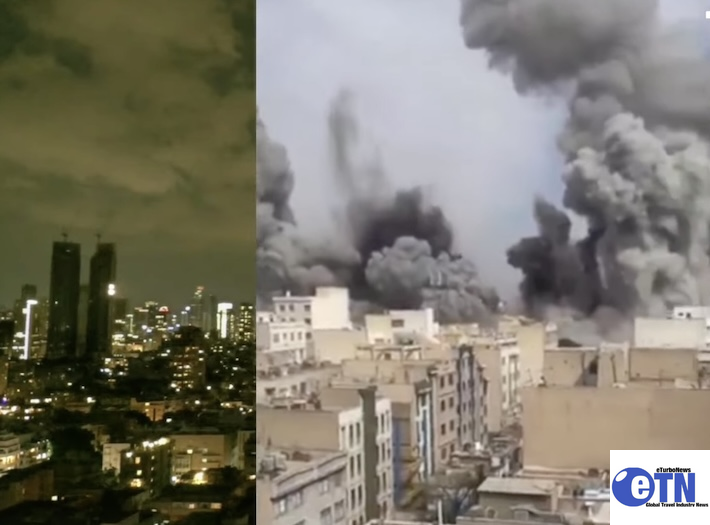
Iran launched a wave of missile and drone strikes across the Middle East and the Caucasus, hitting airports, hotels, and residential areas. Dubai’s prestigious 23 Marina Tower was damaged, while explosions were also reported in Saudi Arabia, Bahrain, and Azerbaijan. Iran also fired missiles toward Israel, where air-defense systems intercepted several projectiles over major cities.
A dramatic escalation in the widening Middle East conflict unfolded today as Iran launched a massive wave of missile and drone strikes across multiple countries, hitting airports, luxury hotels, residential buildings, and energy infrastructure in what analysts describe as one of the most dangerous regional crises in decades.
Explosions were reported across the United Arab Emirates, Saudi Arabia, Bahrain, and Azerbaijanwhile air-defense systems lit up the skies attempting to intercept incoming missiles and drones.
The attacks have disrupted international aviation, damaged civilian buildings, and raised fears that the conflict between Iran, Israel, and the United States is rapidly expanding into a broader regional war.
Luxury Dubai Skyscraper 23 Marina Tower Hit
One of the most shocking incidents occurred in Dubaiwhere explosions were reported nearby Dubai International Airportforcing authorities to suspend flights and close parts of the airspace.
During the same wave of attacks, 23 Marina Towerone of the most prestigious residential skyscrapers in the Dubai Marina district, was reportedly struck or damaged by an explosion nearby.
The 90-story luxury tower—home to wealthy expatriates, international professionals, and foreign investors—was partially evacuated as emergency crews rushed to the scene.
Witnesses described hearing a powerful blast followed by smoke rising from the area around the building. Authorities are still assessing the damage and have not confirmed casualty figures.
Hotels and Tourist Areas Targeted
Iranian strikes have increasingly impacted civilian areas across the Gulf.
In Bahraina drone strike reportedly hit a hotel and nearby residential buildings in the capital Manamadamaging several structures and forcing evacuations.
Other blasts were reported near luxury tourism areas in the UAE, including parts of Palm Jumeirahraising alarm about the vulnerability of densely populated districts.
Officials say debris from intercepted missiles and drones has also caused damage to buildings in several cities.
Saudi Arabia Hit by Drone Attacks
Iranian drones and missiles were also launched towards Saudi Arabiatargeting strategic infrastructure and energy facilities.
Saudi air-defense systems intercepted several incoming drones, although explosions were reported near oil installations earlier in the conflict. Officials warned that repeated strikes could threaten major global energy supply routes.
Oil markets reacted quickly, with prices rising amid fears that further attacks could disrupt production in the Gulf.
Azerbaijan Drawn Into the Conflict
For the first time in the current escalation, Azerbaijan also reported Iranian drone strikes targeting infrastructure near its territory.
Explosions were reported nearby Nakhchivan International Airportwhere drones struck close to airport facilities and nearby civilian buildings.
The attack injured several civilians and damaged structures near the airport, marking one of the northernmost strikes linked to the conflict so far.
Security analysts say the attack may be connected to Azerbaijan’s strategic ties with Israel and the presence of regional security infrastructure near the Iranian border.
Was Expanding Across Multiple Countries
What began as a confrontation between Iran, Israel, and the United States has now spread across multiple countries in the region.
UAE is now in a state of war with Iran
United Arab Emirates President Mohammed bin Zayed Al Nahyan issued a thinly veiled warning to Iran, saying his country is “not easy prey” and referring to Tehran as “the enemy” — a notable departure from the language the UAE has traditionally used towards its northern neighbor.
The president said he “wanted to send a message to the enemy of the UAE.”
Speaking during a visit to a hospital treating civilians wounded in the strikes, he cautioned Iran: “The UAE is beautiful, the UAE is a model to be followed, but I tell you, do not be deceived by that.”
“The UAE’s hand can reach and is strong, its flesh is bitter, and we are not easy to prey.”
The comments — his first since the war began — were broadcast shortly after Emirati air defenses responded to a missile threat, despite Iran’s president having suggested earlier in the day that attacks across the Persian Gulf would stop.
“We are carrying out our duty towards our country, our people, and those who live among us. May God protect the UAE, protect its people and everyone in it, and bless it with security and safety,” MBZ added.
“I promise you that what is coming will show us stronger.”
Countries directly affected in the Iran War
Countries directly affected or participating in defensive operations now include:
- United States – conducting large-scale air and missile strikes against Iranian targets
- Israel – launching ongoing air operations inside Iran
- Iran – firing missiles and drones across the region
- Saudi Arabia – intercepting drones and defending key infrastructure
- United Arab Emirates – responding to missile and drone attacks
UAE is now in a state of war with Iran - Bahrain – host of the US Navy’s Fifth Fleet and target of Iranian strikes
- Kuwait – home to major US military bases
- Jordan – intercepting missiles crossing its airspace
- Azerbaijan – reporting drone strikes near its airport infrastructure
Meanwhile, Hezbollahan Iranian-backed militant group in Lebanon, has launched rockets toward Israel, opening another front in the conflict.
Western nations, including the United Kingdom and France, have deployed military assets to the region but have not yet entered direct combat.
The United Arab Emirates officially confirmed to be at a time of war with the Islamic Republic of Iran, saying the UAE is beautiful and has a big and bitter skin.
Global Alarm as Conflict Widens
The crisis began after large-scale US and Israeli strikes on Iranian military infrastructure late last month, triggering widespread retaliation by Tehran.
Since then, Iran has launched hundreds of missiles and drones targeting US bases, airports, oil facilities, and major cities across the region.
Airlines worldwide have begun rerouting flights away from Middle Eastern airspace, while governments warned citizens to avoid travel to the region.
The United Nations has called for an immediate ceasefire, warning that continued escalation could ignite a broader regional war involving major global powers.

As night falls across the Middle East and the Caucasus, air-defense systems remain on high alert while emergency crews assess damage from the day’s attacks.
Security officials warned that additional missile launches or retaliatory strikes could occur within hoursraising fears that the conflict may spread even further.