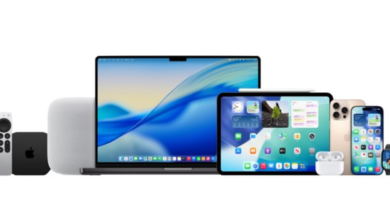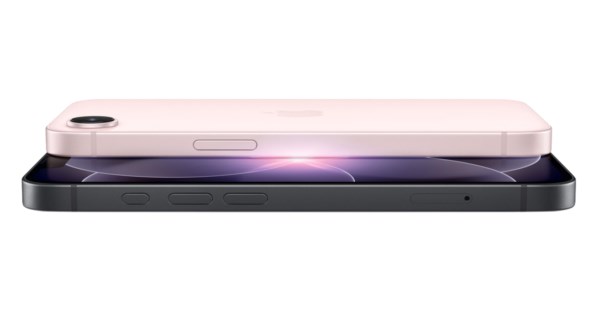
 The first day of the most recent announcement week was accompanied by the presentation of the iPhone 17e and the iPad Air M4. The major new functions have already been explained in the respective press releases, although these primarily concern the chip, especially in the case of the iPad Air – Apple’s comparisons are therefore mostly aimed at older models instead of their direct predecessor. In the meantime, a few more details have leaked that were somewhat lost in the previous discussions.
 Chip binning on iPhone 17e and iPad Air M4
For example, it was noticeable that the chips used in the iPhone 17e (A19) and iPad Air (M4) are slimmed down or “binned” versions. For example, the A19 installed in the iPhone 17e lacks a GPU core, as there are five in the iPhone 17 and only four in the 17e. The M4 of the iPad Air, however, differs in terms of the efficiency cores, as there are five of them, whereas the iPad Pro M4 had six. In the models with at least one TB there were four instead of three performance cores. In the case of the GPU, Apple reduced the number of cores from ten to nine.
iPhone 17e: eSIM, protective cases, battery, portraits
Apple’s transition to iPhones without a physical SIM card continues. The 16e was only “eSIM only” in the USA, now the list includes 13 nations (model number A3575). In European countries, however, nothing has changed. The battery capacity also remained the same, which is 4005 mAh for both the 16e and 17e. Another point without changes: Since Apple did not revise the case dimensions, the same protective cases fit the 2025 and 2026 e-models. However, one feature only seems to be available on the 17e, as “Next-generation portrait support” is mentioned on the product page. People, dogs or cats are recognized and depth information is saved automatically. Incidentally, the iPhone 17e has gained minimal weight, although the increase of two grams should not be noticeable even in a direct comparison.