In Western Sahara, luxury kite camps, military checkpoints, and geopolitical rivalries now exist side by side.
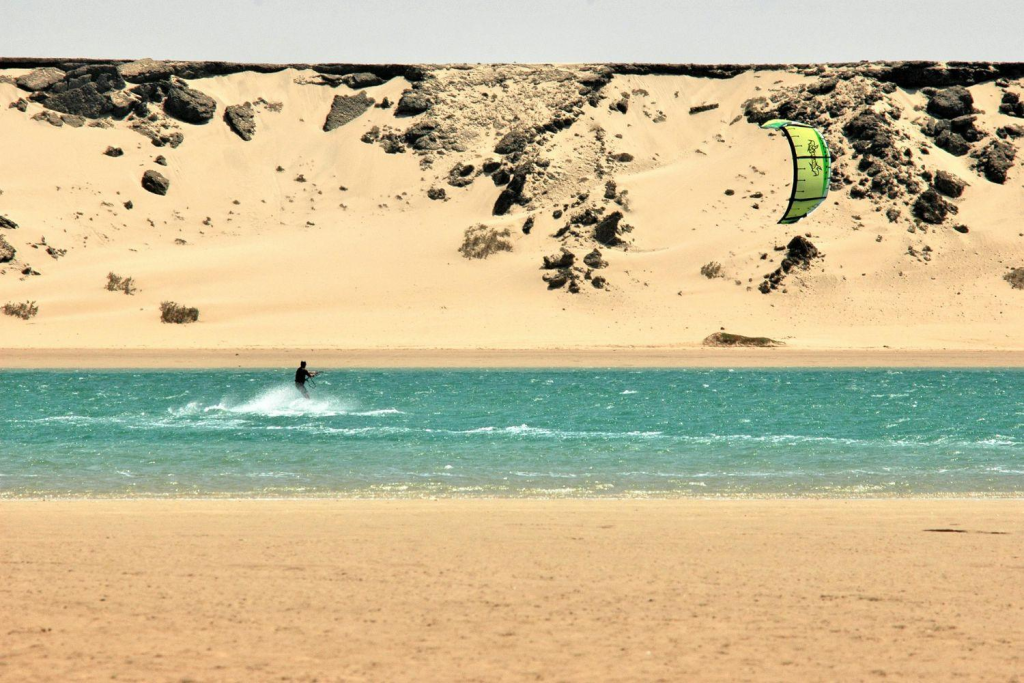
DAKHLA, Western Sahara — The wind begins before sunrise. By midmorning, it sweeps across the lagoon in long, muscular gusts, bending the tents of luxury eco-camps and lifting hundreds of brightly colored kites into the pale blue sky. European tourists in wetsuits skim silently over the shallow water while fishermen haul octopus traps nearby. Behind them stretches the desert: empty, immense and politically unresolved.
For Morocco, this remote Atlantic peninsula is the future. For critics, it is occupied territory dressed as a tourism frontier.
And for travelers arriving from Paris, Madrid or Frankfurt on charter flights packed with surfers and influencers, it is increasingly sold as one of the world’s last untapped adventure destinations.
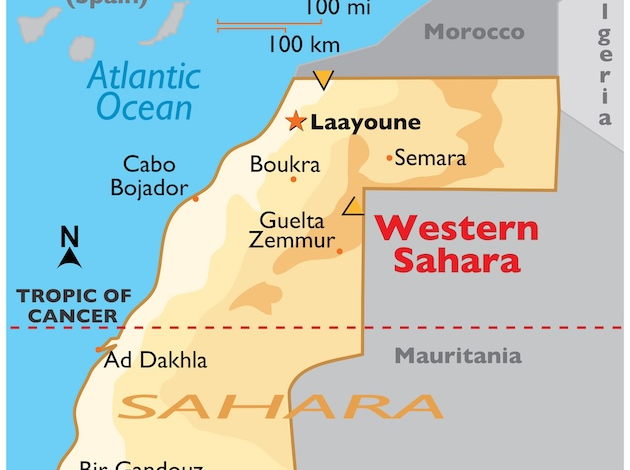
Western Sahara — a sparsely populated territory roughly the size of Britain — remains one of the world’s longest unresolved geopolitical disputes. Morocco controls most of it, administering the region as its “Southern Provinces.” The Polisario Front, an independence movement backed by Algeria, continues to seek sovereignty for the Sahrawi people and operates a government-in-exile from refugee camps near Tindouf, Algeria.
Yet amid decades of diplomatic stalemate, a new contest has emerged: not over tanks or treaties, but over infrastructure, branding, and tourism.
Nowhere is that strategy more visible than in Dakhla.
Once a sleepy military outpost at the edge of the Sahara, Dakhla has transformed into a carefully curated oasis of kite-surf camps, seafood restaurants, and desert luxury lodges. Morocco has poured billions of dollars into roads, airports, renewable energy, and port development across the territory, seeking both economic integration and international legitimacy.
The message is unmistakable: prosperity is intended to reinforce sovereignty.
Along the coastal highway south from Laayoune, fresh asphalt cuts through hundreds of miles of barren landscape. New government buildings rise alongside camel crossings. Moroccan flags appear at nearly every roundabout and administrative compound.
“There is a deliberate effort to normalize the territory economically,” said one European analyst who studies North African development and requested anonymity because of the sensitivity of the issue. “Tourism is part of that normalization.”
Morocco’s Western Sahara Tourism Push Raises New Questions About Sovereignty and Economic Control – African Sustainability Matters
Morocco’s growing effort to position Western Sahara as a major tourism destination is attracting increasing international scrutiny, as expanding airline
But the reality remains complicated.
The region’s tourism economy is narrow and highly concentrated. Most international visitors come for one reason: wind.
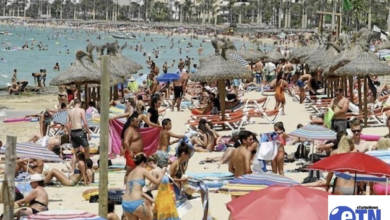
Dakhla’s lagoon has become one of the premier kite-surfing locations in the world, attracting athletes and hobbyists from France, Germany, the Netherlands and Scandinavia. During peak season, camps along the water operate almost continuously, marketing yoga retreats, digital detoxes and “authentic desert experiences” to affluent Europeans seeking remoteness without sacrificing comfort.
“It feels untouched,” said Clara Jensen, a Danish visitor balancing a surfboard outside a beachfront camp. “You feel like you’re at the end of the world.”
In some ways, she is.
Beyond the tourist corridor lies one of the most militarized landscapes in Africa. A vast sand wall — known simply as “the Berm” — stretches more than 1,600 miles across the desert, separating Moroccan-controlled territory from areas held by the Polisario Front. Land mines remain scattered in remote regions. United Nations peacekeepers continue to monitor a cease-fire that effectively collapsed in 2020 after renewed clashes.
Most tourists never see any of it.
Instead, they encounter a carefully managed version of the territory: polished resorts, heavily subsidized development projects, and an atmosphere of stability that Morocco has worked aggressively to promote.
The effort has gained diplomatic momentum in recent years. The United States recognized Moroccan sovereignty over Western Sahara in 2020, and several European and African governments have since backed Morocco’s autonomy proposal as the most realistic path forward.
That support has strengthened investor confidence. New port projects, fisheries infrastructure and renewable energy developments are advancing rapidly. Moroccan officials envision Dakhla not merely as a resort town, but as a strategic Atlantic gateway linking Europe to West Africa.
Still, the unresolved political status of the territory shadows every development plan.
Human rights organizations and Sahrawi activists argue that tourism risks obscuring the underlying conflict while economically marginalizing indigenous Sahrawis. Some accuse foreign companies and travel operators of profiting from disputed country without meaningful local consent.
“There is an image campaign underway,” said a Sahrawi activist based in Spain. “Tourism creates the appearance of normality.”
For international tour operators, the political sensitivities require careful navigation. Many markets in Dakhla simply refer to it as part of Morocco, avoiding mention of the dispute altogether. Others quietly advise travelers to avoid discussing politics publicly.
The remoteness of the region also imposes practical limitations. Outside Dakhla and Laayoune, tourism infrastructure remains thin. Water scarcity is severe. Most food and supplies must travel long distances by road. Flight capacity is limited, and nearly all international access routes pass through Morocco itself.
Mass tourism on the scale of Marrakesh or Agadir remains unlikely anytime soon.
Instead, Western Sahara is evolving into something more selective: a niche destination where geopolitics and luxury coexist uneasily.
At sunset in Dakhla, the lagoon turns copper-colored beneath the desert sky. Tourists gather for seafood dinners while generators hum softly behind the dunes. A few miles away, military checkpoints monitor the highway south towards Mauritania.
The wind never stops.
And neither, it seems, does the struggle over what this place ultimately is — a Moroccan boomtown, an occupied territory, or a nation still waiting to emerge from the sand.