


From a new pier in Majuro to community eco-lodges and traditional weaving, the Marshall Islands is reshaping tourism on its own terms. Backed by support from Taiwan, the Pacific nation is pursuing slow, sustainable growth while balancing isolation, climate risks, and limited infrastructure.
MAJURO, Marshall Islands — On a narrow strip of coral land surrounded by vast Pacific blue, a new pier rises quietly from the lagoon. Nearby, under the shade of pandanus trees, women weave palm-leaf baskets the same way their ancestors did for generations.
These scenes capture a country attempting something rare in global tourism: growth without losing itself.
The Republic of the Marshall Islands is not trying to become the next mass-market island destination. Instead, it is crafting a deliberate, small-scale tourism model—one built on culture, sustainability, and partnerships, including growing support from Taiwan.
A Tourism Industry Designed to Stay Small
With just a few thousand visitors a year, tourism here remains one of the smallest in the Pacific. But that is not a failure—it is policy.
Government plans emphasize:
- Community based tourism
- Cultural preservation
- Environmental protection
- Gradual increases in visitor numbers
Instead of large resorts, the focus is on locally owned guesthouses, eco-lodges, and cultural experiences—like learning traditional navigation or weaving techniques.
“We don’t want mass tourism,” a local official said in Majuro. “We want meaningful tourism.”
Getting There: A Journey Few Make


Reaching the Marshall Islands remains one of the biggest hurdles.
Most travelers arrive via the “Island Hopper” flight from Honolulu or Guam, operated by United Airlines. The route stops across Micronesia before landing in Majurothe capital.
Challenges include:
- Limited flight frequency
- High ticket prices
- Long, multi-stop journeys
For now, remoteness is both a barrier—and part of the appeal.
Who Comes—and Why
The typical visitor is not a beach resort tourist.
Instead, arrivals include:
- Scuba various drawn to remote wrecks and lagoons
- Government officials and NGO workers
- Marshallese diaspora visiting family
- A small number of adventure travelers
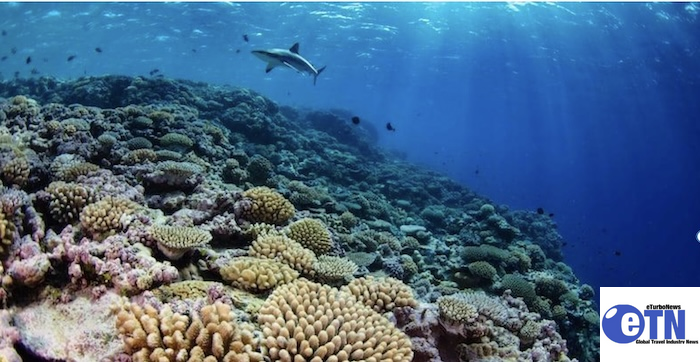
Places like Bikini Atoll attract experienced divers seeking one of the world’s most unusual underwater landscapes.
Where to Stay: Simple, Local, Evolving


Accommodation remains limited and largely centered in Majuro:
- Small hotels and business lodgings
- Family-run guesthouses
- Early-stage eco-lodges on outer islands
Luxury tourism is virtually non-existent. But that is intentional.
Officials aim to expand capacity carefully—ensuring development does not strain land, water, or culture.
Taiwan’s Role: Financing a New Tourism Economy
Support from Taiwan has become a quiet but important force behind development.
Recent cooperation includes:
- Financing for small businesses and tourism startups
- Support for women-led enterprises
- Broader economic agreements tied to infrastructure and trade
Rather than large-scale resort investment, the emphasis is on grassroots growth—helping local entrepreneurs build guesthouses, tour services, and craft businesses.
This aligns closely with the Marshall Islands’ vision of tourism that benefits communities directly.
A Strategic Location in a Complex Region
The Marshall Islands sits at a geopolitical crossroads.
- It maintains strong ties with the United States under the Compact of Free Association
- It is one of the few countries that officially recognizes Taiwan
- It lies in a region of increasing strategic competition with China
While tourism is not overtly political, these relationships shape:
- Infrastructure funding
- Economic development
- International visibility
The Challenges: Beauty Under Pressure
For all its promise, tourism faces serious constraints:
Climate Change
The islands sit barely above sea level, making them among the most vulnerable nations on Earth to rising oceans.
Infrastructure Limits
Hotels, transport, and utilities remain underdeveloped.
Workforce gaps
Many Marshallese live abroad, reducing available labor at home.
isolation
Distance keeps costs high and visitor numbers low.
The Outlook: Slow Growth, High Value
Tourism is expected to grow—but only gradually.
Rather than chasing millions of visitors, the Marshall Islands is positioning itself as:
- A niche destination
- A leader in sustainable Pacific tourism
- A place where culture is the main attraction
From the new pier in Majuro to a handwoven basket drying in the sun, tourism here is not about spectacle. It’s about continuity.
A Different Kind of Paradise
In an era of overtourism, the Marshall Islands offers something increasingly rare: restraint.
It is a place where development moves slowly, where partnerships like those with Taiwan support local ambition, and where the rhythm of life—tides, traditions, and community—still sets the pace.
For travelers willing to make the journey, it is not just a destination. It is a glimpse of what tourism could become.