


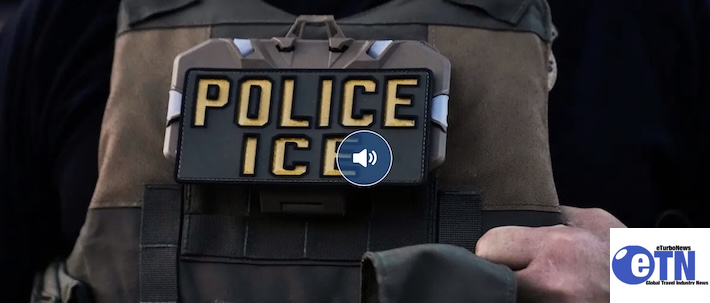
A proposal to deploy ICE agents at US airport security checkpoints is raising alarms among experts and travelers alike. Critics warned that ICE’s enforcement-driven approach could slow operations, heighten fear and confusion, and damage America’s global image—potentially
WASHINGTON— The word ICE has long carried a specific meaning in the United States: immigration enforcement, raids, detention.
Now, that same word—ICE—is being proposed for a very different setting: the airport security line.
Amid a prolonged government shutdown that has left Transportation Security Administration officers unpaid and increasingly absent, President Donald Trump has threatened to replace them with ICE agentssaying they would provide security “like no one has ever seen before.” (Reuters)
The proposal has stunned aviation experts and alarmed civil liberties advocates, not only because ICE agents are not trained in airport screeningbut because of what ICE represents—and what its presence might signal to the world.
ICE: From Enforcement Agency to Airport Security?
ICEor Immigration and Customs Enforcement, was created after the Sept. 11 attacks to enforce immigration laws inside the United States. Over time, ICE has become one of the most visible—and controversial—arms of federal enforcement.
In recent months alone, ICE operations have included large-scale raids, workplace arrests and sweeping enforcement campaignsincluding “Operation Metro Surge,” a crackdown in Minnesota that resulted in thousands of arrests and multiple deaths. (Wikipedia)
That operation—and others like it—help explain why the idea of ICE standing at airport checkpoints has triggered such an intense reaction.
“ICE is not a neutral presence to many people” said one former homeland security official. “It is an enforcement presence. It carries weight, history and, for some, fear.”
The Record That Follows ICE
The concerns are not abstract.
Recent ICE deployments have been tied to fatal incidentsincluding a Minnesota operation in which agents shot and killed two American citizens, prompting national backlash. (Reuters)
Other reported episodes from recent operations include:
- ICE detaining workers at airports during active shifts
- ICE stopping vehicles carrying families, including children
- ICE operations involving flashbangs and tear gas near civilians (Wikipedia)
Critics argue these actions illustrate a pattern: ICE operates with urgency and force, not the predictability of a civilian-facing agency like TSA.
Supporters counter that ICE is enforcing federal law in difficult conditions and plays a critical role in national security.
But both sides agree on one point:
ICE changes the tone of any space it enters.
What Happens When ICE Becomes the First Point of Contact?
Airports are not just infrastructure. They are symbolic entry points—where millions of people form their first impression of the United States.
For decades, that experience has been defined by TSA: procedural, standardized, sometimes frustrating, but largely predictable.
Replacing that with ICE would fundamentally alter the interaction.
Instead of:
- “Remove your shoes.”
- “Place your bag on the belt.”
Travelers may fear:
- “Why are they asking about my status?”
- “Can I be detained here?”
Even if ICE agents were instructed to perform only screening dutiesexperts say their presence alone could shift behavior.

Home | Transportation Security Administration
The TSA website serves as a comprehensive resource for travelers, offering information on security screening procedures, travel tips, and programs like TSA PreCheck®. It provides guidance on packing, REAL ID requirements, and assistance for passengers with special needs.
“ICE brings a law enforcement mindset focused on people, not objects,” said an aviation analyst. “That’s a different lens entirely.”
A System Already Under Pressure
The proposal comes as the aviation system is already strained.
- Hundreds of TSA officers have quit during the shutdown (AP News)
- Many remaining workers are unpaid and calling in sick
- Airports across the country are reporting long lines and delays
Into that vacuum, the administration has suggested inserting ICE.
But experts warned that ICE agents lack the technical training required for screening passengers and baggageraising concerns about both efficiency and safety. (Reuters)
Fear, Perception and the Traveler Experience
For many travelers, the most immediate impact would not be procedural—it would be psychological.
In communities across the United States, ICE already carries a reputation that extends beyond enforcement into daily life.
Reports from recent years describe:
- Families avoid public spaces after nearby ICE raids
- Workers fearing routine encounters could lead to detention
- Even legal residents caught up in enforcement actions due to errors or suspicion
Extending ICE into airports could bring that same atmosphere into one of the most universally shared public spaces.
“You don’t need to change policy to change behavior,” said a European travel executive. “You just need to change perception. And ICE changes perception immediately.”
Global Optics: The ICE Effect
Internationally, the optics may be even more significant.
Images of ICE agents—armed, enforcement-focused—running airport checkpoints would likely circulate widely, reinforcing a narrative of a more restrictive and security-driven United States.
Tourism experts warned of several likely consequences:
- Decline in foreign visitorsparticularly from regions sensitive to immigration scrutiny
- Reduced business travelas companies weigh unpredictability
- Diversion to alternative hubs in Europe or Canada
“Airports are a country’s front door,” said a tourism economist. “If that door is staffed by ICEit sends a message.”
Blurring the Line Between Security and Enforcement
At the heart of the debate is a fundamental question:
What is airport security supposed to be?
TSA was designed to detect threats to aviation—weapons, explosives, dangerous materials.
ICE is designed to enforce immigration law—to identify, question and detail individuals.