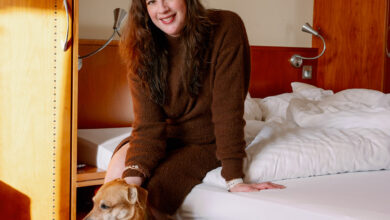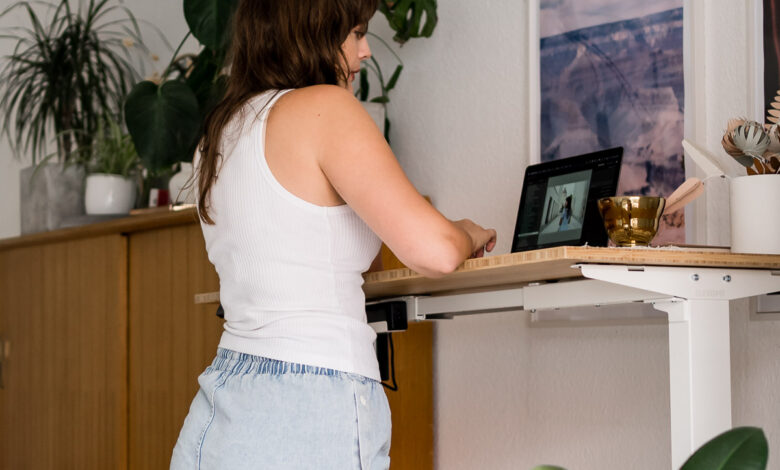
I almost only work from the sofa! Because I have been completely self-employed since 2020. At first it sounds pretty comfortable, and it often is. Especially now as a mom! No stress about daycare, no sick days. I don’t have to commute, I can organize my day freely and work in my usual surroundings. But that is exactly where the problem lies. At home, boundaries quickly become blurred. I don’t sit at a perfectly furnished workstation every day, but often on the couch, sometimes in bed, occasionally half-turned with a laptop on my knees. Of course, this is anything but ideal for your back.
Lifestyle blog on andysparkles
Why sitting for long periods in the home office is so treacherous
There is often automatically more movement in the office. You run to the coffee machine, go to another room, get documents, and briefly talk to colleagues. At home, a lot of it simply falls away. When I’m working, it can happen that I barely move for hours. Everything is within reach. Laptop, cell phone, water bottle, camera equipment, snacks, charging cables, all right next to me. Practical, but also quite fatal.
The common thing is that sitting for too long is not always immediately noticeable. You often only notice it later. Your shoulders become heavy, you slide ever deeper into yourself, your gaze goes downward, your neck tightens and at some point even standing up normally feels immobile. Especially when you work a lot on your laptop, you quickly tend to make yourself small. Unfortunately, I know this all too well.
In addition, many of us still think of sitting as a neutral posture. But it isn’t, at least not for hours. The body is not designed to stay in the same position for long periods of time. Even a supposedly good sitting posture is of little use if it remains unchanged for three hours at a time.
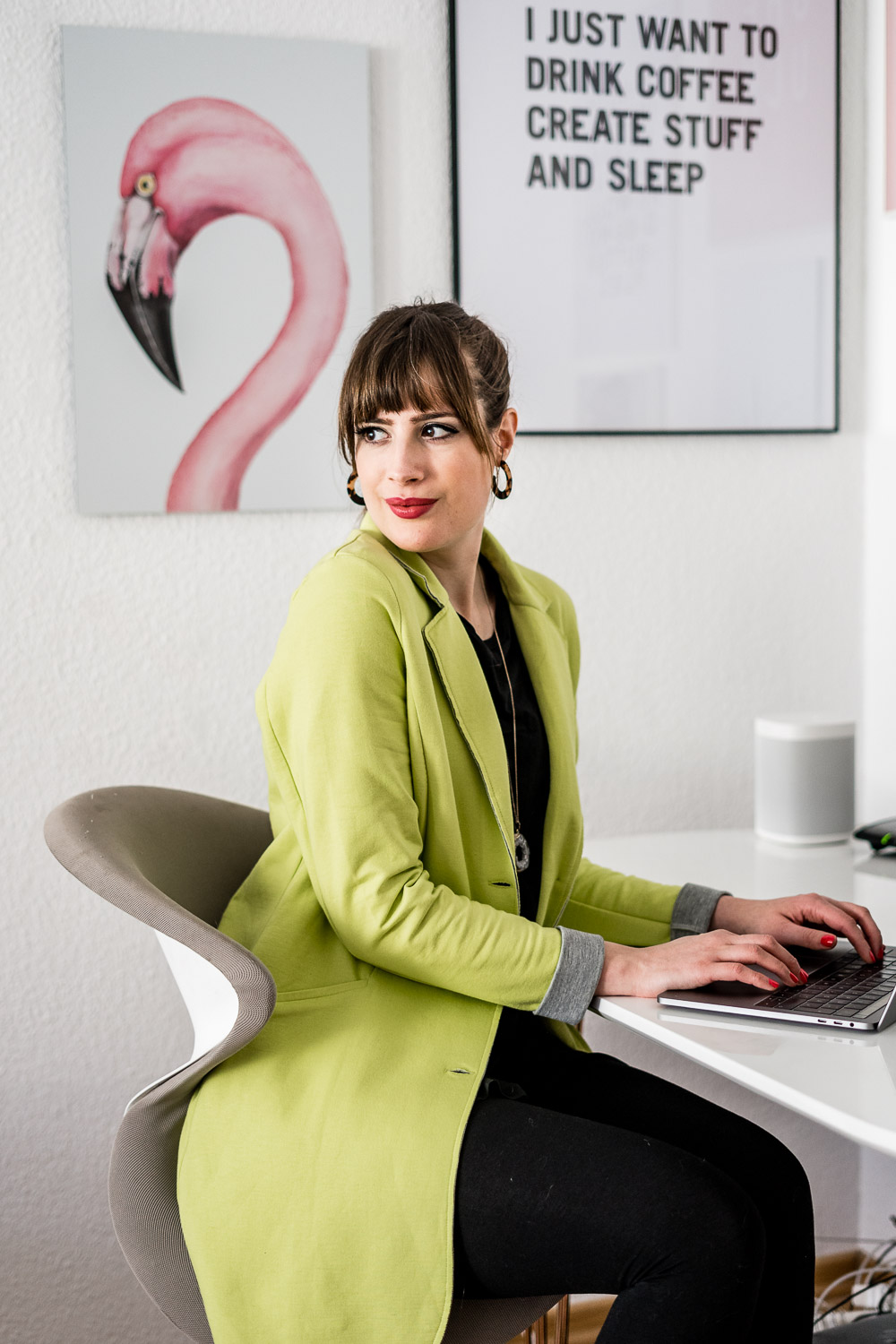
How often should you get up from your desk?
The simple answer is: significantly more often than most people do. It’s not enough to get up at midday and close your laptop in the evening. It makes sense to change your position and move briefly about every half hour or at least every hour. This doesn’t have to be a big workout. First of all, it’s about getting the circulation going again, relieving the strain on the muscles and signaling to the body that it’s not stuck in this one position.
It helped me not to see the topic as a sport, but as a small, compulsory part of everyday life. I don’t have to do ten squats every time. It’s often enough to stand up, take a few steps, circle your shoulders, refill your water or step briefly to the window. The main thing is that I don’t get stuck in the same position for hours at a time.
This is particularly important when working from home, because otherwise you slip into a complete marathon of sitting unnoticed. It used to often be like this for me: I started working in the morning, then suddenly it was afternoon and I barely moved.
What is the 40 15 5 rule?
A method that I find quite useful is this 40 15 5 rule. It is pleasantly simple and can therefore be implemented in everyday life. The idea behind it is to divide each hour of work roughly like this:
Sit for 40 minutes
During these 40 minutes you work with concentration while sitting. It is important that you do not collapse completely, but rather sit as stable and relaxed as possible. For me that means: both feet on the floor, shoulders relaxed, screen at a reasonable height.
Stand for 15 minutes
This is followed by a standing phase. Anyone who has a height-adjustable desk is of course at an advantage. But even without such a setup, you can incorporate small periods of standing. I sometimes answer messages standing up, sort something on the table, make short phone calls or simply stand on a higher surface with my laptop. It’s about breaking the sitting posture.
Move for 5 minutes
The last 5 minutes are for exercise. Walk around the apartment, stretch briefly, take a few steps on the balcony, hang up the laundry, get something from the other room, the main thing is to move. Exactly these 5 minutes often make more difference than you think. Afterwards, the body feels significantly more awake again, as does the head.
Ergonomics in everyday life
In the past, ergonomics always sounded to me like open-plan offices, company equipment and those height-adjustable desks that you’re more familiar with from catalogs. Today I see it completely differently. Ergonomics is not a luxury and not just an issue for people with a designer home office. It’s simply about not putting unnecessary strain on your body at work.
Especially when you’re self-employed, it’s easy to find yourself in positions that seem comfortable in the short term, but are simply rubbish in the long run. The couch feels comfortable at first, of course. The bed too. But both invite you to sink into yourself. It might work for half an hour, but not as a long-term daily solution.
I’ve noticed that it’s not just my back that thanks when I work more consciously. I’m also more concentrated, less sluggish and less likely to get that mushy feeling in my head that comes naturally after sitting for a long time.

This is what good posture at work really looks like
These things really make a difference and aren’t particularly stressful. Here are my favorite tips:
Keep your back as straight as possible
Not stiff, not cramped, but not completely sunken either. I’m now trying to make sure that I don’t hang in front of the laptop with a rounded back. This happens quickly, especially when you’re tired or looking at a small screen for too long.
Place your feet firmly
If the feet do not have firm contact with the ground, the posture often automatically becomes unstable. Then it’s easier to tip forward or sit crooked. That sounds banal, but it makes a big difference.
Align the screen and keyboard appropriately
Working on a laptop is simply tiring on the neck in the long run if you constantly look down. It therefore makes sense to move the screen to a more comfortable height if possible. An external keyboard and mouse can really help because then you don’t have to operate everything in a position that’s too low.
Let your shoulders relax
I tend to unconsciously hunch my shoulders when I’m stressed. At some point you realize that you are completely solid again. Since I’ve been taking short breaks more often, I’ve noticed this more quickly.
Why a good chair makes more difference than you think
For a long time I underestimated how much the wrong chair can make things worse. If you’re going to sit a lot, then the space should at least be reasonable. Of course, a good chair won’t solve every problem if you never move. But it can help you sit more stable, slump less and not put additional strain on your back.
Just one Office chair with headrest makes perfect sense. My friend has one of these and sometimes I sit in his office to work. This can be a real relief, especially on long working days when you notice that your neck is getting tired. Of course, this doesn’t replace exercise, but it is one component of several.
My simple tricks so that I actually get up more often
Theory is nice, everyday life is something else. What really helps me is simple things that aren’t annoying.
- I deliberately don’t put water right next to the laptop, but rather so that I have to stand up.
- I use phone calls to walk around the apartment.
- I associate certain tasks with exercise, for example standing up briefly after each section has been completed.
- I no longer work from the couch permanently. Really, that was one of the most important changes for me.
- I no longer accept back pain as a normal part of the workday.
Sometimes I also set a timer. Not because I want to live in a controlled manner, but because I know how easily I forget to take breaks once I’m focused.

Reducing back pain starts with small steps
Many people fail because they think they need the perfect study room, expensive equipment and a completely new routine. You don’t need it. It’s worth looking at your own habits more honestly and then tackling the points that are really annoying.
For me, the first thing I realized was that my back wasn’t sensitive, but that the way I worked was simply bad in places. Sounds harsh, but it’s true. Sitting for too long, not moving enough, too often on the couch and bed instead of a proper place to work, that doesn’t go without consequences.
Since I’ve been more conscious about how often I get up, how I sit and how I use my workspace, things have gotten significantly better.
Conclusion: How often should you get up from your desk?
If you sit a lot, especially in your home office, then the honest answer is: regularly and better too often than too rarely. Sitting all the time should stop after an hour at the latest. It’s even better to change positions briefly beforehand. The 40 15 5 rule can be a really good framework for this because it sensibly combines sitting, standing and movement without becoming unrealistic.
Working from home can be incredibly nice, but only if your body doesn’t permanently pay the bills. How is it for you? Do you often work while sitting and only at some point notice how much your back is suffering?