


For decades, tourism was measured by hotel occupancy rates, airline arrivals, and visitor spending. Today, a growing number of travelers are evaluating destinations through a different lens: human rights.
Questions about war, discrimination, immigration policies, civil liberties, minority rights, and humanitarian crises are increasingly shaping global tourism patterns. From the United States and Israel to Gaza, Lebanon, Iran, Ukraine, and Russia, the connection between tourism and human rights has become impossible to ignore.
As travelers become more socially conscious and globally connected, a nation’s reputation is no longer defined solely by its attractions. It is increasingly influenced by how it treats its people and responds to conflict.
Tourism and Human Rights: An Emerging Global Connection
Tourism has traditionally been promoted as a vehicle for peace, cultural exchange, and economic development. However, international organizations, human rights advocates, and tourism experts increasingly argue that tourism cannot be separated from human rights.
Human Rights Watch defends the rights of people in 100 countries worldwide, spotlighting abuses and bringing perpetrators to justice
Human Rights Watch defends the rights of people in 100 countries worldwide, spotlighting abuses and bringing perpetrators to justice
Travelers now routinely consider issues such as freedom of expression, racial equality, treatment of minorities, LGBTQ rights, refugee protections, civilian safety, and government accountability when choosing destinations.
At the same time, governments invest billions in tourism promotion because visitors often become unofficial ambassadors, sharing their experiences and shaping international perceptions.
As a result, a country’s human rights record can influence not only diplomatic relationships but also its tourism economy.
The United States: Freedom, Tourism, and Growing Human Rights Questions
The United States remains one of the world’s most visited countries, attracting millions of international travelers to its national parks, major cities, cultural institutions, and entertainment centers.
Yet America also faces growing scrutiny regarding human rights concerns.
Immigration enforcement policies have become a particular focus of criticism. Human rights organizations have raised concerns regarding conditions inside Immigration and Customs Enforcement (ICE) detention facilities, including allegations involving medical neglect, overcrowding, prolonged detention, inadequate access to legal representation, and deaths in custody.
Civil rights groups have also documented allegations of racial profiling during immigration enforcement operations. Latino, Black, Middle Eastern, African, and immigrant communities have reported incidents involving questioning, searches, or detention based on appearance, language, ethnicity, or perceived immigration status.
For LGBTQ travelers and migrants, concerns extend beyond immigration enforcement. Advocacy organizations have reported instances of discrimination against transgender individuals in detention facilities, unequal treatment, and broader concerns regarding LGBTQ rights protections in parts of the country.
These issues have begun affecting international perceptions of the United States. Prior to major international sporting events, including the 2026 FIFA World Cup, several human rights organizations issued advisories warning travelers about potential risks involving immigration enforcement, racial profiling, and discrimination.
At the same time, supporters of US policies argue that immigration enforcement is necessary for border security and public safety and reject accusations that enforcement is based on race or sexual orientation.
The debate illustrates how tourism and human rights have become increasingly intertwined. For many visitors, perceptions of fairness, equality, and treatment by authorities are now part of the travel decision-making process.
Israel: Tourism Amid Security Concerns and International Scrutiny
Israel has long been one of the world’s most significant tourism destinations. Millions of visitors travel annually to Jerusalem, Tel Aviv, the Dead Sea, and religious sites sacred to Judaism, Christianity, and Islam.
However, the war that followed the October 7 Hamas attacks has dramatically altered global perceptions of the country.
Israel maintains that its military operations are aimed at protecting its citizens and dismantling Hamas, which it considers a terrorist organization responsible for attacks on civilians.
At the same time, international human rights organizations, United Nations officials, and legal experts have raised concerns regarding civilian casualties, destruction of infrastructure, restrictions on humanitarian aid, and allegations of violations of international humanitarian law.
The conflict has led to a sharp decline in tourism arrivals while increasing global debate about the relationship between security, military operations, and human rights.
Gaza: Humanitarian Crisis and the Collapse
Nowhere is the connection between conflict and tourism more visible than in Gaza.
Once home to Mediterranean beaches, historic sites, and vibrant urban communities, Gaza could have a tourism sector, but the occupied territory has effectively disappeared amid years of conflict, blockade, and repeated military confrontations.
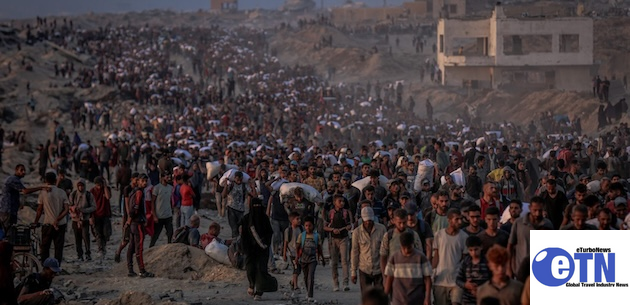
The current war has produced one of the world’s most severe humanitarian crises. Large portions of Gaza’s infrastructure have been destroyed, hundreds of thousands of residents have been displaced multiple times, and aid organizations have warned of severe shortages of food, water, medicine, and shelter. Hospitals had been deliberately destroyed.
Human rights groups have accused multiple parties in the conflict of violating international law, while Israel argues that Hamas embeds military operations within civilian areas, making military operations more complex.
Controversies surrounding aid distribution systems, including internationally supported humanitarian initiatives, have further fueled debate regarding the protection of civilians and access to assistance.
For tourism experts, Gaza serves as an example of how war can erase an entire economy while simultaneously attracting worldwide attention to human rights concerns.
Lebanon: A Tourism Industry Held Hostage by Conflict
Lebanon has long relied on tourism as a pillar of its economy.
Before years of political instability and economic crisis, Beirut attracted visitors from Europe, North America, and the Gulf region, earning a reputation as one of the Middle East’s most vibrant cultural destinations.
However, repeated clashes between Israel and Hezbollah have created renewed uncertainty. Human rights advocates warned that military escalation threatens civilian populations on both sides of the border and undermines hopes for economic recovery.
Hotels, restaurants, transportation companies, and cultural attractions remain vulnerable to regional instability, illustrating how human rights and security concerns directly affect tourism development.
Iran: Cultural Heritage in the Crosshairs of Geopolitics
Iran possesses some of the world’s most important historical treasures, including ancient Persian cities, archaeological sites, and UNESCO-recognized landmarks.
Yet geopolitical tensions and military confrontations have increasingly overshadowed the country’s tourism potential.
Recent conflicts involving Iran have raised concerns regarding civilian safety and the protection of cultural heritage sites. International organizations have repeatedly emphasized that historical and religious landmarks should be protected during armed conflict.
Despite its extraordinary cultural assets, sanctions, diplomatic tensions, and security concerns continue to limit international tourism to Iran.
Ukraine: War, Accountability, and Solidarity Tourism
Russia’s invasion of Ukraine transformed one of Eastern Europe’s emerging tourism destinations into the center of Europe’s largest armed conflict since World War II.
The war has devastated cities, displaced millions of people, and generated widespread allegations of war crimes, unlawful killings, torture, deportations, and attacks on civilian infrastructure.
Human rights investigators, international courts, and United Nations experts continue to document alleged violations committed during the conflict.
Yet Ukraine has also witnessed the rise of what observers call “solidarity tourism.” Visitors, journalists, researchers, and supporters travel to war-affected areas to better understand its human impact and to demonstrate support for local communities.