


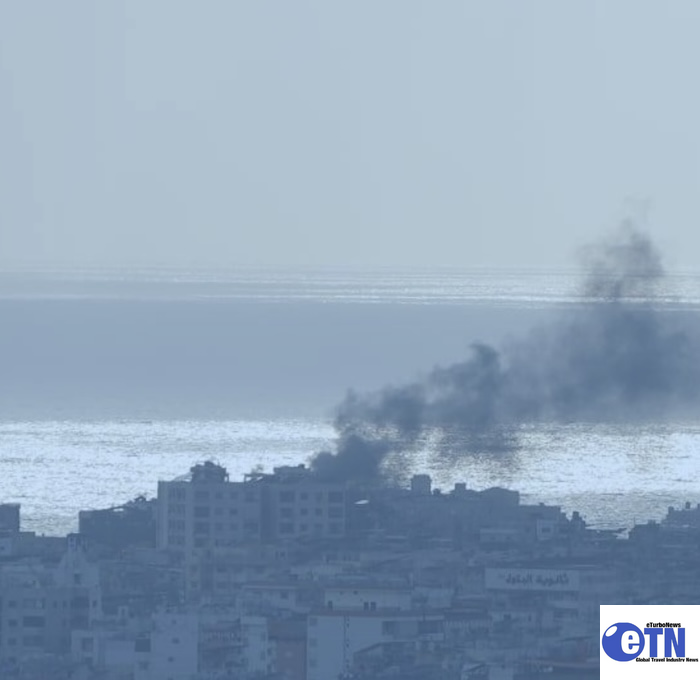
Beirut’s airport continues operating under the shadow of airstrikes, revealing a stark contrast with the fortified systems of Tel Aviv and the stability of Gulf hubs like Doha and Dubai. This feature explores how airports function in crisis—where resilience ranges from survival instinct to engineered continuity.
Beirut: A runway under fire
At Beirut–Rafic Hariri International Airport, the surreal has become routine.
Plan still land and take off even as smoke rises from nearby suburbs. Israeli airstrikes have hit areas bordering the airport perimeter, with one strike reportedly destroying a building near the main airport road. (et inside the terminal, operations continue—quieter than usual, but unbroken.
This is not improvisation; it is institutional memory. Lebanon has run an airport through wars before—civil war, invasions, bombardments—turning crisis operations into a kind of national expertise. “We’ve done this since…1967…1975 until 1990…2006…2024…2026,” aviation chief Mohammad Aziz said, framing continuity as resilience rather than exception.
Today, that resilience is existential. Lebanon has only one commercial airport. With land borders constrained and ports fragile, the airport is not just infrastructure—it is a lifeline for aid, evacuation, and economic survival.


And yet, the contradiction is stark: a functioning civilian gateway operating amid a war that has displaced hundreds of thousands and killed many more across the country.
Tel Aviv: Resilience under threat, but with buffers

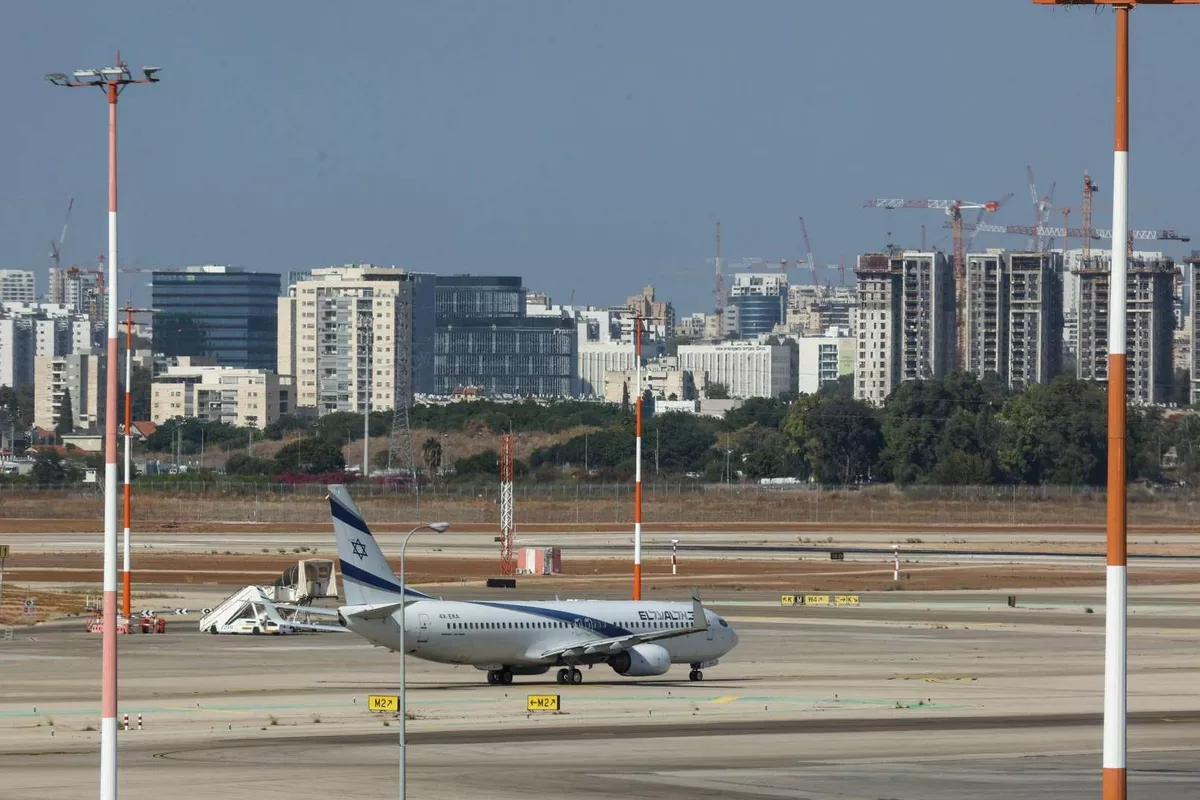
At Ben Gurion Airport, resilience looks different.
Israel’s main airport has also faced direct threats—missiles, including a 2025 hypersonic strike attempt that tested even advanced interception systems. But unlike Beirut, Tel Aviv operates with layered defenses: missile shields, infrastructure redundancy, and a far more controlled security environment.
Operations may slow or temporarily halt during escalations, but the system is designed to absorb shocks. Flights can be rerouted, airspace tightly managed, and passengers shielded within hardened facilities.
The key difference is strategic depth. Israel’s aviation system is backed by strong state capacity and defense integration. Beirut is sustained by necessity.
Doha & Abu Dhabi: Stability engineered


At Hamad International Airport and Zayed International Airport, the story shifts from survival to control.
These Gulf hubs operate in a region not untouched by conflict—but insulated from it. Their resilience is proactive, not reactive:
- diversified air routes and contingency planning
- vast financial reserves
- advanced air traffic systems
- political stability that keeps conflict at a distance
Airports here are designed as global connectors first, crisis managers second. Even during regional tensions, they function as stabilizing nodes, absorbing diverted traffic and maintaining continuity for global aviation networks.
Dubai: The global machine that cannot stop


Dubai International Airport represents another category entirely: scale as resilience.
As one of the busiest airports in the world, Dubai’s challenge is not survival but continuity at massive volume. Its resilience lies in redundancy—multiple terminals, vast fleets, global partnerships.
Where Beirut struggles to keep a handful of flights moving, Dubai manages hundreds daily. Yet both share a common truth: stopping is not an option.
The anatomy of resilience
Across these airports, operating “against the odds” means very different things:
| Airport | Core challenge | Type of resilience |
|---|---|---|
| Beirut | Active war, nearby strikes | Necessity-driven survival |
| Tel Aviv | Direct threats, missile attacks | Security-driven resilience |
| Doha/Abu Dhabi | Regional instability | System-designed stability |
| Dubai | Scale, global dependence | Operational redundancy |
The human factor
What unites them is not technology, but people.
In Beirut, pilots land next to smoke plumes. Ground crews work under the knowledge that “nowhere is safe,” as residents describe the city.
In Tel Aviv, staff train for missile alerts as part of routine operations.
In the Gulf, controllers manage global traffic flows shaped by conflicts far beyond their borders.
Airports are often described as infrastructure. In reality, they are living systems—dependent on human judgment under pressure.
The final approach
Beirut’s airport is not the most advanced, nor the busiest. But in moments like this, it may be the most revealing.
Because it shows what aviation becomes when stripped to its essence:
not convenience, not commerce—but connection.
A runway, kept open, when everything around it is falling apart.