

Five Hessian municipalities are currently testing an AI system that is intended to reduce energy costs in public buildings. It is designed to adjust heating and lighting in real time to suit the people in a room.
Will heating in kindergartens soon no longer be based on the time, but based on the number of children in the room? Admittedly, this idea may seem a bit abstract at first glance, but it could soon become reality. In five municipalities in the Schwalm-Eder district, specially developed artificial intelligence is intended to ensure massive energy savings in public buildings such as daycare centers, town halls and cemetery halls.
The approach is relatively simple: the AI recognizes how many people are in a room and then adjusts the heating and lighting in real time. The background is that many municipalities find themselves exposed to heavy financial burdens due to high energy costs.
Swimming pools, town halls or gyms must be heated and lit, even if the rooms are only partially used or not used at all. This is exactly where the new AI system is intended to provide a remedy by supplying buildings with electricity and heat as needed. Instead of rigid schedules, sensors decide whether to turn up the heating or turn on the lights. If no one is in the room, the lights and heating remain off.
Intelligent control: AI reduces energy costs
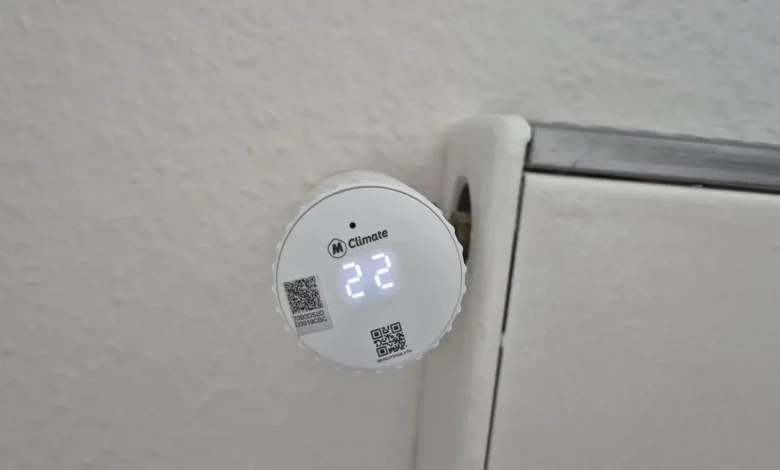
The project, which is supported with 1.2 million euros from a funding program from the state of Hesse, builds on a project that has already been completed. In the participating communities of Bad Zwesten, Borken, Jesberg, Neuental and Wabern, specialist companies have already installed the first digital thermostats, CO2 measuring devices and current sensors in the buildings.
This initial inventory, according to digitalization officer Michael Meichsner, was crucial in identifying unnecessary consumption in the first place. The country was able to adapt a continuously running ventilation system in an event hall without AI and achieve savings of 10,000 euros per year.
The new AI system should now completely take over and perfect these manual adjustments. For example, in the Lummerland daycare center in Neuental, where children are accommodated in six different group rooms. So far, the operator has controlled everything there using a calendar or switches the heating on and off manually.
AI detects the number of people through the air they breathe
In the future, CO2 measuring devices will use the air we breathe to detect how many children are currently in the room. The AI then evaluates this data and adjusts the heating as needed at any time. This should not only have a financial benefit, but also a human one. Carers would be relieved of the burden and would have more time for the children.
The communities in the Schwalm-Eder district see themselves as pioneers, especially in rural areas. They hope that their experiences will be a blueprint for similar projects throughout Hesse. The advantages are obvious. The project not only saves money, which can then be invested elsewhere in services such as swimming pools or youth centers.
It is also an important step towards sustainability. AI helps to reduce energy consumption and thus conserve resources. It is a clear example of how technology can have a concrete, positive impact on everyday life and how we can use an invisible but very smart brain to help combat rising energy costs.
Also interesting: