


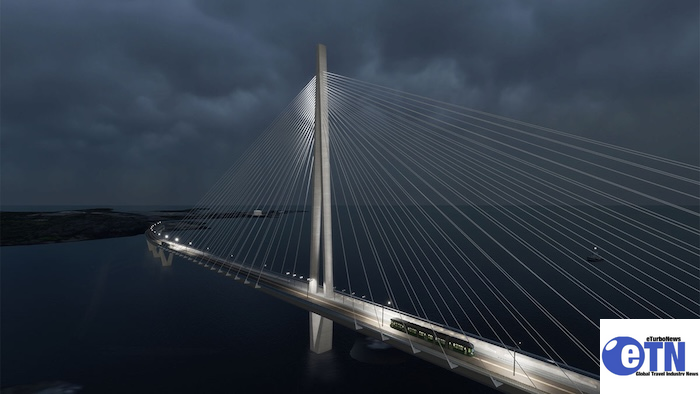
Helsinki’s new Kruunuvuorensilta Bridge, Finland’s longest and tallest, has opened to the public, attracting over 50,000 visitors in its first weekend. Designed specifically for trams, cyclists, and pedestrians, the landmark project highlights sustainable urban mobility while emerging as a striking new tourism attraction in the Finnish capital.
Helsinki, Finland – The Finnish capital has unveiled a striking new icon of sustainable urban development with the opening of the Kruunuvuorensilta Bridge, now the longest and tallest bridge in Finland. Officially opened to the public on April 18, 2026, the bridge drew more than 50,000 visitors during its inaugural weekend, signaling its immediate appeal as both infrastructure and attraction.
Stretching 1,191 meters across the water, Kruunuvuorensilta connects the districts of Korkeasaari and Kruunuvuorenranta, forming a key link in Helsinki’s ambitious Crown Bridges Light Rail project. What sets this bridge apart globally is its exclusive dedication to public transport, pedestrians, and cyclists—completely excluding private car traffic, a rarity for a structure of this scale.
A Bold Architectural and Engineering Statement
Dominating the skyline is the bridge’s 135-meter-high diamond-shaped pylon, now one of the tallest structures in the city—surpassing even the Kalasatama tower and the historic Olympic Stadium tower. The pylon alone required nearly two years of continuous concrete casting, underscoring the complexity and ambition of the project.
Designed by Knight Architects with engineering by WSP Finland, the bridge blends cutting-edge design with functionality. Its sleek profile and prominent height are expected to redefine Helsinki’s visual identity while offering panoramic views that will likely become a draw for visitors.
Mayor Daniel Sazonov described the bridge as “a unique and exciting landmark” that reflects Helsinki’s commitment to sustainable solutions and its maritime character.
Built for People, Not Cars
Kruunuvuorensilta embodies Helsinki’s long-term mobility strategy: prioritizing sustainable transportation. Currently, about 41% of journeys in the city are made on foot, 25% via public transport, and 11% by bicycle—leaving only around 20% by car.
The bridge will carry a new tramline connecting the city center to Laajasalo island, whose population is expected to double by 2040. By halving travel distance from 11 km to approximately 5.5 km, the bridge will significantly improve connectivity while reducing congestion and emissions.
Sustainability at Its Core
Designed with a lifespan of up to 200 years, the bridge reflects a long-term vision for resilient infrastructure. Its total carbon footprint is estimated at 129,000 tCO₂e, with efforts made to reduce emissions through low-carbon materials and renewable energy.
Environmental considerations were extensive, including assessments of marine ecosystems, noise, and vibration. The bridge also features innovative weather-resilience measures: cables that move slightly in the wind to prevent ice buildup, and textured sheaths that break ice into small particles.
A New Tourism Magnet
Beyond its transport function, Kruunuvuorensilta is poised to become a major tourism asset. Its scale, design, and accessibility make it attractive for walking, cycling, photography, and sightseeing. The opening weekend turnout already demonstrated its potential as a visitor hotspot.
Infrastructure projects of this kind increasingly play a role in destination branding, positioning cities as forward-thinking and environmentally conscious.
Global Comparisons
Helsinki’s approach aligns with a growing international trend toward people-centered infrastructure:
- In Copenhagen, the Cykelslangen (Bicycle Snake) elevated cycleway has become both a functional route and a tourist attraction, symbolizing the city’s cycling culture.
- London introduced the Millennium Bridgea pedestrian-only crossing over the Thames that has become an iconic landmark and filming location.
- New York City transformed old infrastructure into the High Linea linear park that draws millions of visitors annually while promoting walkability.
- In Seoul, the Seoullo 7017 Skygarden repurposed a highway into a pedestrian-friendly urban park, boosting tourism and urban regeneration.
While these examples focus primarily on pedestrians and cyclists, Helsinki’s Kruunuvuorensilta stands out by integrating a full-scale public transport system—tramlines—into a car-free bridge of this magnitude.


Kruunuvuorensilta, the new icon of Helsinki – Kruunusillat
Tourism Value and Economic Impact
For tourism, such infrastructure offers multiple benefits:
- Destination branding: Showcases Helsinki as a leader in sustainability and design.
- Experiential Travel: Visitors can walk or cycle across a landmark structure, enhancing engagement.
- Urban Exploration: Connects emerging districts like Kruunuvuorenranta, encouraging tourists to explore beyond the city center.
- Event potential: The bridge can host public events, marathons, and cultural activities.
As cities compete globally for visitors, projects like Kruunuvuorensilta demonstrate how infrastructure can double as an attraction—blurring the line between utility and experience.
Looking Ahead
With an expected 23,000 daily tram passengers and thousands of cyclists by 2030, Kruunuvuorensilta is more than a bridge—it is a statement about the future of urban mobility.
By prioritizing sustainability, resilience, and human-centered design, Helsinki has created not only a vital transport link but also a new reason for the world to visit.