


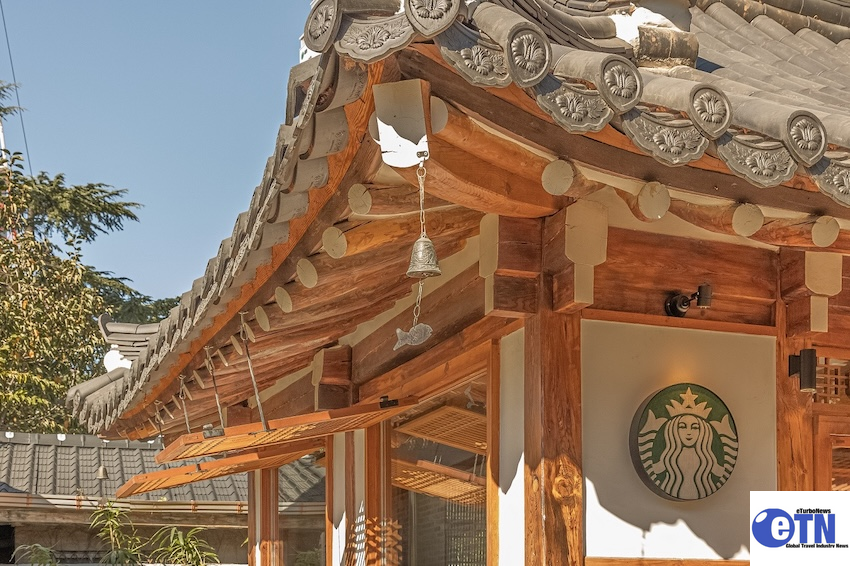
In an increasingly fragmented and digitized world, few brands have managed to embed themselves as deeply into the rhythms of daily life as Starbucks. What began as a single coffee shop in Seattle has evolved into a global cultural institution—one that sits at the intersection of commerce, community, tourism, and human connection.
Today, Starbucks is not just a coffee company. It is a symbol of globalization, of modern hospitality, and increasingly, of a renewed search for human connection in an automated age.
A Company Reborn: “Back to Starbucks”
When Brian Niccol assumed leadership as CEO in 2024, Starbucks was at a crossroads. The brand that once defined café culture had drifted toward efficiency, automation, and mobile-first transactions—sometimes at the expense of the very atmosphere that made it iconic.
Niccol’s promise was simple yet ambitious: go “back to Starbucks.”
For five consecutive quarters, results were underwhelming. Growth stagnated, and skepticism grew. But patience, as Niccol had urged, proved essential.
Then came the turning point.
In the most recent quarter, Starbucks reported a 4% increase in same-store sales in North America, alongside a 3% increase in transactions. Loyalty program members were spending more, and necessarily, casual customers—those who had drifted away—were returning.
This resurgence is not accidental. It is the outcome of one of the most sweeping retail reinventions in modern business.


Starbucks Coffee Company
Explore our menu of handcrafted drinks, order ahead, sign up for Starbucks® Rewards, manage your gift card and more.
Reinventing the Third Place
At the heart of Starbucks’ philosophy lies the concept of the “third place”—a space between home and work where people gather, connect, and simply exist.
Under Niccol, this philosophy is being physically rebuilt.
More than 1,000 stores are undergoing redesigns, replacing sterile, utilitarian surfaces with warm wood textures, greenery, and vibrant colors. The company plans to add over 100,000 seats globally by 2026, actively encouraging customers to linger rather than rush.
Free refills are back. Baristas are being retrained to prioritize conversation and personalization. Even the menu reflects this shift, blending innovation with comfort—fresh-baked pastries and thoughtfully crafted beverages designed to invite pause.
In a world dominated by speed, Starbucks is betting on stillness.
Technology Meets Humanity
Ironically, Starbucks’ digital ecosystem—once seen as a driver of depersonalization—is now being reimagined to support human connection.
The company is refining its mobile app not to replace interaction, but to enhance it. Orders are being streamlined, wait times reduced, and baristas are being empowered to re-engage with customers face-to-face.
This hybrid model—where technology serves hospitality rather than replacing it—may well define the future of global tourism and service industries.
For travelers, Starbucks has long functioned as a familiar anchor in unfamiliar cities. Whether in Tokyo, Berlin, or New York, stepping into a Starbucks offers a sense of predictability, comfort, and cultural translation.
Starbucks and the Global Tourism Ecosystem
Few brands have integrated themselves into tourism infrastructure as seamlessly as Starbucks.
Airports, train stations, historic districts, and city centers around the world feature Starbucks locations that serve as informal meeting points for international travelers. These spaces often become microcosms of global interaction—where languages, cultures, and stories intersect over a shared cup of coffee.
In this sense, Starbucks plays an understated but powerful role in fostering cross-cultural dialogue.
Coffee, after all, is universal.
And in Starbucks cafés, strangers become neighbors—if only briefly.
Growth and Controversy: The Expansion Debate
Yet Starbucks’ global success is not without criticism.
The company’s aggressive expansion strategy has reshaped urban retail landscapes worldwide. By rapidly establishing stores in prime locations, Starbucks has often outcompeted smaller, independent coffee shops that lack comparable resources.
In many cities, this has sparked debate about homogenization and the erosion of local business ecosystems.
Germany provides a particularly interesting case study.
Starbucks is not the same outside the United States
Starbucks is not the same everywhere in the world, and this inconsistency highlights both challenges and opportunities in its global strategy. For example, the always-fresh drip coffee system common in most US stores—offering light, medium, and dark roast options, including decaf, available at any time—is largely absent in international locations. This simple yet highly valued feature could resonate strongly in many overseas markets, where customers often seek straightforward, high-quality brewed coffee alongside more complex espresso-based drinks.
Germany: A Tale of Two Coffee Cultures
In Germany, Starbucks has expanded steadily, especially in major cities such as Berlin, Munich, and Frankfurt. Its presence reflects global consumer trends—convenience, brand recognition, and standardized quality.
However, Germany also boasts a deeply rooted café tradition that predates Starbucks by centuries.
Independent cafés—often family-run—continue to thrive by offering what global chains cannot: hyper-local identity, artisanal craftsmanship, and deeply personal service.
In Berlin’s neighborhoods, for example, small coffee shops emphasize specialty roasting, sustainable sourcing, and unique atmospheres that reflect the city’s creative spirit. These establishments have not merely survived Starbucks’ expansion—they have adapted and, in many cases, flourished.
The result is not a zero-sum game, but a dynamic coexistence.
Starbucks brings accessibility and global familiarity. Independent cafés bring authenticity and individuality.
Together, they create a richer, more diverse coffee culture.
Coffee, friendship, and peace
Beyond economics and design, Starbucks’ broader significance lies in its role as a social platform.
In a time marked by division and digital isolation, physical gathering spaces are more important than ever. Starbucks cafés—alongside countless independent coffee shops—offer environments where people can meet, converse, and reconnect.
Business meetings, first dates, reunions, and solitary reflections all unfold within these spaces.
Coffee becomes the medium. Humanity is the message.
There is something inherently peaceful about sharing a table, however briefly, with others. In this sense, Starbucks contributes—however modestly—to a global culture of dialogue and coexistence.
The Road Ahead
Starbucks’ recent resurgence suggests that even the largest corporations must remain attuned to human needs.
Efficiency alone is not enough. Nor is scale.
What customers increasingly seek—whether at home or while traveling—is authenticity, warmth, and connection.
Brian Niccol’s strategy acknowledges this reality. By returning to the company’s roots while embracing modern innovation, Starbucks is attempting to balance growth with meaning.
Whether this balance can be sustained remains to be seen.
A Shared Future
Ultimately, the story of Starbucks is not just about coffee.
It’s about how we gather, how we travel, and how we connect in a rapidly changing world.
As Starbucks continues to expand and evolve, it will remain part of a broader ecosystem—one that includes independent cafés, local traditions, and diverse cultural expressions.
Together, they shape the global coffee experience.
And in that shared space—between global and local, efficiency and intimacy—lies the true future of café culture.
A future built not just on growth, but on humanity.