


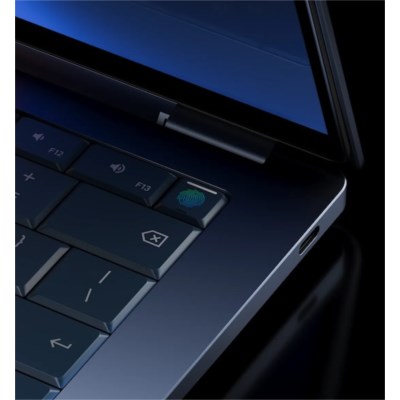


As with its predecessor, Google relies on multiple hardware partners: Acer, Asus, Dell, HP and Lenovo produce laptops for the Googlebook brand. Accordingly, the announcement is reserved with hardware features: only USB-C and HDMI ports, a mini jack and a fingerprint sensor are visible. Instead, Google is emphasizing AI integration, which is now being advertised under the name Gemini Intelligence.
“Magic pointer”
To give users access to potential AI functions, Google is integrating a new pointer gesture: If you quickly move the mouse arrow back and forth, context-related recommendations are displayed. Depending on whether the arrow is hovering over a photo, an email or an appointment, other function suggestions appear around the pointer. The fine print reveals: Some functions require an active internet connection and the user to be of legal age. Apparently an age check of the users is planned.

AI widgets and smartphone apps
Users can decorate the screen background with individual widgets. Artificial intelligence should also be helpful here – users should be able to independently put together content by entering text, such as planning a vacation. However, this function will not be available until spring 2027 at the earliest. If you use a smartphone with Android 17 or newer, you can pair it with the Googlebook and operate the apps from your computer. This function is very reminiscent of Apple’s “Phone Mirroring” – does Google block this feature in the EU, as does Apple?
Answer to MacBook Neo?
Google doesn’t mention the performance of the local device at all, but rather focuses on software features. The slogan “Smart AI functions in focus” suggests that the search engine company has found a second role model in Microsoft: The Redmond company has been relying on its in-house AI for some time and is touting Copilot as an outstanding feature in hardware and software products.